DESPITE its very best efforts, the Church of England still somehow manages to attract able, active, and committed priests. There are a million other things that these people could be doing — and doing brilliantly — and yet they devote themselves to parish life.
A good example is the irrepressible Fergus Butler-Gallie, a man who writes like a dream and works like a Trojan. You are bound to have encountered him somewhere, whether in The Guardian, the Daily Mail, or The Spectator, or on the pages of the Church Times. His poignant, amusing memoir, Touching Cloth (Books, 24 March 2023), was deservedly bestselling, and his Field Guide to the English Clergy (Books 30 November 2018) was widely appreciated for its distinctive combination of wit and wisdom.
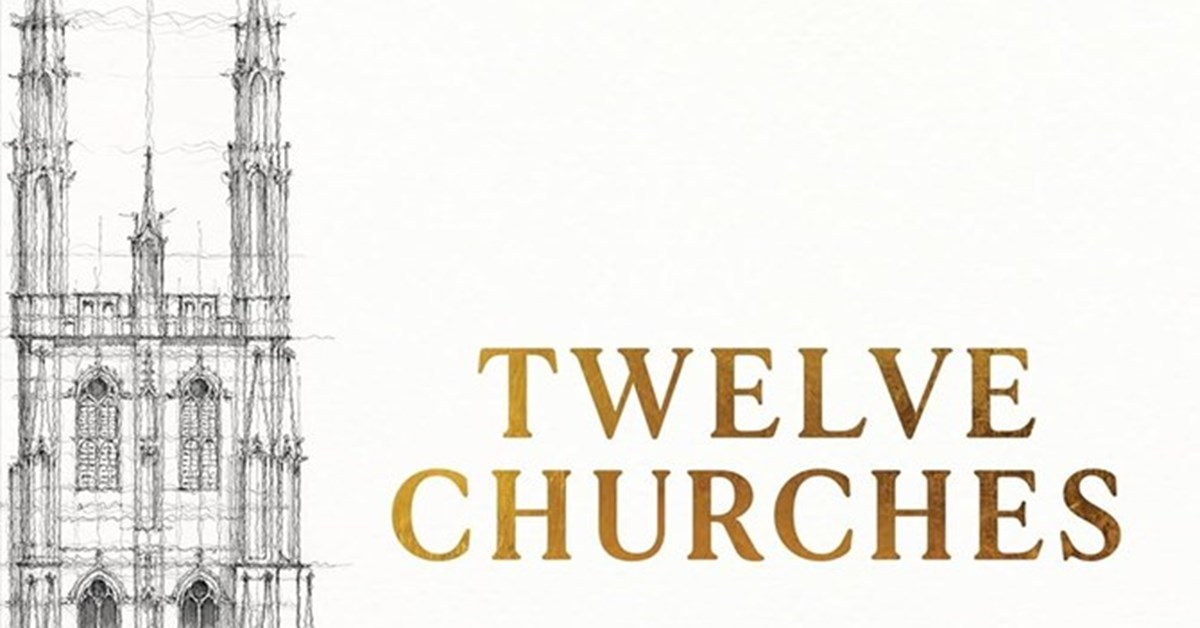
Now, having explored the people who make up the Church, he has turned his attention to the places of Christian life. It is important to emphasise that. Despite the title of Twelve Churches, this book is not really about architecture. Instead, it is concerned with a broader, bigger question: the paradox of a universal faith that none the less takes on particular, physical expression; an omnipresent God who is, in some way, specially encountered in distinct locations.
It is also about the stories that accrete in these sites, the ways in which these holy places become the repositories of myth and the embodiment of ideas.
To that end, Butler-Gallie takes the reader on a world tour that begins in Bethlehem and ends in Nigeria. In chapter after chapter, we are transported to famous locations, such as St Peter’s, Rome, or Hagia Sophia, Istanbul, as well as to less celebrated sites such as Christ Church, Zanzibar, in Tanzania, or the rocky remains of a Christian chapel in Japan.
Characteristically, Butler-Gallie’s book employs a wide range of reading and sharp observations drawn from personal experience to present a series of fascinating and often funny vignettes. But this is no mere travelogue. Each of these places is approached as an exemplar of a particular moment and a distinctive theme in Christian history. In this account, Canterbury Cathedral speaks of violence, and 16th Street Baptist Church, Birmingham, Alabama, of violence; Mount Athos opens up a discussion of sex, and the site of the First Meeting House at Salem, Massachusetts, is considered with reference to persecution.
As this suggests, Butler-Gallie emphasises the diversity and changefulness of Christianity. He is also willing to acknowledge the Church’s capacity to do great evil as well as good. Above all, a central theme is just how important these places are.
Writing of the churches in his own Oxfordshire benefice, Butler-Gallie acknowledges all the problems of broken boilers and bat droppings, but focuses still more on the ways in which St Mary’s, Charlbury, and All Saints’, Shorthampton, still speak of Christian witness and Christian life. “People and place are one,” he concludes. An observation that draws together all the threads of his trilogy of books, it perhaps helps to explain how it is that the Church of England — through the churches of England — still attracts gifted people like him.
The Revd Dr William Whyte is a Fellow and Tutor of St John’s College, Oxford, and Professor of Social and Architectural History in the University of Oxford.
Twelve Churches: An unlikely history of the buildings that made Christianity
Fergus Butler-Gallie
Hodder & Stoughton £30
(978-1-3997-3130-0)
Church Times Bookshop £24