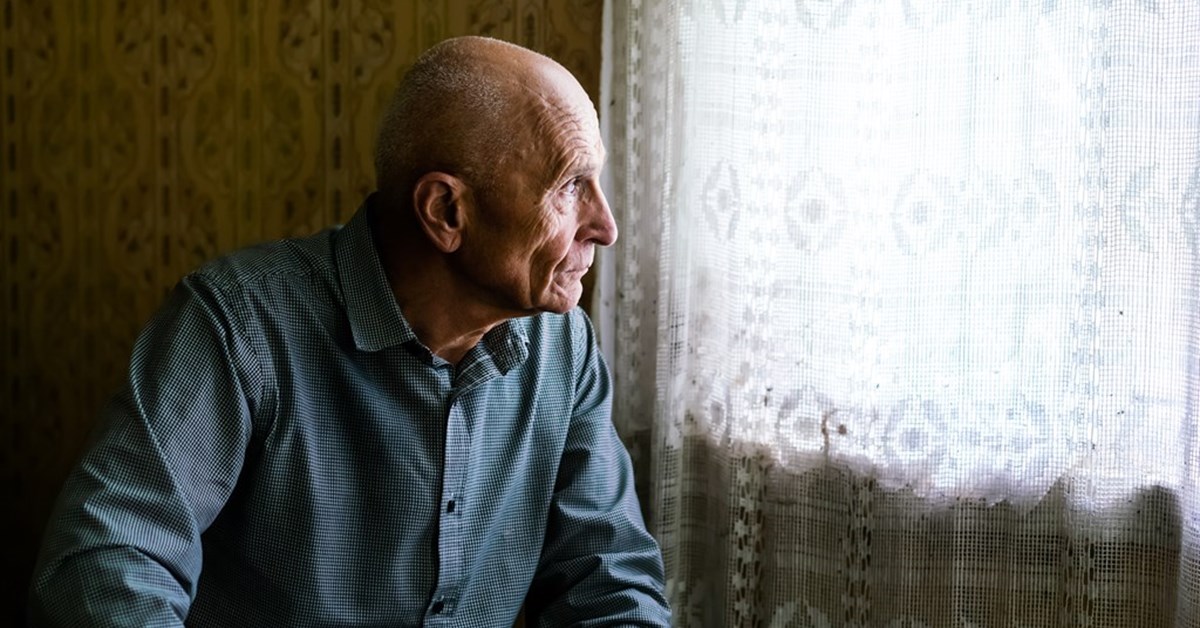
WHEN, in 2023, the US Surgeon General, Dr Vivek Murthy, compared loneliness’s mortality risk to smoking 15 cigarettes daily, he articulated what parish priests have witnessed for generations: people are dying not only from disease, but from disconnection.
Recent research involving more than 2.2 million people confirms that loneliness substantially increases the risk of premature death, heart disease, and stroke. For the Church of England’s approximately 12,000 parishes, this represents both a profound missional challenge and an extraordinary opportunity.
The pandemic amplified what was already a crisis. People with stronger social relationships have a 50 per cent greater likelihood of survival than those who are isolated. Chronic loneliness substantially increases stroke risk, and, among those with heart disease, worsens outcomes and accelerates mortality.
This matters profoundly for an ageing society in which traditional kinship networks have eroded. The NHS Long Term Plan deploys social-prescribing link workers to connect patients with community resources. Yet health services cannot manufacture the very thing that lonely people need: sustainable relationships, a sense of community belonging, and opportunities for meaningful contribution. These exist where the Church has always dwelt.
THE Church of England possesses what health systems lack: sustained relational infrastructure woven into the fabric of every community. Parishes represent neighbourhood-based presence that are independent of funding cycles. When a churchwarden befriends an isolated neighbour, that relationship does not cease when programme money runs out.
Regular worship offers repeated social contact. Coffee after services, study groups, and luncheon clubs create low-threshold opportunities for connection. Multi-generational mixing counters the age segregation, addressing the specific isolation experienced by older adults, who are identified as the highest risk in epidemiological studies.
Opportunities for volunteering address not merely social connection but the sense of purpose that combats loneliness’s deepest dimensions. Many parishes maintain pastoral care systems that provide proactive outreach — identifying need before a crisis occurs: a preventative approach that health systems aspire to but struggle to put into practice.
Critically, churches offer non-transactional relationships grounded in shared faith rather than eligibility criteria. Unlike time-limited interventions, congregations persist across centuries, providing the relational continuity essential for those experiencing chronic loneliness. This is a covenant, not a contract.
The Church engages with loneliness not primarily because the NHS needs assistance, but because the gospel compels us. Jesus’s ministry attended consistently to isolated people: Zacchaeus in his tree, the Samaritan woman at the well, and lepers excluded from the community. The Early Church distinguished itself through radical hospitality, creating communities where social barriers dissolved in Christ.
The Trinity itself speaks to humanity’s fundamental need for relationship. We are created in the image of a God who is eternally relational. Loneliness represents a fracturing of that created purpose. In ministering to lonely neighbours, we participate in Christ’s ongoing ministry of restoration. This is holy work, not merely helpful work.
YET theological conviction requires practical implementation. Many parishes struggle with declining attendance and overstretched clergy. How can we respond effectively?
First, become more intentional. Parish activities — pastoral visiting, bereavement follow-up, welcome teams, community cafés — represent significant social capital. The question is not whether we can start entirely new programmes, but whether we can maximise the anti-loneliness impact of current ministry. Training welcomers to identify isolated newcomers, ensuring systematic follow-up, and encouraging intergenerational mixing — these modest enhancements strengthen effectiveness without overwhelming capacity.
Second, normalise conversations about loneliness. Many experiencing isolation feel shame and hide their need. Creating a church culture in which admitting loneliness is met with compassion enables people to seek help. Preaching occasionally about loneliness as a pastoral concern, including prayers for isolated people in intercessions, and creating small-group discussions, signal that loneliness is legitimate church business.
Third, parishes need appropriate training. Loneliness manifests differently across populations: bereaved spouses, young mothers, people with disabilities, those with mental-health difficulties, and newly relocated families. Dioceses should provide resources to equip parishes for this ministry, including mental-health literacy, safeguarding protocols, and guidance on signposting to professional services.
Fourth, collaborate. Deanery-level co-operation pools resources and shares good practice. Partnerships with NHS social-prescribing link workers enable parishes to receive appropriate referrals, while protecting boundaries around complex mental-health needs requiring psychiatric intervention.
Research demonstrates that faith communities successfully deliver health interventions, particularly reaching populations disconnected from mainstream services, with significant effects such as reduced blood pressure and improved mental-health outcomes.
The convergence of robust evidence on the health impacts of loneliness, growing government concern, NHS recognition of its limitations, and the Church’s existing infrastructure, creates a rare opportunity. The Church of England can demonstrate public relevance not by mimicking secular organisations, but by being more fully itself — a community of radical hospitality, sacrificial love, and enduring presence.
This requires moving beyond rhetoric to practical investment: diocesan resources for training and co-ordination; parish commitment to sustained engagement; individual Christians’ examining whether their lives include space for befriending isolated neighbours.
Health systems cannot address fundamental deficits in community connection. The Church of England, with established parish networks present in every community, offers crucial infrastructure that clinical interventions cannot replicate.
The health evidence confirms what Christian theology has always proclaimed: we are made for relationship, and disconnection diminishes us. In responding to Britain’s loneliness crisis, parishes have the opportunity to witness to the gospel through embodied community, offering not merely programmes, but belonging; not merely activity, but meaning; not simply company, but communion.
People are dying from disconnection in communities where church buildings stand as monuments to a faith that proclaimed “It is not good for man to be alone.” The mission field has come to our doorstep. Our response will determine whether future generations recognise the Church of England as essential social infrastructure or merely heritage architecture.
Raman Bedi is an Emeritus Professor at King’s College, London, and a former Chief Dental Officer for England. He is a former member of the General Synod. Esther Okorodudu is a researcher at the World Federation of Public Health Associations.