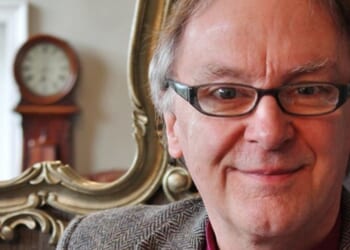
THE Bishop of Chelmsford, Dr Guli Francis-Dehqani, has warned of a “policy of slow strangulation” of the Christian minorities in Iran, who, she warns, could face harsh reprisals should the Islamist regime survive the current American and Israeli action.
“With the Middle East now on fire, we’ve no idea what the consequences of this war are going to be — nor when America may back off and leave Iran at the mercy of its regime,” Dr Francis-Dehqani, who was born in Iran, told the Church Times last week.
“As we saw during the January protests, this regime has no qualms, and survives through brutality. I think President Trump and Israel may have unleashed something over which they have very little control.”
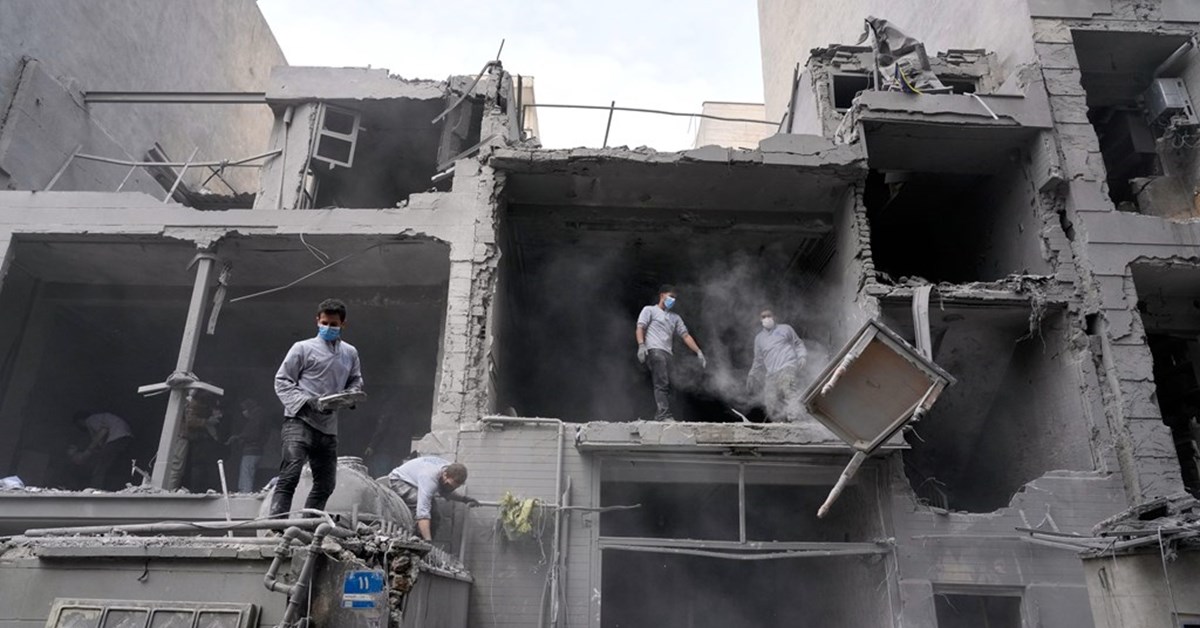
Dr Francis-Dehqani was speaking as strikes continued against Iranian targets, and Tehran was attacking neighbouring countries.
Her messages to Iran were no longer getting through, she said, making it hard to follow events. It was, however, “naïve and dangerous” to encourage Iranians to “take back their country” as part of a regime change, she said.
“Just because the regime has been decapitated doesn’t mean it’s gone. Its structures are still there, and the Islamic Revolutionary Guard Corps is its power base. They’re facing an existential crisis, and are likely to be incredibly brutal if fighting for survival. We should be very cautious about pontificating from the safety of our armchairs and telling Iranians that this is their great opportunity.”
Although Iran’s 93 million inhabitants are mostly Shia Muslims, the country is home to historic Armenian and Assyrian Christian communities, which are represented in the state assembly, as well as about 20,000 Eastern-rite and Latin Catholics, led by the Archbishop of Tehran–Isfahan, Cardinal Dominique Mathieu.
Its Anglican diocese, created in 1912 under the auspices of the Church Mission Society, forms part of the Province of Jerusalem and the Middle East.
Dr Francis-Dehqani’s grandfather, William Thompson, and her father, Hassan Dehqani-Tafti, were Anglican bishops in Iran between 1935 and 1990. She and her family fled the region in 1980, after her elder brother, Bahram, was shot dead by agents of the regime.
During the pandemic, the Iranian government had closed Iran’s three surviving Anglican churches in Tehran, Isfahan, and Shiraz, after decades of worship, and had since “used every pretext” to bar them from reopening, she said.
Evangelical house churches, mostly made up of converts from Islam, appeared to be a “significant movement”, she said, although the threat of police raids made it difficult to obtain reliable information.
“With no bishop or pastoral support for years, the Anglican Church is hanging by a thread, with very small numbers and no pastoral support, and with inevitable cracks and tensions,” Dr Francis-Dehqani said.
“As for the house churches, these are kept very small and tight because it’s incredibly dangerous if they’re discovered. They appear to reflect a genuine exploration of faith, although it’s hard to say how far they may also operate as resistance groups.”
Article 18, a London-based religious rights group, reports that at least 19 Christians were among the thousands killed when disorder erupted across Iran in early 2026, met by what the United Nations described as “unprecedented violence”.
The report, Scapegoats — published last month in partnership with Open Doors, Middle East Concern, and Christian Solidarity Worldwide — said that the “scapegoating” of Christians had also intensified. There had been 254 arrests during 2025 — twice as many as the previous year — and harsher court sentences had been accompanied by exclusion from education, employment, and health care.
The report demanded the “unconditional release” of detained Christians, and the reopening of “forcibly closed churches”. It also called on the UN to include “the situation of Christians, particularly Christian converts”, in human rights reports on Iran.
Dr Francis-Dehqani said that Christian minorities had enjoyed relative tolerance under the Shah, and had lived well alongside “ordinary secular, liberal Muslims”. But the regime had prevented baptisms and “persecuted people into leaving” as part of a “policy of slow strangulation” after the 1979 revolution. Anglicans and other Christians would now be feeling “utterly isolated and alone”, she said.
“Iranians are totally disillusioned with the version of Islam they’ve received over the past five decades — there’ll be great swaths of the population now who want nothing to do with any religion.
“But Iranians are spiritual by nature, and there are lots of stories of people coming to the Christian faith, whose numbers might greatly increase if the regime is toppled. But converting from Islam will always be a problem while more extreme religious elements remain at large.”