CHRISTOPHER WILD, a lay Anglican, is a former Professor of Molecular Epidemiology at Leeds, with a particular interest in the relationship between environmental and genetic factors in the development of cancer.
Appointed, leaving Leeds, director of the prestigious International Agency for Research on Cancer at Lyon, he is now excellently qualified to give an overview of ethical issues arising from recent developments in genetic science. He does so with commendable clarity: someone useful for the new Archbishop of Canterbury to consult.
He repeatedly emphasises — as others have done, following the late, great Ian Barbour — that (genetic) science can be used for good or ill: “As with so much of genetics, honourable and dishonourable aims run side by side, employing the same tools. This is ‘dual use’ at its most dangerous. While some seek to overcome disease by genetic engineering, others seek to weaponise biology.”
For example, in relation to DNA testing, he points out: “New applications can bring benefits through accurate establishment of identity, including reuniting families or apprehending criminals. There are also notable improvements to be made in healthcare and in the administration of justice. . .
“Along with benefits, genetic profiling carries the potential for division and discrimination. . . Currently the starkest decisions of discrimination are those which exclude the birth of embryos and foetuses affected by disability of genetic origin.”
He cites the secular philosopher John Harris’s claim that parents have a duty not to bring disabled children into the world. On this basis, parents who decline to take genetic tests on (let alone abort) their unborn disabled baby could become social pariahs.
This is a far cry from a relational Christian commitment to the vulnerable: “The use of genetic testing prenatally or linked to IVF reveals underlying values and attitudes to children, including with regard to disability. Genetic selection or editing of embryos risks creating a child that is viewed as a commodity rather than a gift from God. Judging family members by their genetic coat is a long way from the biblical view of every person being of immeasurable and equal value in God’s sight.”
Interestingly, he also detects no scientific evidence for genetic determinism: “Nothing in genetics convinces me that we are not responsible for our choices. Our genetic make-up influences but does not determine who we are or how we act. We are responsible beings.”
On GM food, he is generally more supportive, since “the fact that some GM crops improve biodiversity, while others decrease it, illustrates the complex relationships in any given setting.” Provided that stewardship and caution are practised, he mostly sees benefits from GM crops.
He concludes: “As a scientist, I have sought to be clear about the benefits for humanity of the myriad of exciting findings and new technologies. At the same time science, however smart, must not be given a free pass in terms of its applications. Societal scrutiny is needed.”
Christian ethicists working in this area have made very similar points. Understandably, our theology is typically more developed than his (for example, nuancing some of his claims about stewardship and commodification), but his deep involvement in emerging science is difficult for us to emulate. It is a delight to find a leading scientist, who is also an Anglican, so morally engaged.
Canon Robin Gill is Emeritus Professor of Applied Theology at the University of Kent.
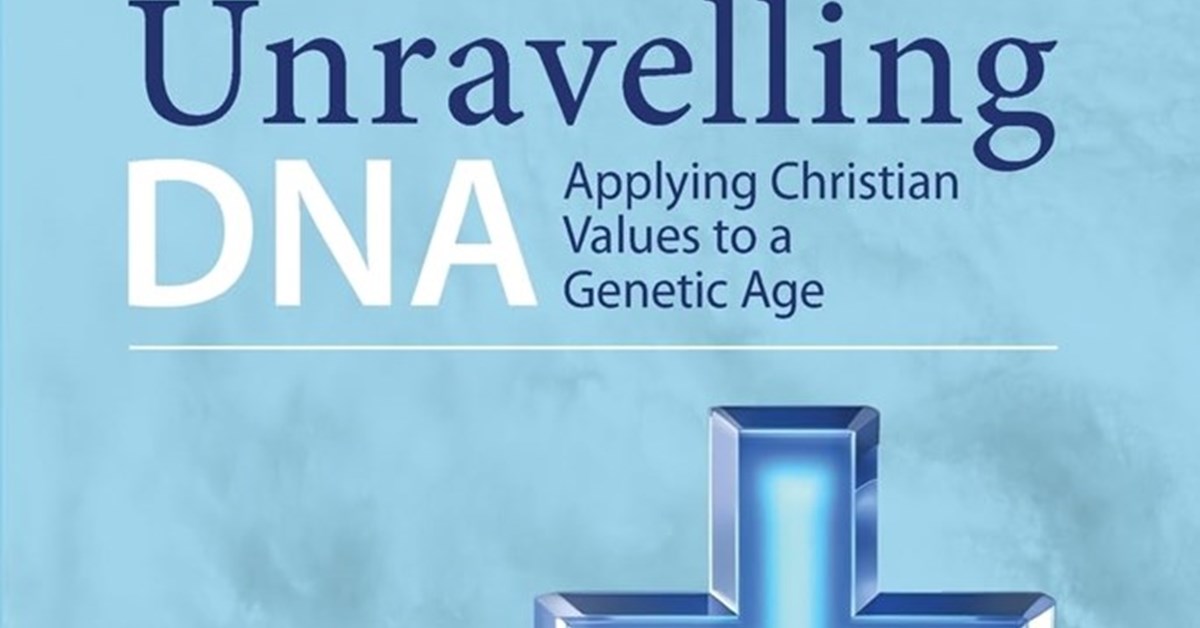
Unravelling DNA: Applying Christian values to a genetic age
Christopher Paul Wild
GBJ Books £12.99
(978-1-0682275-0-9)
Church Times Bookshop £11.69