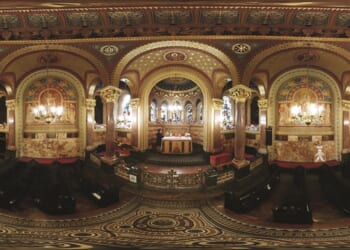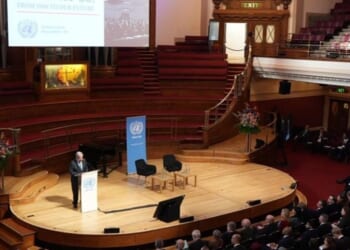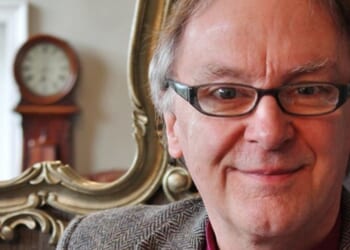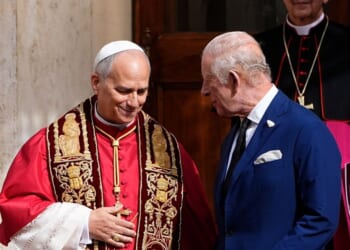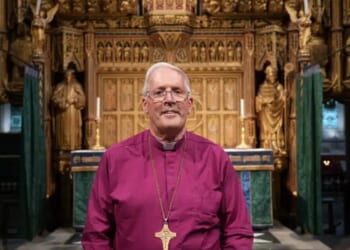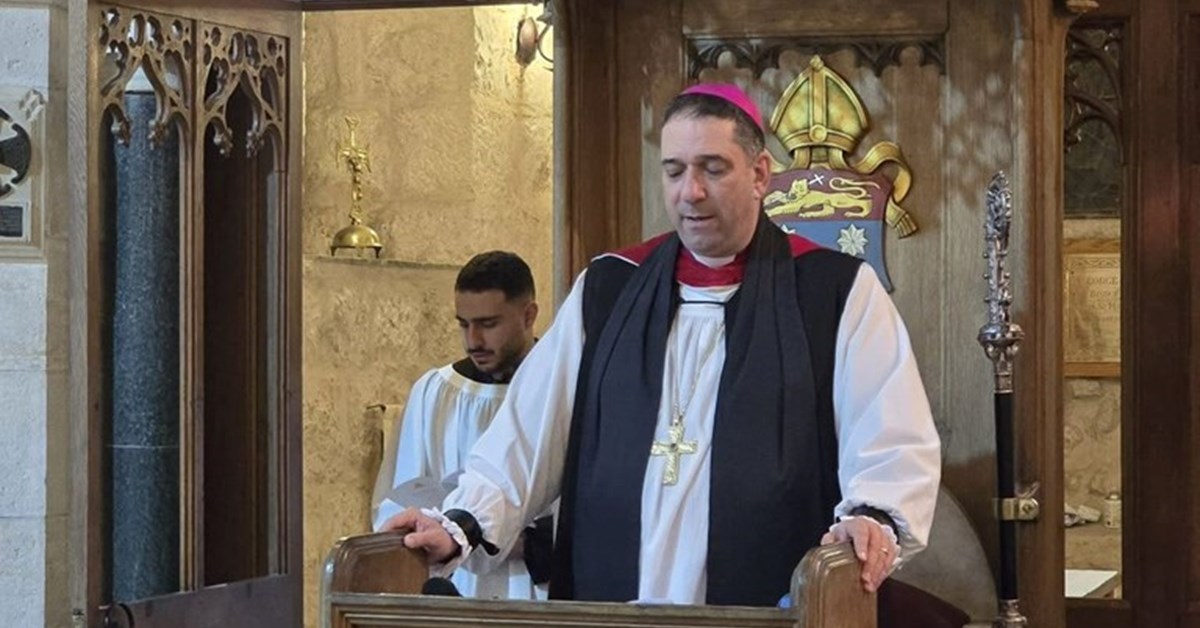
THE lives and ministries of Anglican Christians in the 50 years since the inauguration of the Province of Jerusalem and the Middle East on 6 January 1976 have “reflected the light of Christ into one of the most conflicted places in the world”, the Archbishop in Jerusalem, the Most Revd Hosam Naoum, has said.
“From Galilee to the West Bank, to Gaza and across our borders into Jordan, Lebanon, and Syria, our mission remains the same: to be a witness to the life-giving Gospel of Jesus Christ in an area torn by bloodshed and unrest,” Archbishop Naoum said on Tuesday.
The new Province of the Anglican Communion brought together the dioceses of Jerusalem, Cyprus & the Gulf, Iran, and Egypt. Its roots lay in the founding of the Jerusalem bishopric in 1841, later an archbishopric, and its emphasis was on local leadership.
Its first elected President Bishop was Bishop Hassam Dehqani-Tafti, father of the Bishop of Chelmsford, Dr Guli Francis-Dehqani.
Bishop Dehqani-Tafti wrote in his first letter as President Bishop: “The Church in Jerusalem and the Middle East have decided to be counted an adult church and a growing community.
“This is not going to be easy, because we are made of four distinct dioceses, very different from one another and situated in the most sensitive part of the globe. We are a tiny minority in the midst of Islam, Judaism and other religions existing in the area. We have no one common language of our own. If we were to travel from one end of the of the province to the other, we would have to deal with about 18 different currencies.”
He continued: “Though the church in the Middle East is small in number, it is great in potential influence, and above all in the work of reconciliation.”
The 50th anniversary also marks the formation of the Anglican charity the Jerusalem and the Middle East Church Association (JMECA), which changed its constitution as a mission agency to one working in partnership with the new Province. Its present chair is the Revd David Longe.
In an article for the JMECA website, Dr Francis-Dehqani describes the 50 years as “testament to the faithful and persistent witness of this beloved and significant province, which formed me and still informs much of my ministerial life.”
A child of nine in 1976, she had “distinct memories of there being something major afoot in the life of the Church” and from her father’s written recollections and those of Bishop Clive Handford, Bishop in Cyprus & the Gulf. She had been “struck by the wisdom shown in complex negotiations”.
“The complexities of each diocese were heightened by international geopolitics and, it ought to be recognised, by the high levels of competitiveness within the differing characters in this process,” she writes. “In all of it there was for my father a real desire that the authentic identities of the various communities involved should be recognised, preserved and celebrated.”
The past 50 years are acknowledged to have included political upheaval on a scale unimaginable in 1976. The Islamic Revolution, Lebanon’s civil war, and the “Arab Spring” uprising have all occurred. Archbishop Naoum described the region as “battered and bruised, but not defeated”, when he addressed the General Synod in July. He described the mission of the Province and its support for hospitals, clinics, schools, rehabilitation centres, and guest houses as its “arms of ministry, in which we show God’s faith, or our faith in God”.
Dr Clare Amos, a director and trustee of the JMECA, was at the inauguration ceremony in 1976, as the newly arrived course director at St George’s College. She acknowledges that, with Egypt now autonomous and Iran a minimal presence, the two viable working dioceses are Jerusalem and Cyprus & the Gulf, which will be marking its own anniversary this month.
“The diocese of Jerusalem has to be very diplomatic in treading very carefully along difficult and narrow lines,” she says. “Christian communities here feel increasingly vulnerable and need to stand together.
“But among so much division and fragmentation, the good news is the strengthened ecumenical relationships. The province stands as a truly international Christian community. It knows it needs to stand together as a minority of a minority.”
And pilgrims are invited to return. The way to help Christians in the Holy Land is to visit, “to support the ailing community and to listen to the voices of the suffering people of this land, and those standing in solidarity,” the Dean of St George’s College, the Very Revd Canon Richard Sewell, has written recently in the Church Times last month (Comment, 19/26 December).