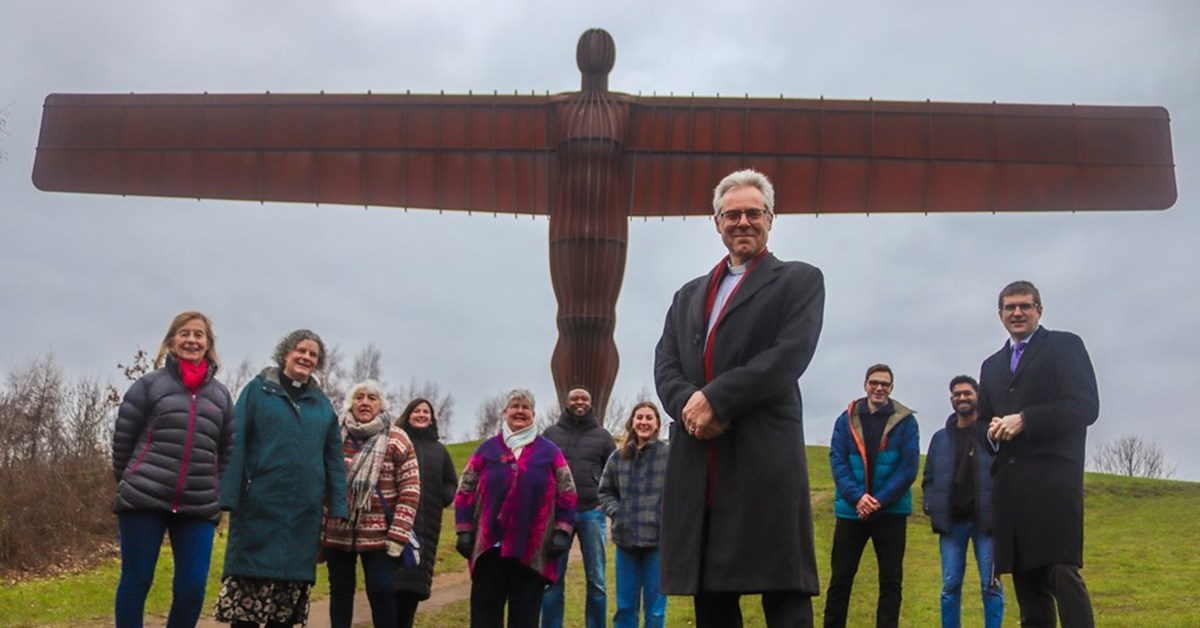
THE next Bishop of Durham is to be the Ven. Rick Simpson, currently Archdeacon of Auckland, Downing Street announced on Thursday morning.
He succeeds the Rt Revd Paul Butler, who retired in February 2024 (News, 21 July 2023), and takes the reins from the Acting Bishop, the Rt Revd Sarah Clark, Bishop of Jarrow, who was appointed Bishop of Ely last month (News, 30 January).
The news comes almost exactly a year after the announcement that a previous nominee had withdrawn from the process (News, 17 February 2025).
Archdeacon Simpson was educated at Keble College, Oxford, and trained for ordination at Wycliffe Hall. He was ordained priest in 1994 and served his title at St Gabriel’s, Heaton, in Newcastle upon Tyne, before becoming Priest-in-Charge of Holy Trinity, Jesmond, and St Barnabas and St Jude, Newcastle on Tyne, until 2006.
He has since served in the diocese of Durham, as Priest-in-Charge of St Brandon’s, Brancepeth, and as Director of Initial Ministerial Education (IME 4-7) for both Durham and Newcastle dioceses. He took on the same post at Lindisfarne College of Theology in 2009, and became Archdeacon of Auckland in 2018.
The local appointment has been welcomed. Bishop Clark said: It “places a person who already loves the people, parishes, and communities of Durham diocese and the north-east at the heart of this hopeful new season.
“The voice he will bring to the wider Church and national roles will be shaped by his long experiences of the challenges and joys of life and faith in this land of Cuthbert, Bede, and Hild.”
The Dean of Durham, the Very Revd Dr Philip Plyming, said: “[Rick] is well known and widely respected across the diocese, and his blend of missional energy and wise leadership, both rooted in a deep sense of trust in God, are what we have been praying for in our next Bishop. At the Cathedral, we look forward very much to working with him and seeing God continuing to be at work in this generation.”
The Archbishop of York praised Archdeacon Simpson’s dedication over many years. “He has a wealth of experience in supporting and enabling parish ministry,” he said.
“His deep local knowledge of the diocese will be an asset in his new role as Bishop of Durham. Please join me in praying for Rick and for the diocese as he begins a new chapter of ministry, inspiring all to grow in mission, leadership, church life, and in engaging younger generations.”
Speaking from his car on a whistle-stop tour of the diocese on Thursday morning, the Bishop-elect conveyed why, as someone originating from the south, he had remained in the north-east throughout his ministry, “and wouldn’t want to be anywhere else”.
He said: “It’s a beautiful part of the country. I’ve always loved the people, ever since moving up here. There’s a good directness and straightforwardness, and, in many places, that sense of community. In the places where the Church is thriving, where good things are being done in the community and the gospel is being proclaimed in ways that are relevant to people and accessible to them, it’s at the heart of neighbourhoods, and the way it serves them is making a difference. There are real challenges across the Church of England in terms of sustainability, of course, but I don’t believe the inevitable decline story.”
More than half the parishes in Durham are in the highest 20 per cent of the most deprived in the country, and one third are in the top ten. A study of one deanery, at the start of 2020, forecast that, by the end of the decade, only three of the current churches would have “viable congregations” (News, 15 March 2024).
Archdeacon Simpson has been closely involved with the diocese and deaneries in Durham’s Transformation vision, which received £8 million from the Strategic Development Fund, and a further £2.6 million from the Diocesan Investment Programme. This was, he said, a complicated project, that had to be managed with accountability, “but the purpose of it is simple — enabling the Church to thrive so that it serves our communities well”.
Part of the money is for parish regeneration — something close to his heart, he said. There is also support for schools: the Bishop-elect had just come from Whitburn Academy, where he described the “amazing work of the school chaplaincy team, both within the school and in the wider community, explicitly based on faith. The kids were speaking about how it made them happy to be doing things they could see were kind and good for other people. It was an absolute joy.”
Archdeacon Simpson was a member of the Wilkinson-Jay response group on safeguarding. “Everyone I’ve worked with in the Church and in safeguarding is utterly committed to trying to continually improve safeguarding. We take it totally seriously,” he said on Thursday.
“For very good reasons, it generates deep feeling, but it is complicated, and actually finding the best way, which will be the safest to make the Church safest for people, is not always obvious. It’s really important, as we continue to go forward with the process that Synods have been engaged in and still are; that we are keep attending really carefully to the perspective and the voice of victims and survivors.
“We need also to see what’s working well in the Church already, and not to fix the things that are not broken. Our diocese was audited by the independent auditors last year. They were casting a light on the things that were working well, and the people who were working well, with real commitment. We need to ensure we retain the good while actually aiming at improvement.
“I’m really hopeful that Durham will see more and more examples of churches finding ways forward and growing,” he concluded.
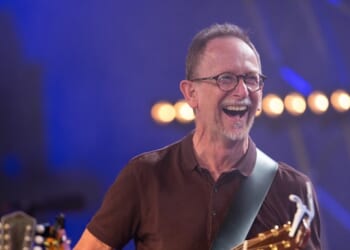
For recreation, he enjoys the outdoors, especially wildlife photography; playing guitar; sport; films; and novels. He is married to Rachel, and they have ten godchildren and one cat. He will be installed as Bishop of Durham in the summer.