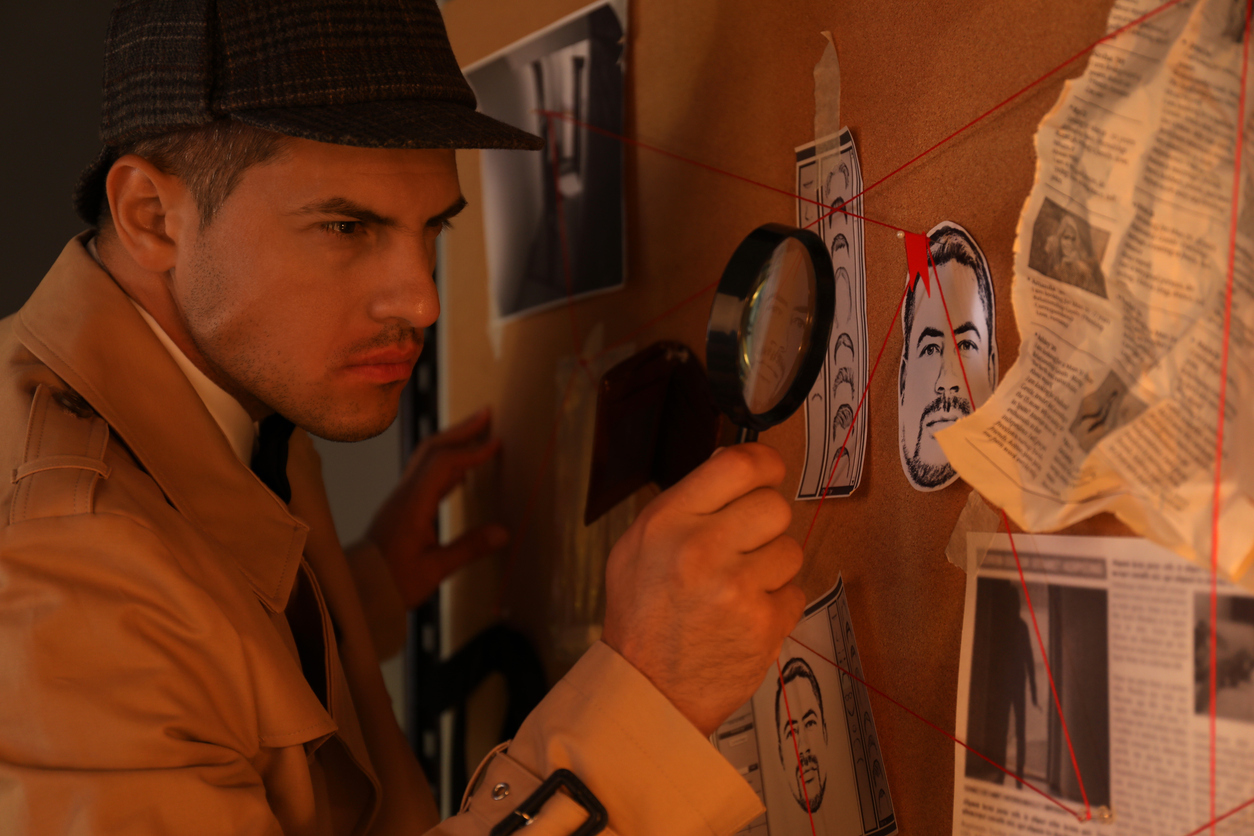
Legendary detective Benoit Blanc (Daniel Craig) will face yet another devilish crime Nov. 26, when “Wake Up, Dead Man: A Knives Out Mystery” lands in theaters. (It’ll head to Netflix Dec. 12.) And this time, religion takes center stage — with Blanc investigating the murder of a charismatic priest.
Maybe it’s fitting that faith sneaks into director Rian Johnson’s popular mysteries. While we can’t say how Christian faith will be treated in his latest Knives Out mystery, faith itself is incredibly important in mystery stories themselves. Those stories might not be pinned to faith in God, but faith in so many things that Christians believe are rooted in God’s character: faith that truth can be known, justice can be found, and that a sense of divine order can be restored.
I think that’s a big reason why mysteries — especially murder mysteries — are so popular today.
True crime tales dominate our podcast feeds. Crime procedurals are everywhere in network television. In an age in which few people read and fewer still buy books, sales of mystery novels are up.
We want to see justice triumph and the bad guys get caught. And sometimes we’re willing to wade through a little death and blood to get there.
From where I sit, that’s a bit of a paradox. I’m part of Plugged In, a faith-based review outlet that details content concerns in movies, TV shows and just about every other bit of media out there. And when I write my review of “Wake Up, Dead Man,” I’ll definitely call out all the death and blood we might see. We’re not going to praise a film for offing innocent folks, right? Murder: That’s bad.
But we all know it’s bad. And we all know it happens. Death and sin and evil have been part of our world since Adam and Eve were kicked out of the Garden. The question is, what are we going to do about it?
I don’t think it’s an accident that some of the world’s greatest mystery writers have been Christian. Catholic thinker G.K. Chesterton wrote a ton of Christian works, but he’s perhaps most famous for his Father Brown mysteries. Dorothy Sayers was a close friend of C.S. Lewis and wrote her own share of apologetics works, but she’s best known for her dynamite murder mysteries. More recently, P.D. James — whose whodunits have sold more than 10 million copies in the U.S. alone — was a committed Christian.
“What the detective story is about is not murder but the restoration of order,” James told Face magazine in 1986.
Chesterton presaged James’ thoughts in 1925’s How to Write a Detective Story.
“The first and fundamental principle is that the aim of a mystery story, as of every other story and every other mystery, is not darkness but light,” he wrote. “The story is written for the moment when the reader does understand, not merely for the many preliminary moments when he does not understand.”
I like that. And it reminds me of the first lines of Genesis — when the “earth was without form and void, and darkness was over the face of the deep … and God said ‘Let there be light,’ and there was light” (Gen. 1:2-3, ESV).
We live in a dark, chaotic world where truth is hard to find. We doubt the news. We wonder if the latest viral YouTube vid is real or AI. Many people think that morality itself is sometimes a flexible thing — able to bend and twist with their own whims. “What is truth?” Pontius Pilate once asked. The culture is asking that same question every day. The crimes and evils we see in murder mystery stories are predicated on that evil and chaos. And its villains hope the truth will never be found.
And then the light comes.
The mystery story reminds us of that. It starts in a place of chaos and sin and resolves into order, justice and truth. And through these works of fiction, we see a glimmer of an all-important fact: Evil is real — but so is goodness. The world’s injustices can feel overwhelming, but we can find and embrace something better.
And when our world’s own book closes, we’ll find our happy ending.
Paul Asay is a senior editor at Plugged In, Focus on the Family’s media discernment website. He’s the author of several books (including the recently published Beauty in the Browns) and lives in Colorado Springs with his wife, deaf dog and several unruly houseplants.