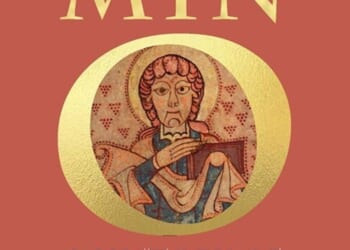
THE story of Codex Amiatinus, the oldest intact, complete Bible in existence (Arts, 4 January 2019), and described by researchers at Durham University as “probably the most important book ever made that we still have today”, is being told in a new light-and-sound installation that has been on tour in north-east England.
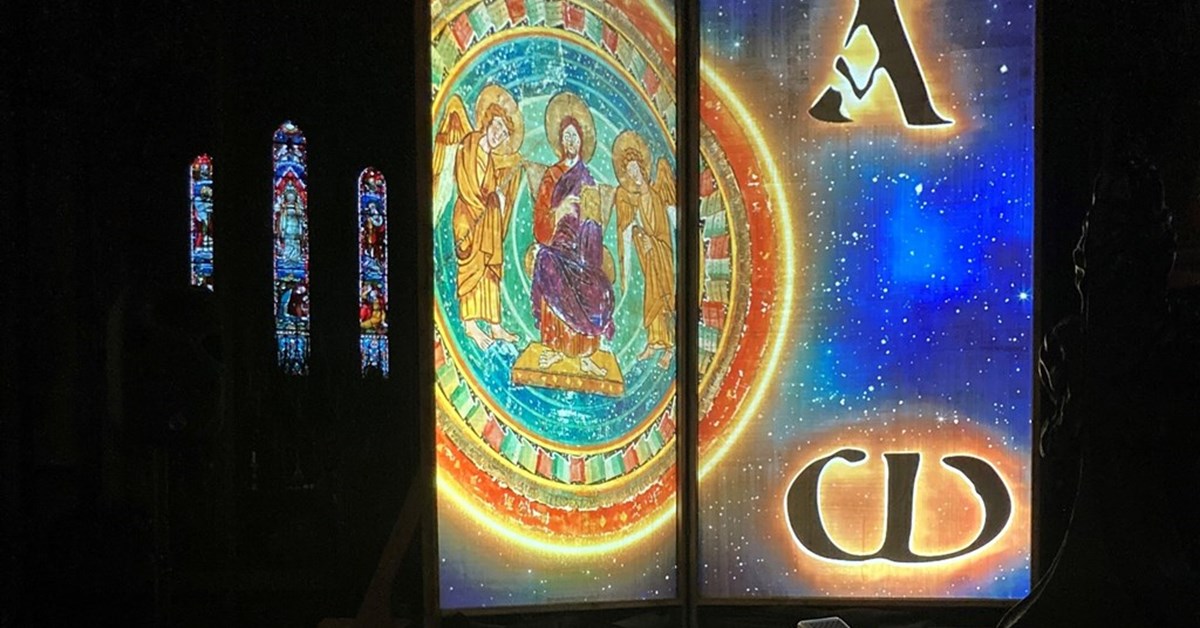
The free show, Rivers of Ink, uses video-projection mapping and original sound to bring Codex Amiatinus alive. It has been created by the Projection Studio, in collaboration with Durham University researchers, who will also give talks after some screenings.
The early eighth-century manuscript — an entire Latin Bible contained within a single, heavy volume — was produced at the twin monasteries of Wearmouth and Jarrow.
Hundreds of animal skins were needed to produce the book, along with the labour of highly skilled scribes, artists, and bookbinders. It would have taken several people to handle the sheer weight of it. The manuscript is presented as the culmination of centuries of writing culture; the installation’s title reflects the vast quantities of “ink, labour, and chains of thought” flowing across the generations.
The original is now held in the Biblioteca Medicea Laurenziana, in Florence. An alteration on its dedication page obscuring its true provenance meant that its origins were concealed for centuries. That page has been digitally restored back to its original state by the Projection Studio, which has used digital techniques to restore the page to its original state.
The Rivers of Ink artwork is projected on to a large-scale model of an ancient writing tablet covered with papyrus sheets. Sound, multilingual voices, and textures drawn from original historical sources, have also been used to create the work. It has been on show at High Pittington, Holy Island, Newcastle, and Jarrow, and the tour concludes this weekend in Durham Cathedral.
Research into the Codex Amiatinus by a doctoral researcher, Lauren Randall, and Professor Francis Watson, Professor of New Testament at Durham University, has helped to shape the artwork. “It filled us with a genuine sense of awe when we realised the key influence Codex Amiatinus had on the Western world for hundreds of years,” Ms Randall said.
“It’s got a huge legacy to it, and was made right here in the north of England. But, unlike the Lindisfarne Gospels, people don’t necessarily know about it, and we feel it’s something we absolutely should be celebrating. When people come away from the tour, we hope they will feel a renewed sense of pride that this incredible book comes from the north-east.”