Minnesota’s fraud scandals have become the country’s number one news story, and conservatives are after someone’s hide. Countless tweets, etc., have demanded accountability and asked Republican politicians, what are you going to do about it? The administration is responding:
ICE agents Monday targeted Minnesota sites suspected in the state’s sprawling, billion-dollar fraud scheme in a bid to root out potential illegal migrants amid the shameful scandal, authorities said.
“DHS is on the ground in Minneapolis, going DOOR TO DOOR at suspected fraud sites,” the Department of Homeland Security posted on X along with a video of a pair of DHS agents entering Nicollet Tobacco & Vape in Burnsville, about 17 miles south of Minneapolis.
***
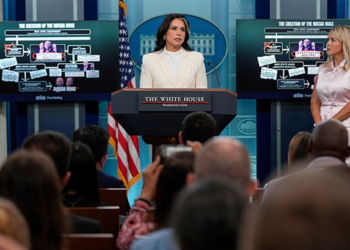
“Right now in Minneapolis, Homeland Security Investigations and ICE are on the ground conducting a large-scale investigation on fraudulent daycare and healthcare centers, as well as other rampant fraud,” DHS Assistant Secretary for Public Affairs Tricia McLaughlin said in a statement to The Post.In the video shared by the agency, two immigration officers enter the Burnsville business and quiz a woman behind the counter about a nearby building that the agents said appeared closed and asked her if she had “seen any people come and go from there” in recent days.
ICE is the wrong tool for the task at hand. The Minnesota Somali story is not about illegal immigration. The massive frauds that have been uncovered over the past four years have not been perpetrated, to any significant degree, by illegal immigrants. Rather, Minnesota’s Somalis pretty much all came here legally, as refugees. (There probably was widespread asylum fraud going back many years, but that is not something that ICE can address.)
Moreover, the vast majority of Minnesota Somalis are not only legal immigrants, they are American citizens. Of those convicted so far in the Feeding Our Future scandal, the large majority have been citizens. This is why Somalis have become a significant voting bloc. The scandal is not illegal immigration, it is vote-buying.
So deploying ICE is pointless, even though a few illegals might be identified and rounded up. That said, there are several things the administration could to in response to the fraud scandals.
The feds could severely limit federal Medicaid funding for Minnesota. That would be a huge deal: it would have a major impact on the state’s budget. But most dollars that have been stolen by Minnesota fraudsters have been federal tax dollars, not Minnesota dollars. If the Walz administration can’t be trusted to safeguard Americans’ tax dollars, why should the federal government continue to shower billions on that corrupt cabal?
Another thing the feds could do is beef up staffing in Minnesota’s U.S. Attorney’s office. State enforcers have been AWOL on the Somali frauds, presumably for political reasons. The entire burden has been carried by the FBI and the U.S. Attorney’s Office. But, given the magnitude of the frauds, the resources at hand are completely inadequate to the task. Most fraudsters are going free, simply because there are not enough prosecutors to go after anyone but the biggest fish. And that was true even before federal investigators had identified another $9 billion or more in Medicaid fraud.
I don’t know whether the Department of Justice has funds on hand that could be funneled to Minnesota to expand the U.S. Attorney’s Office, or whether Congressional action would be needed. But one way or another, the most practical action the administration can take to combat the frauds that have come to light is to bring more legal resources to bear.
So I understand why the administration is publicizing ICE actions that are essentially irrelevant, but I hope we will soon see more effective countermeasures coming from Washington.
UPDATE: I should add that the Small Business Administration has already announced a freeze on all grant funding to Minnesota on account of that state’s pervasive frauds. I take it that crime in the covid-era Paycheck Protection Program is the main connection to the SBA, although Administrator Kelly Loeffler may have taken the state’s broader reputation for corruption into account.
Likely more federal agencies can and should follow suit.