RELIGIOUS broadcasting is increasingly becoming “the poor and underfunded relative in a BBC which, I believe, needs to be reminded of its core business”, the Archbishop of York has said.
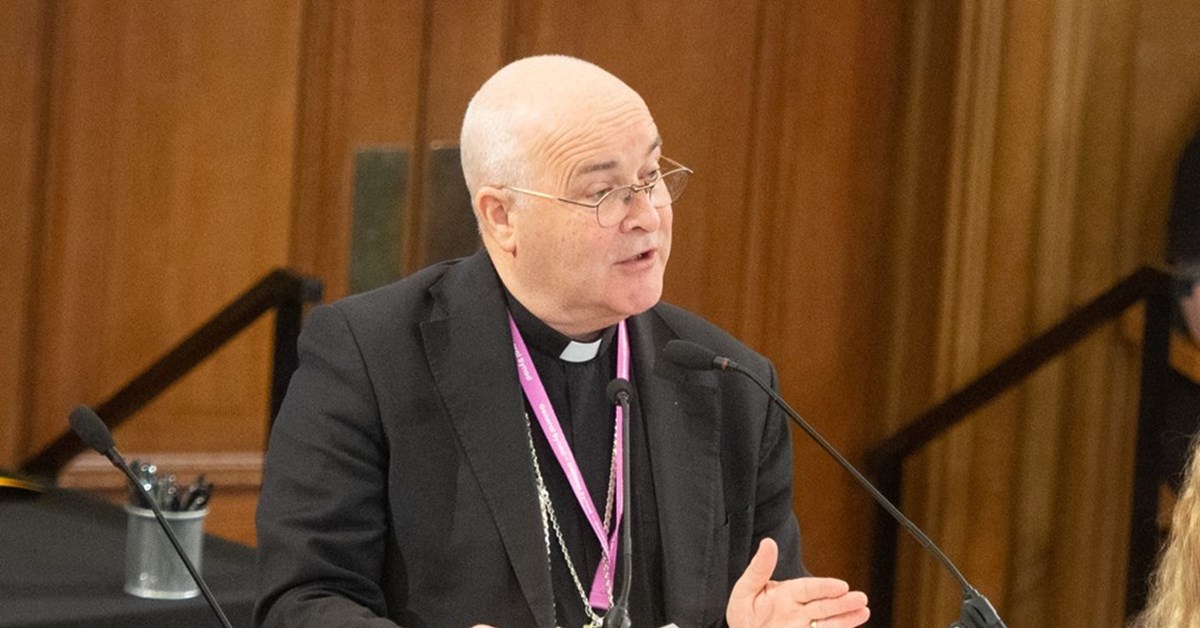
Speaking on Tuesday during a Religion Media Centre briefing on the Green Paper on the BBC Royal Charter review (News, 16 January), Archbishop Cottrell spoke “with sadness and some distress” about the “sometimes appalling lack of religious literacy in so much of the BBC”. He described religious and public-service broadcasting as “a precious bulwark against polarisation, intolerance, prejudice, and chaos.
“The fact is that religion is a vital part of how millions and millions of people in Britain today get their belonging, their values, their purpose, and their identity,” he said. “For those of us who have faith, our faith does not live in a box or a compartment in our lives. It is about the whole of life.”
Community centres including the local church, mosque, gurdwara, and synagogue, and institutions such as the BBC, the NHS, the Scouts, and the Women’s Institute, bound the nation together, he said. “We need policies at every level in government life, and in the BBC that strengthens those institutions. It troubles me that I don’t see that larger political vision to do that.”
Figures show a dramatic decline in religious broadcasting across the networks. The volume of original UK-produced content on religion and ethics at peak time on all public-service broadcasting platforms had fallen by 85 per cent between 2011 and 2022, the broadcaster Roger Bolton told the briefing.
He found a mismatch between the importance of religion to people throughout the country and the way in which it was represented in the media, however well that was done. The debate on the Green Paper should focus on “the fundamental question of what we want the BBC to do and what the need is”, he said. “We’re at crisis point, particularly when you look at the shifts in technology to digital.”
The RC Bishop of Salford, the Rt Revd John Arnold, appreciated the variety that religious broadcasting offered, but as important were “the opportunities that there are to build a sense of collaboration in our society. which is cosmopolitan.
“We could do so well in helping people of different faiths to understand one another through showing what we believe in common, . . . to show a respect for the diversity of faiths in our society at the moment, and also to give that lead to those young people who, it seems, right across the board, are showing an increased interest in faith and in some sort of affiliation to a Christian Church.”
The executive director of the Sandford St Martin Trust, Anna McNamee, did not want to underestimate the BBC’s contribution in the field of religious broadcasting historically. It had, she said, been “absolutely fundamental”.
But the downward trajectory had to be acknowledged. The consultation currently taking place in the Department for Culture, Media and Sport was “an opportunity to actually not just look at the BBC now but at what we want it to be and what we need it to be moving forward, given all the changes that we’re experiencing.”
The Head of Digital at the production company CTVC, Alison Green, detected a sense of “light” religious programming finding it easier to get commissioned. “I think it’s much tougher to come up with real journalistic religious-educational programming. I think it’s so important to think about where that content is placed,” she said.
“The strength of places like YouTube is that you can really make programming for different audiences there, and there’s an appetite in those spaces for journalistic content. . . Moving into different platforms and broadening the audience definitely allows for more of that content to be made.”
Rabbi Dr Jonathan Romain, the Convener of the Rabbinic Court of Great Britain, considered the BBC’s religious broadcasting to make an important contribution to general knowledge, and as “part of the social cohesion to understand the person at the desk, in a classroom, living in the house opposite or whom we meet in the street. Don’t lose sight of that,” he warned.
He also spoke of a decline in trust in the BBC, particularly among the Jewish community, about an institution that was supposed to be rooted in impartiality. Among “own goals” were references on Holocaust Memorial Day to “six million people” as opposed to “six million Jews”. The BBC was a valuable institution in so many respects, but it needed to do much more in the religious sphere, he said.
Bishop Arnold emphasised that “85 per cent of the world’s population believe in one of the major faiths. . . If we don’t underpin our broadcasting with religious and ethical teaching, then we’re going to go the way that so much dangerous damage has been done on social media — by just people’s opinions.”
Archbishop Cottrell concluded: “I hear the cry of friends, sisters and brothers, and other faith communities for their almost invisibility in some areas of broadcasting —or being seen as a kind of quaint exotic.
“I want to say I believe public-service broadcasting can survive as a valued part of our society and a new media landscape, but that would require an ambition from within the BBC and within Government that I’m not sure is there at the moment. It’s got to be a vision which is more than surviving alongside others.”