CALLS to offer a generous welcome amid fears about immigration were issued by Bishops in their Christmas sermons this year.
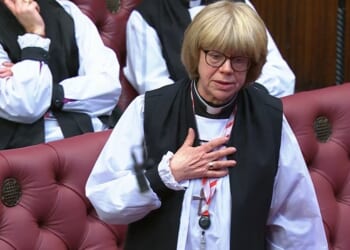
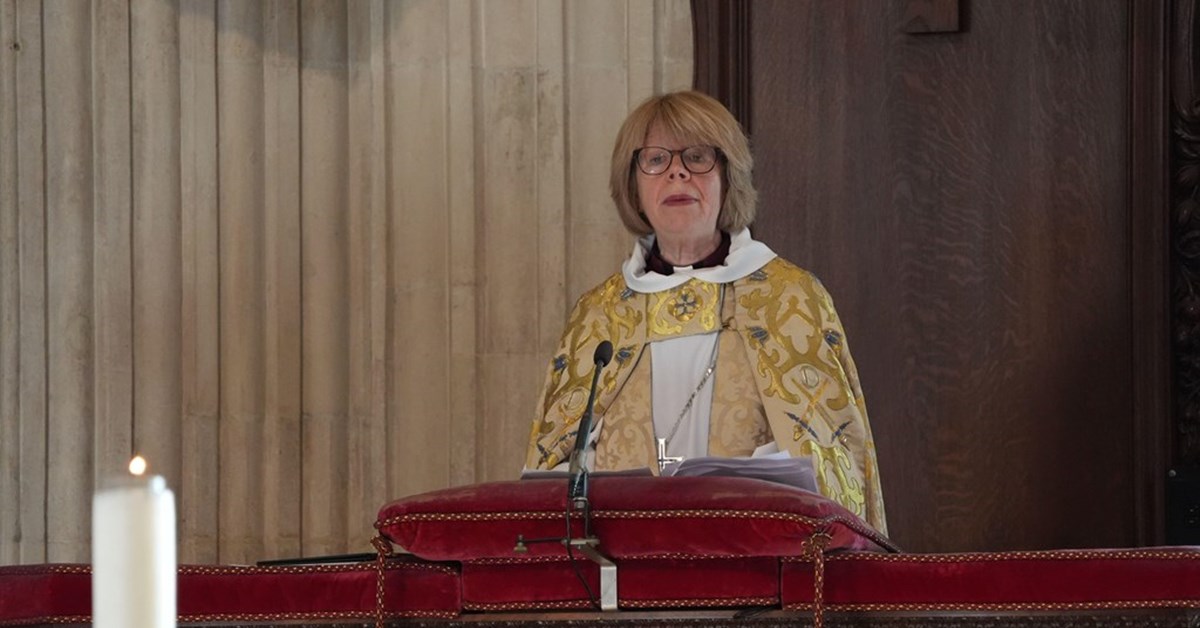
“Our national conversations about immigration continue to divide us, when our common humanity should unite us,” the Bishop of London, the Rt Revd Sarah Mullally, who is the Archbishop of Canterbury-elect, said in a sermon preached in St Paul’s Cathedral. This and other issues — including the “weight of economic pressure” — could “leave us wondering whether the world is fraying at the edges . . .
“Christmas does not ask us to ignore any of this. It invites us to see that God chooses to be born precisely into a world like ours. A world of limited resources and crowded homes. A world of political tension and uncertainty. A world where people do their best to offer kindness even when they feel stretched. God does not wait for perfect conditions. God arrives in the midst of the incomplete.”
She prayed: “May the joy of Christ be born anew in us today, steady enough to sustain us and generous enough to overflow into the lives of those around us.”
The Archbishop of York, preaching in York Minster, lamented that “we have become fearful of each other, and especially fearful of strangers, or just people who aren’t quite like us. We cannot see ourselves in them. And we, therefore, spurn a common humanity.”
He warned: “Our fearful shielding of ourselves from strangers, the strangers we encounter in the homeless on our streets, refugees seeking asylum, young people starved of opportunity and growing up without hope for the future, means that we are in danger of failing to welcome Christ when he comes. . .
“This Christmas, and especially at Christmas, we must find ways of balancing the needs of keeping everyone safe, and yet at the same time seeing and adoring the face of Christ in the face of strangers, and especially in the faces of those who are in need; and then dismantle, tear down the walls, which, in keeping strangers out, keep Christ out as well.”
Overcoming fear was also a theme of the message of the Bishop of Chelmsford, Dr Guli Francis-Dehqani, who said that “fear of the outsider has led to deeply troubling rhetoric and policy proposals on immigration”.
The Bishop of Salisbury, the Rt Revd Stephen Lake, preaching in Salisbury Cathedral, said: “A future of faith will be happier, will help our hearts sing and will unite us around the Prince of Peace. This is why the recent attempt by some to take the Christian message hostage for a political end is doomed. Christ is in Christmas and does not need to be ‘put back’ — the clue is in the name: Christmas.”
Amid online reports of packed Christmas services, following a year in which the Bible Society reported a “quiet revival” in churchgoing, some bishops spoke of sensing a shift in the nation’s appetite for faith.
The Bishop of Rochester, Dr Jonathan Gibbs, said: “Up and down this country, over the last few months, there have been stories of people wandering into churches after having had a dream about Jesus Christ or having felt compelled to buy a Bible and to start reading it. They don’t know why this has happened, but they have come along to church and wanted to know more.
“I have seen this happening time and again here in this diocese, when people at confirmation services — especially people in their twenties and thirties — have shared the story of what has led them to become followers of Jesus, often having had little or no previous connection with the Church.
“Something is going on, or, rather, God himself seems to be up to something — way beyond what we as Christians have been doing to share the message of the gospel with the people around us.”
He continued: “Humanly speaking, I believe this is happening because people have begun to realise that the things in which they had placed their hopes — things like ever-increasing prosperity or the ability of science and technology to solve all our problems — have started to crumble in the face of economic crises, global pandemics, and climate change.
“In the midst of the chaos of today’s world, this is why people are turning once more to Jesus Christ, because he offers us hope instead of fear and light in place of darkness.”
The Bishop of Gloucester, the Rt Revd Rachel Treweek, said that she had detected “a yearning for certainty amid the turbulence, anxiety, and uncertainty, and the endless messaging of crises.
“But I also perceive a yearning for mystery — a reaching out for something beyond ourselves and how things appear to be. You only have to look around you to see all that continues to spring up regarding mystic otherworldliness”.
In his Christmas broadcast, the King sought to emphasise points of commonality across faiths. Having observed that the wise men had “relied on the companionship and kindness of others” and “found an inner strength”, he suggested that, “in times of uncertainty, these ways of living are treasured by all the great faiths and provide us with deep wells of hope: of resilience in the face of adversity; peace through forgiveness; simply getting to know our neighbours and, by showing respect to one another, creating new friendships. . .
“As I meet people of different faiths, I find it enormously encouraging to hear how much we have in common; a shared longing for peace and a deep respect for all life. If we can find time in our journey through life to think on these virtues, we can all make the future more hopeful.”
He closed by saying that “the greatest pilgrimage of all is the journey we celebrate today — the story of The One who ‘came down to Earth from Heaven’, ‘whose shelter was a stable’, and who shared his life with ‘the poor and lowly’.”