W. H. AUDEN was the most naturally talented poet of the 20th century. With a verbal felicity that bordered on wizardry, he could write erudite, amusing, wry, ironic, comic, or serious verse in an extraordinary range of forms. In 1940, while in New York, he went to the cinema and was appalled to hear Germans in the audience calling for the death of Poles. He said at the time: “Jung hardly went far enough when he said that ‘Hitler is the unconscious of every German’, he comes uncomfortably near being the unconscious of most of us.”
He started to read Charles Williams and Kierkegaard and talk to his friends Ursula and Reinhold Niebuhr, and then returned to the faith that he had abandoned as a teenager to pursue the delights of the flesh. In “A Thanksgiving” at the end of his life, he wrote:
Finally, hair-raising things
That Hitler and Stalin were doing
Forced me to think about God
Why was I sure they were wrong?
Wild Kierkegaard, Williams and
Lewis
Guided me back to belief.
From then on, the Christian faith was fundamental to Auden’s poetry, though Ackroyd gives it scant attention. He focuses on Auden’s relationships, especially his sexual ones with short-term lovers, casual pick-ups, prostitutes, and criminals, including those under age. His sexual preferences are described in detail.
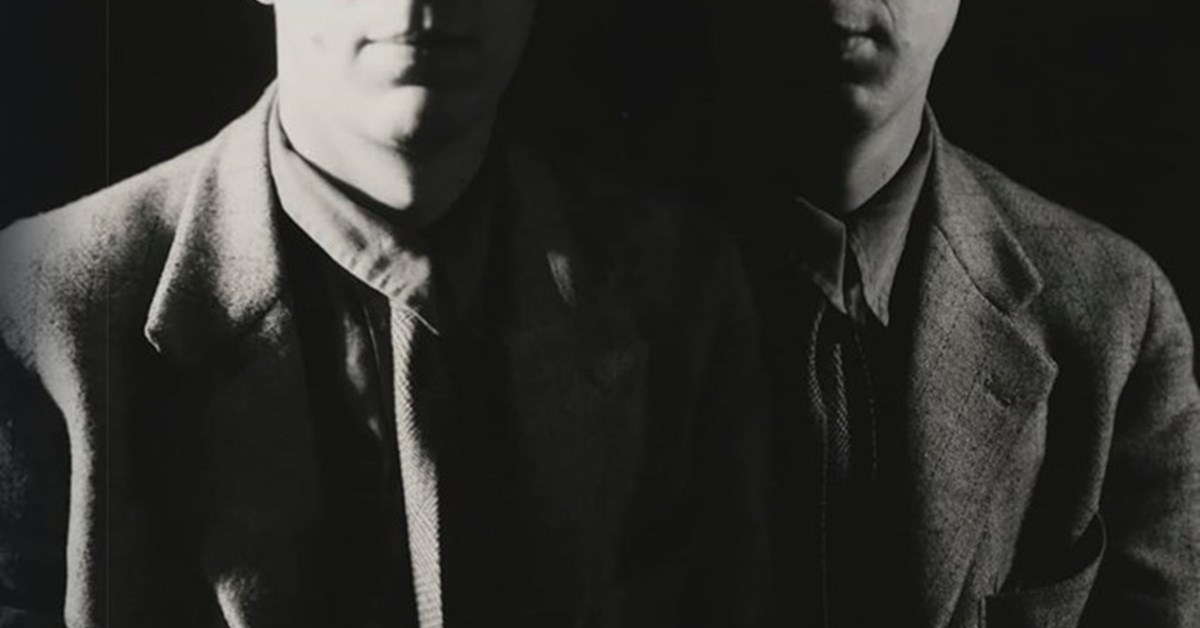
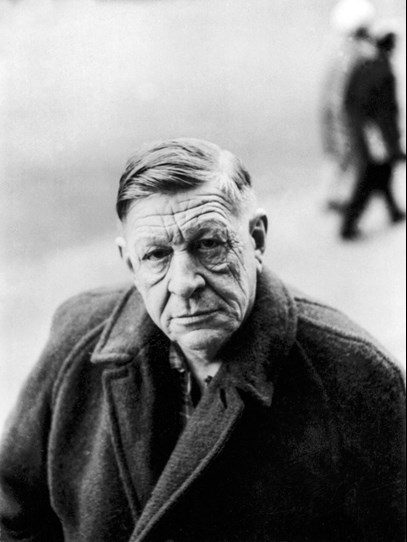 AlamyA portrait of the poet W. H. Auden, c.1968. He died in 1973, aged 66
Auden was a mass of contradictions, and Ackroyd gets it right in calling him “The Double Man”, which was the American title of the poem known in Britain as “New Year Letter”. The rooms in which he lived were squalid, with drink, papers, and cigarette ash everywhere. He did not wear underclothes and wore slippers even in the street. He rarely washed; so people complained that he smelled.
At the same time, he was a fanatic about punctuality and complained bitterly if people were late or a meal was not on time. He was rigid in his routine, which included hard work on his writing for the first part of the day, and he was totally dedicated and disciplined in cutting out all that was unreal or sham in his poetry.
Auden chain-smoked, drank huge quantities of alcohol, and looked ever more terrible as he got older, with a face so lined that someone said that a fly would break a leg if it tried to walk across it. What comes across from those who knew Auden at the time is his sheer unhappiness from mid-life onwards.
The source of this is twofold. Although Auden, with his strong sex drive, obviously found pleasure in his sexual relationships, I think he found his homosexuality, which, of course, was criminal at the time, a burden. He had been brought up by highly intelligent, loving parents, and he was always haunted by that ideal. Twice, he proposed to women.
And this leads to the second reason for his misery. In America, he fell in love with Chester Kallman and thought of their relationship as a marriage. Although they shared much of their lives together, Kallman never had quite the same view of it. As Auden wrote,
If equal affection cannot be,
Let the more loving one be me.
That loving, which was not returned in quite the same way, was the source of deep pain. The total effect of Ackroyd’s picture of Auden totally gone to pieces in the latter part of his life was so depressing that it sent me back to the last poems that he wrote. In what way was the terrible sadness of this broken man reflected in the poetry? Not at all. His poem about a fog in New York, which made him hunker down with congenial friends, ends “Thank you. Thank you. Thank you, fog”. And the last poem in his Collected Poems is a lovely lullaby, which contains the line “Let your last thinks all be thanks”.
Here is a final contradiction: the outer sadness, but the inner gratitude. As he put in “Precious five”, although we may want to shake our fist at heaven, in the end we are called “To bless what there is for being”.
The Rt Revd Lord Harries of Pentregarth is a former Bishop of Oxford. He is the author of Haunted by Christ: Modern writers and the struggle for faith (SPCK, 2018) (Books, 2 November 2018).
Auden
Peter Ackroyd
Reaktion Books £25
(978-1-83639-172-2)
Church Times Bookshop £22.50