THE prevalence of powerful and idiosyncratic world leaders in the present day is having an effect on the past. History faculties report a renewed interest in the “great men” approach to the subject, i.e. the thesis that history is governed by the actions of powerful individuals.
There is something of that in Alwyn Turner’s account of the 20 years between the two World Wars. We are given sketches of Ramsay MacDonald, Stanley Baldwin, George Lansbury, Oswald Mosley, etc. But Turner is a cultural historian; so added to the roster are John Reith, Billy Butlin, Gracie Fields, Henry Hall, and Benjamin Drage, who opened a furniture shop in Holborn in 1908 and popularised hire purchase. (“A small first payment and small monthly payments will enable men and women of moderate means to gain pleasant homes easily and safely.”)
Turner’s thesis is that the story of these two decades cannot be told merely by recounting the actions of political leaders. Far more important are the actions and attitudes of the people who put them there, which, after 1928, meant everyone over the age of 21.
Thus he sifts jackdaw-like through specialist histories of, for example, the BBC, motoring, the cinema. . . The treasure that he brings to light generally contributes to the story of the national mood, but he finds it hard to resist the quirky and inconsequential. Thus he uses the building of Wembley Stadium in contrast with (at the time) a firm plan to build a Channel tunnel as an illustration of the UK’s parochialism after the internationalism of the First World War — but then adds details of the first FA Cup match and the career of the first goal-scorer.
But when one chooses to dive below the surface story of the great men to tell stories about ordinary lives, the line between significance and fascination becomes necessarily blurred. Turner’s readers are the beneficiaries as he turns up gems such as this warning about the influence of the United States, from the Eastbourne Chronicle in 1928: “The printed sub-titles of the silent film have already taught the youth of Britain to bestrew its speech with the racy phrases of the Bowery and the ranch.”
He is perhaps most impressive when he plots national attitudes through trends in fiction and on stage: the rise of jazz, the nostalgic revival of music-hall acts, the bubble of interest in war accounts in 1928 (at a safe distance from the conflict), the rise of detection fiction (violent death mediated by logical deduction), the popularity of Mills & Boon romances (“fiction for the assembly-line age”).
There are inevitable gaps. A closer look at the decline of domestic service, for example — as attested by the scores of wishful “servant wanted” ads in the Church Times — would have provided important evidence of the changing attitude of women during this period.
But Turner does enough to depict the national characteristics that prevailed after the First World War — essentially a set of paradoxes: individualism and collectivism, pride and humility, respect and mockery, grit and a degree of frivolity. Together, they were strong enough to resist the temptations of Communism and Fascism to which other countries succumbed; strong enough, too, to furnish the British with what they needed to return to the battlefield in 1939.
Paul Handley was editor of the Church Times 1995-2024.
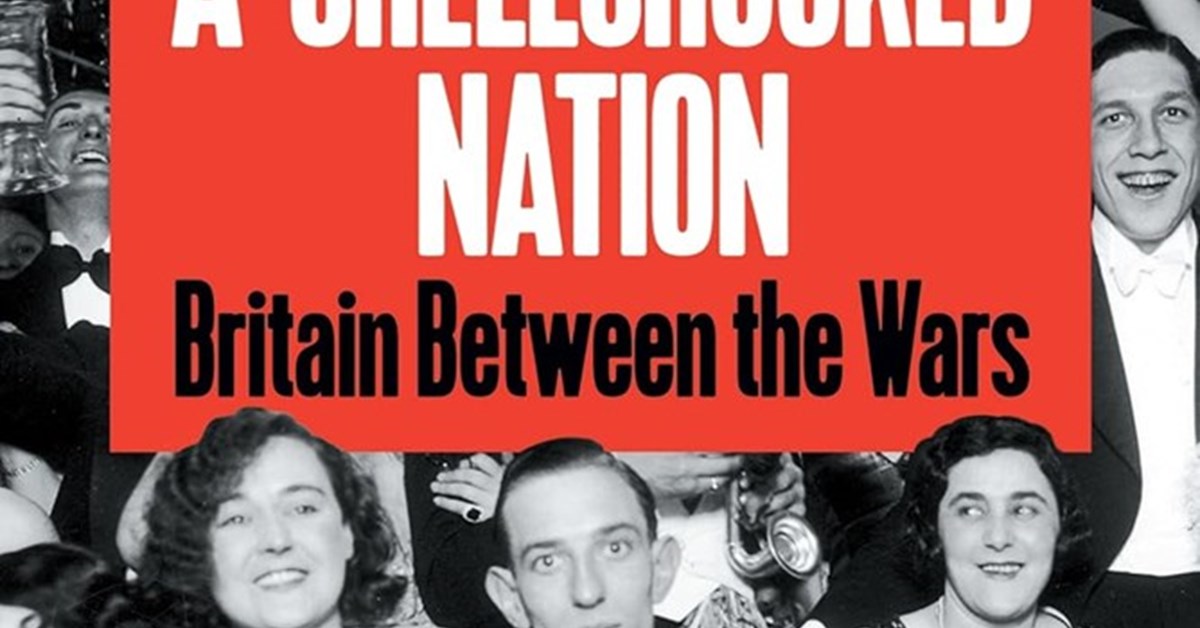
A Shellshocked Nation: Britain between the Wars
Alwyn Turner
Profile £25
(978-1-80522-187-6)
Church Times Bookshop £22.50