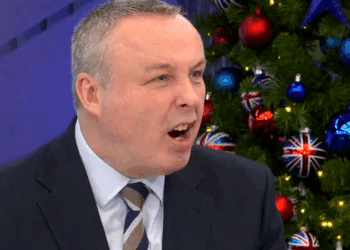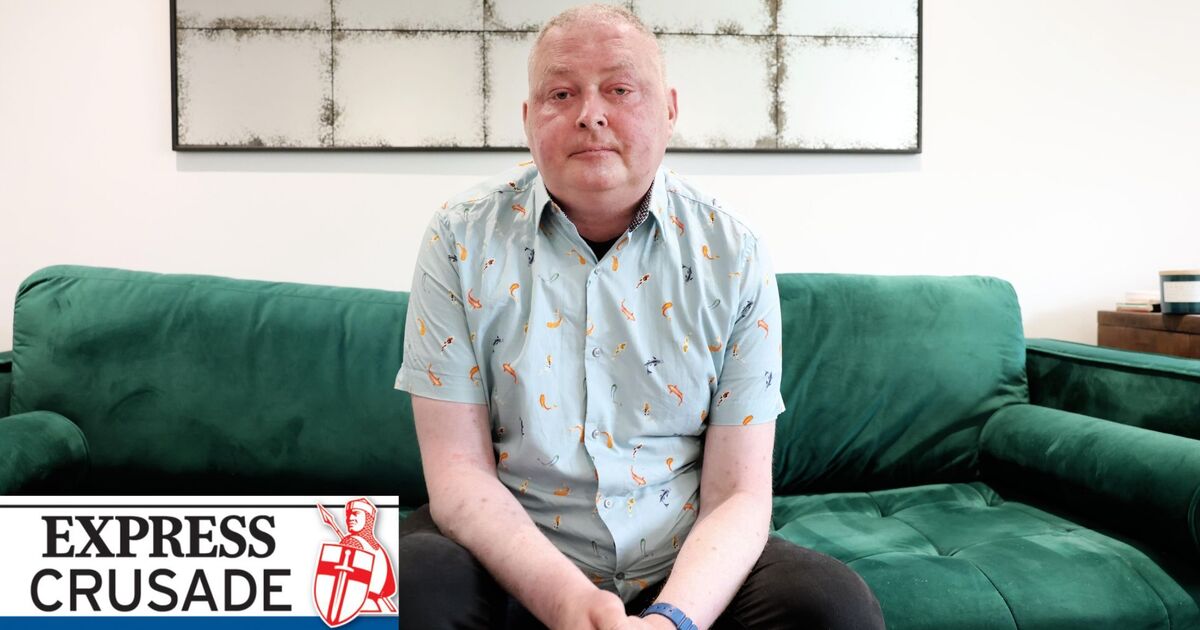
Robert Fisk says he’s been gifted a glimmer of hope (Image: Daily Express )
Lying in my hospital bed, trying to sleep because I’m not allowed any more morphine, this year I may feel a lot like a stretch of road that’s being dug up, filled in, and then dug up a few months later. But, unlike a motorist waiting at three-way temporary traffic lights for the fourth time in seven months, this is my dream scenario. And, after a surprising trip to Essex, there is a glimmer of hope that it might happen.
In scenes you won’t see on the latest series of The Only Way Is Essex, I travelled to the county to meet a surgeon for a third opinion on my hernia. As a recap for anyone new to my tales about my “cancer journey”: One of the many side effects of my incurable bowel cancer is a massive hernia. I’d say it’s as big as a baby’s head, and scans reveal it contains a lot of my intestines.
Read more: ‘We’ve written to Wes Streeting to demand crucial NHS change for patients’
Read more: ‘NHS must fix these gaping holes in patient care that I’ve had to battle’
Back in November 2024, I was devastated when a surgeon told me it was too dangerous to fix the hernia, meaning that any plans I had for a life where I don’t look like a freak were shattered.
And last Easter, he confirmed that after discussing the issue with another surgeon, they definitely wouldn’t be doing the operation.
Fast-forward to the present day, and I was prepared for the consultant to share the same opinion as the other surgeons.
At best, I was thinking he would say he would discuss the issue with colleagues, only to then tell me no, a few months later.
But instead, he said something I hadn’t heard during my quest for a yes in South London.
He said my hernia wasn’t as bad as he had feared it would be, and that I was looking very well for someone who had been on palliative chemotherapy for two-and-a-half years.
Instead of finding the negatives of my situation, he said he thought an operation to repair my hernia would be possible, and he would be happy to do it.
But in acknowledging that it would be a much trickier operation than a usual hernia repair, his solutions to make it simpler will require a lot of surgeons to say yes (and then a lot of hospital trusts to agree to spend money on procedures).
When my hernia first developed there was a reticence from medics to even discuss an operation because they were fearful any op would spread the cancer cells. And now I have far fewer cancer cells than I did before surgeons tend to say it’s too big to be operated on.
But in Essex, the surgeon wondered why, if I’ve been on palliative chemotherapy for two-and-a-half years and am doing well, a cancer surgeon doesn’t remove the primary tumour.
And he also suggested another operation to address another issue that might prevent a hernia repair from being as successful as he thinks it could be.
I have a meeting with a different surgeon in central London in March to get his thoughts on the chances of doing the first two operations.
I’m not too optimistic that everyone will agree that the three operations will be the best course of action.
But at least until I get a no in March, there’s a glimmer of hope I might get to look and live like a normal person – even if it does mean having lots of scars from where I’ve been cut into like a road that’s being repaired by a cable company, and then dug up by a water company several months later.