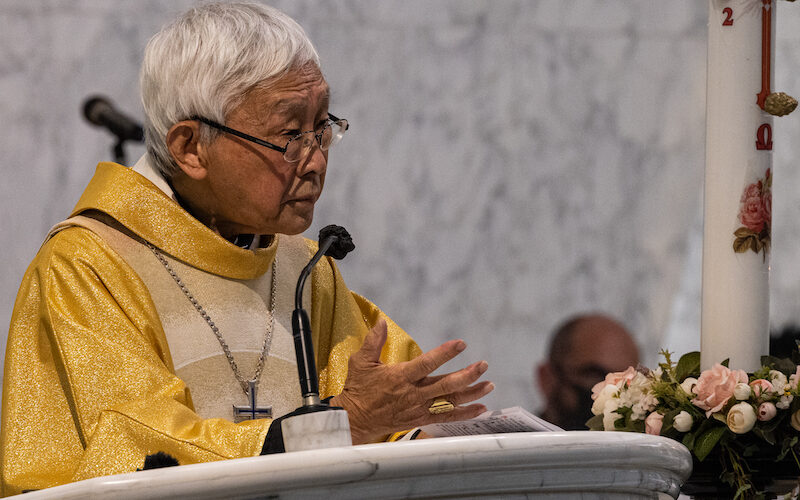
(LifeSiteNews) — Cardinal Joseph Zen, the bishop emeritus of Hong Kong, during an intervention before the extraordinary consistory of cardinals this week, slammed the Synod on Synodality’s final document and the entire synodal process for bypassing the bishops’ rightful authority, allowing for various interpretations, and suggesting that the Holy Spirit can change His mind.
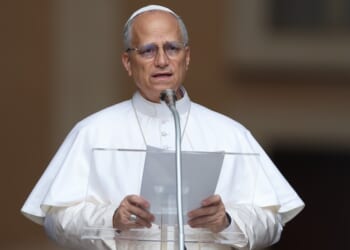
The 93-year-old Chinese cardinal’s intervention, first reported by the College of Cardinals Report, was made before Pope Leo XIV and 170 of his brother cardinals and focused on the accompanying note to the final document of the three-year Synod on Synodality.
Cardinal Zen used the entire three minutes allotted to him to rebuke the document and the entire synodal process as “ironclad manipulation” for taking away bishops’ authority by bypassing them in favor of the laity and for having a predetermined outcome.
The cardinal further stressed the contradiction of Pope Francis declaring that the document was “magisterium” but also “not strictly normative,” allowing for different interpretations by the bishops, which could lead to divisions similar to those in the Anglican Church and will not attract the Anglicans or Orthodox back into Communion with Rome. He also contended that the continued invocation of the Holy Spirit by the Vatican prelates for the Synod bordered on “blasphemy,” since the Holy Spirit cannot repudiate what He inspired in the Church’s 2,000-year tradition.
Cardinal Zen’s full intervention:
The Pope says that, with the Final Document, he gives back to the Church what has developed over these years (2021–2024) through “listening” (to the People of God) and “discernment” (by the Episcopate?).
I ask:
- Has the Pope been able to listen to the entire People of God?
- Do the lay people present represent the People of God?
- Have the Bishops elected by the Episcopate been able to carry out a work of discernment, which must surely consist in “disputation” and “judgment”?
- The ironclad manipulation of the process is an insult to the dignity of the Bishops, and the continual reference to the Holy Spirit is ridiculous and almost blasphemous (they expect surprises from the Holy Spirit; what surprises? That He should repudiate what He inspired in the Church’s two-thousand-year Tradition?).
The Pope, “bypassing the Episcopal College, listens directly to the People of God,” and he calls this “the appropriate interpretative framework for understanding hierarchical ministry”?
The Pope says that the Document is magisterium, “it commits the Churches to make choices consistent with what is stated in it.” But he also says “it is not strictly normative …. Its application will need various mediations”; “the Churches are called upon to implement in their different contexts, the authoritative proposals contained in the document”; “unity of teaching and practice is certainly necessary in the Church, but this does not preclude various ways of interpreting some aspects of that teaching”; “each country or region can seek solutions better suited to its culture and sensitive to its tradition and needs.”
I ask:
- Does the Holy Spirit guarantee that contradictory interpretations will not arise (especially given the many ambiguous and tendentious expressions in the document)?
- Are the results of this “experimenting and testing,” e.g. (of the “creative activation of new forms of ministeriality”), to be submitted to the judgment of the Secretariat of the Synod and of the Roman Curia? Will these be more competent than the Bishops to judge the different contexts of their Churches?
- If the Bishops believe themselves to be more competent, do the differing interpretations and choices not lead our Church to the same division (fracture) found in the Anglican Communion?
Perspectives on Ecumenism
- Given the dramatic rupture of Anglican Communion, will we unite ourselves with the Archbishop of Canterbury (who remains with only about 10% of the global Anglican community), or with the Global Anglican Future Conference (which retains about 80%)?
- And with the Orthodox? Their Bishops will never accept Bergoglian synodality; for them, synodality is “the importance of the Synod of Bishops.” Pope Bergoglio has exploited the word Synod, but has made the Synod of Bishops—an institution established by Paul VI—disappear.