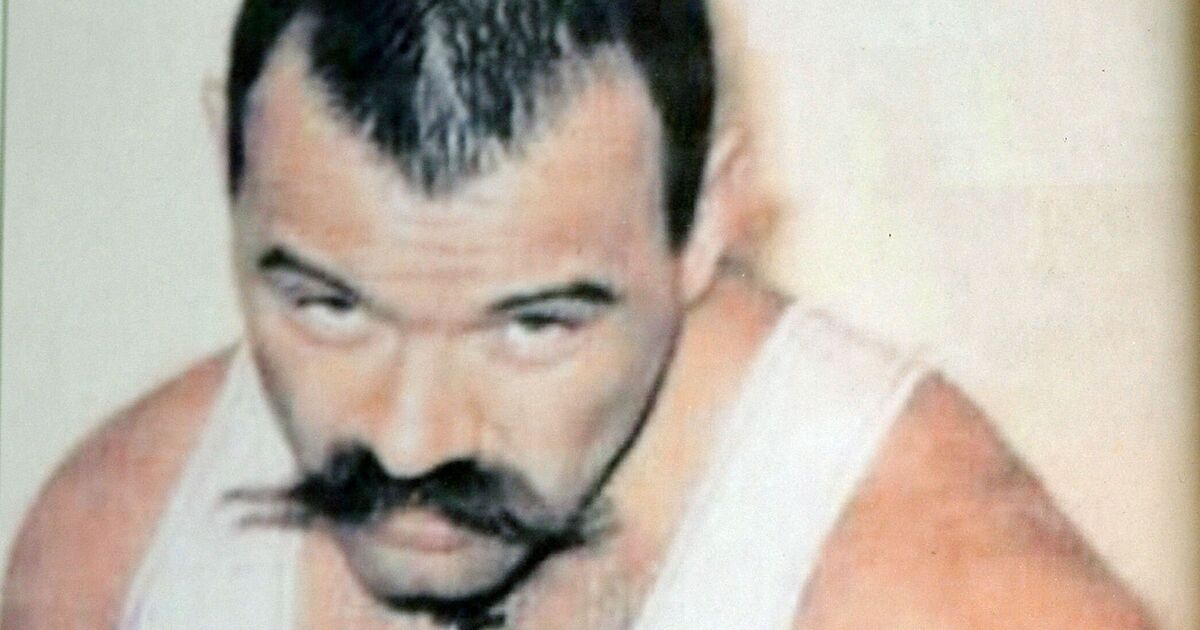
Charles Bronson, Britain’s most infamous prisoner, has spent the majority of the past five decades behind bars for a string of violent offences and taking 11 hostages – but his former lawyer believes he should finally be freed.
Marcus Johnstone, who worked closely with Bronson – real name Michael Gordon Peterson – for nearly a year at HMP Woodhill, told The Sun that the notorious lag is no longer a risk to the public. “There’s worse people on the streets than him,” he claimed.
Bronson’s violent past and failed parole attempts
Bronson, now 72 and going by the name Charles Salvador, was initially jailed for armed robbery in 1974. Despite brief releases in 1987 and 1992, he continued to commit crimes both inside and out, including robberies and attacks on fellow inmates, which saw him returned to prison or his sentence extended.
The infamous prisoner, famously portrayed by Tom Hardy in a 2008 biopic, has had numerous Parole Board appeals refused over the years. His violent acts have included attacking a lag with a glass jug, getting a prison governor in a headlock, and causing £250,000 worth of damage during a rooftop protest at Broadmoor.
11 hostages taken during 9 sieges
Bronson has held 11 different people hostage during nine sieges throughout his incarceration. The final incident saw him kidnapping prison teacher Phil Danielson in 1999 during a tense 44-hour standoff.
Mr Johnstone, who never met Bronson in person but communicated with him extensively through letters, told The Sun: “I don’t think by any means he’s the most dangerous prisoner but he’s probably the most discerning one. He’s just institutionalised now.”
Bronson’s artistic talents and prison treatment
The former lawyer revealed that Bronson flooded him with copious letters, scribblings, and artwork during their correspondence. “He’s a remarkable artist, probably still is. He’s an interesting character… he’s had a colourful life,” Mr Johnstone said.
Many of Bronson’s drawings reflected his treatment in prison, which Mr Johnstone believes was quite severe compared to other prisoners. “A lot of the time he was in solitary confinement, very tightly regulated. The drawings largely reflected him as a prisoner caged up,” he explained.
‘I don’t think he’s a danger anymore’
Mr Johnstone, who has many of Bronson’s letters and drawings hanging up in his office, believes that the notorious prisoner is no longer a threat to society. “It’s sad the system can’t do something for him. Why we’ve got to keep him locked up. I don’t think he’s a danger anymore now. There’s worse people on the streets than him,” he said.
The solicitor, who has worked across almost every prison in the UK, explained that many “lifers” often have to be re-taught how to do everyday activities when they are close to release. “They have to learn how to cross the road, they have to learn how to buy a stamp, some of them haven’t dealt with modern currency,” he said.
The struggle to cope back in society
Mr Johnstone emphasized the difficulty long-serving prisoners face when reintegrating into society. “Then you think, ‘How do you expect those people to cope back in society?’ And they can’t, and within a matter of time they end up re-offending. It’s sad, really,” he lamented.
As Britain’s most notorious prisoner, Charles Bronson’s potential release remains a contentious issue. While his former lawyer believes he is no longer a danger, the decision ultimately lies with the Parole Board, who must weigh his violent past against his current state and the risk he poses to the public.