A senior Chinese general could face the death penalty after being accused of leaking nuclear secrets to the US.
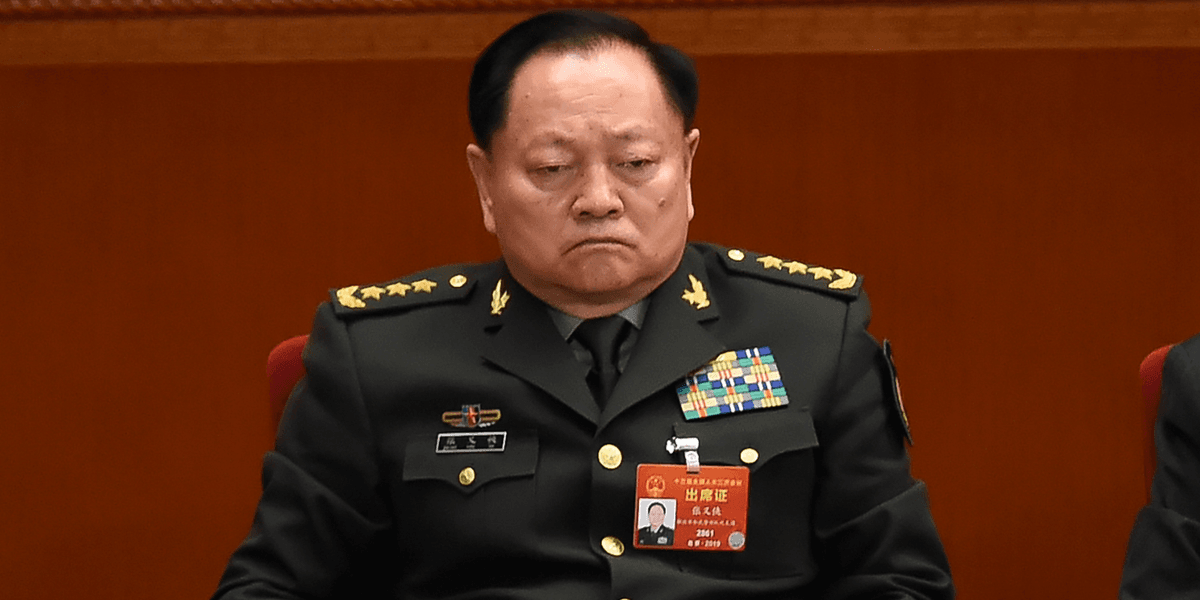
General Zhang Youxia, 75, the operational commander of China’s People’s Liberation Army (PLA), was removed from his post by President Xi Jinping amid allegations he passed sensitive information to Washington.
He was dismissed on Saturday after being charged with a “serious violation of discipline,” according to the Wall Street Journal.
Beijing later confirmed that Mr Zhang now faces a formal inquiry into his conduct.
The allegations mark an extraordinary development in the Chinese military, with the general accused of sharing sensitive nuclear information with a global rival while serving at the highest levels of the PLA.
During a confidential meeting attended by the PLA’s most senior officers, additional charges were levelled against the 75-year-old, including accepting bribes in exchange for promoting a colleague to defence minister.
He was also accused of establishing “political cliques” within China’s armed forces.
Evidence against the general was said to be supplied by Gu Jun, the former head of China National Nuclear Corporation, which oversees both civilian and military atomic programmes.

General Zhang Youxia was removed from his post by President Xi Jinping
|
GETTY
Mr Gu is himself under investigation as part of a wider anti-corruption probe targeting China’s defence and nuclear sectors, announced last week.
Officials indicated that inquiries into Mr Gu revealed a security breach in the nuclear industry allegedly linked to the ousted PLA leader.
Mr Zhang had long been regarded as virtually untouchable, having known President Xi since childhood.
He had served the Chinese military across six decades, having seen actual combat during China’s brief conflict with Vietnam in 1979.

The senior general was also accused of establishing ‘political cliques’ within China’s armed forces
|
GETTY
Despite surviving numerous purges that decimated the upper ranks of the PLA in recent years, the general’s fortunes have dramatically reversed.
His removal marks the most significant in President Xi’s ongoing campaign to root out corruption and disloyalty within the military.
The Central Military Commission now has just two members, including Mr Xi, after every commander appointed in 2022 was removed.
In October alone, nine senior generals were stripped of their positions, including former vice-chairman He Weidong.

It is the most significant removal in President Xi’s campaign to root out corruption and disloyalty within the military
|
GETTYThe commission, once the cornerstone of China’s military modernisation, is now at its smallest size in history.
Analysts have suggested Beijing’s ambitions regarding Taiwan could be delayed by several years as a result.
Under China’s Counter-Espionage Law, spying covers anything related to “national security,” including cyber-attacks, espionage by third countries, and cooperation with foreign entities.
Penalties for espionage can range from long prison sentences to the death penalty.
In March 2025, a former engineer at a Chinese research institute was sentenced to death by the CCP after being accused of selling classified material to foreign intelligence agencies.