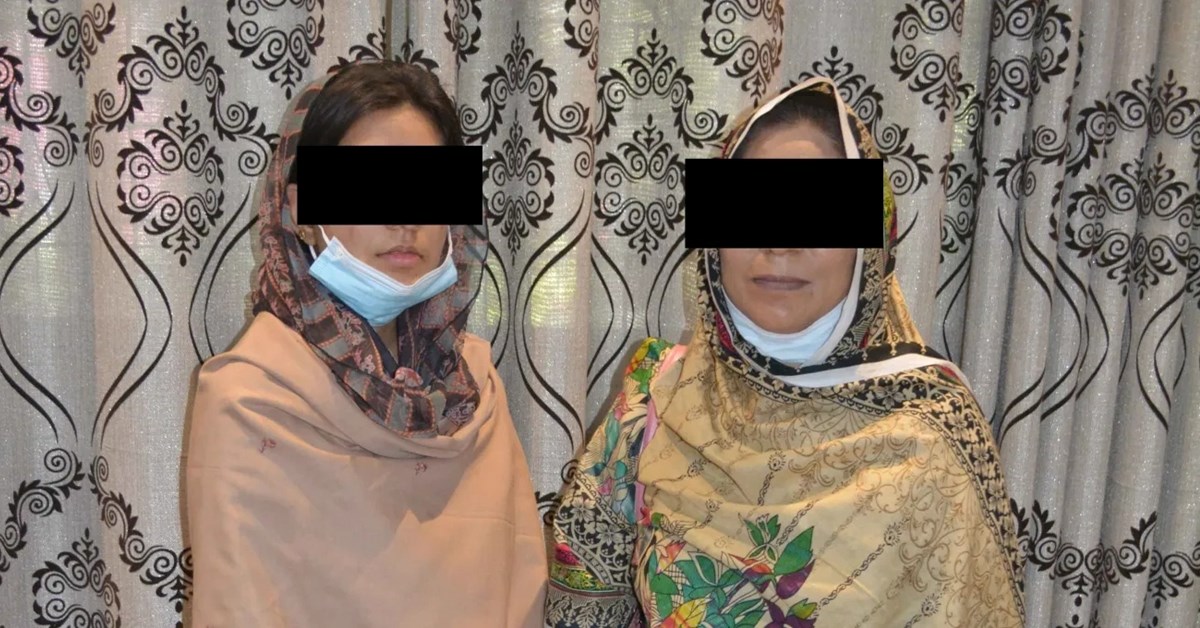
FOR more than four years, two Christian nurses lived in the shadows in Islamabad, avoiding appearing in public, abandoning their professions, and fearing for their lives.
This month, a district court in Pakistan finally acquitted the nurses, Mariam Lal and Newosh Arooj, of blasphemy charges, a rare moment in a country where such accusations often end in prolonged imprisonment or violence.
The case dates back to April 2021, when Ms Lal, then 52, and Ms Arooj, just 19 at the time, were accused by a senior doctor at a government hospital in Faisalabad of defiling a sticker that bore an Islamic inscription.
As word spread inside the hospital, an angry crowd gathered, and the women fled in fear of their lives. Soon after, they were arrested under Pakistan’s blasphemy laws, and spent five months in detention.
“The fear never left us,” Ms Lal said quietly in a recent conversation facilitated by church officials. “Even when we were released on bail, every knock on the door felt like danger. We stopped living normal lives.”
Throughout the trial, the women were permitted to avoid public court appearances because of credible threats. Their defence was led by the National Catholic Commission for Justice and Peace (NCCJP), with support from Aid to the Church in Need.
In November, the district court dismissed the charges, ruling that the complainant had failed to provide evidence.
Legal experts have described the verdict as unusual. Courts often refer blasphemy cases to higher courts, owing to intense pressure from extremist groups. “This judgment shows that evidence can still matter,” a Lahore-based human-rights lawyer, speaking on condition of anonymity, said. “But it remains the exception, not the rule.”
For Ms Arooj, now in her mid-twenties, the acquittal has not erased the trauma. “I lost my youth inside fear,” she said. “I used to dream of becoming a senior nurse. Now, I just want safety.”
Church officials have warned that acquittal does not guarantee security. Fr Khalid Rashid Ali, of NCCJP Faisalabad, said that the families remained vulnerable. “Justice does not end with a court order,” he said. “True justice means rehabilitation, dignity, and the ability to live without fear.”
Despite the legal victory, both women remain unemployed and live discreetly. “We are grateful to be free,” Ms Lol said, “but freedom without safety still feels incomplete.”
Human-rights observers say that the case highlights both the dangers of Pakistan’s blasphemy laws and the courage required to challenge them.
Tauseef Ahmad and Sajid Raina are Kashmir-based freelance journalists.