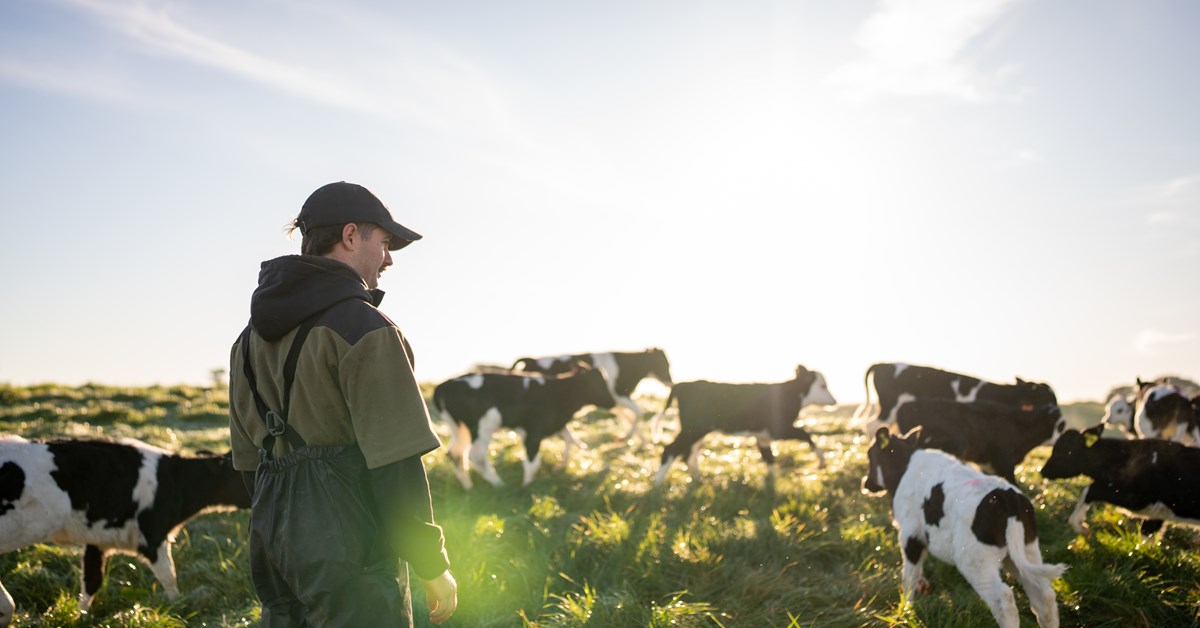
EMISSIONS of greenhouse gases from the Church Commissioners’ farmland remain high, but have fallen by nine per cent since 2022, their latest research suggests.
A report, Our Approach to Sustainability for Real Assets: Progress update, published in November, compares the Commissioners’ environmental impact on its 2024 portfolio with the effects reported in 2022.
The Real Assets are divided between land (55 per cent) and built environment and infrastructure (45 per cent), and make up around a fifth of the Church Commissioners’ £11.1 billion endowment fund. Land holdings include farmland, forestry, and developmental land, while the infrastructure consists of commercial and residential properties.
The Commissioners report that dairy farming is the single largest emissions source, owing to methane. “Other factors include fertiliser use, soil disturbance and on-farm fuel use,” the report says.
The Commissioners said that more than 90 per cent of the farmland is graded as productive or highly productive (Grade I-III). The research indicates that, in 2024, the farmland portfolio — approximately 80,000 acres — generated emissions of 117,000 tonnes of carbon-dioxide equivalent, with 19,000 tonnes of carbon-dioxide equivalent removed and an additional 2000 tonnes of avoided emissions. This represents a reduction of about nine per cent on 2022 figures.
The Commissioners also say that they contributed £1 million to the Soil Association in a five-year pilot scheme to support farmers in cutting emissions and improving environmental sustainability.
“By addressing these barriers, the pilot seeks to unlock private investment in the arable sector. Farmers are financially rewarded for measurable improvements, enhancing both environmental outcomes and business resilience. We are the only landowner involved, with three of our farmers looking to participate.”
Progress has been made in reducing the net carbon impact of the forestry portfolio. Last year, the portfolio emitted 86,000 tonnes of carbon-dioxide equivalent, while 415,000 tonnes were removed through sequestration, and an additional 20,000 tonnes were recorded as temporary removals in harvested timber. The 2023 report says that, in 2022, the portfolio was estimated to be “absorbing, net of harvesting and emissions”, approximately 116,000 tonnes.
The report also says that the Commissioners have significantly improved the energy performance of the commercial buildings in their portfolio. In 2024, 32 per cent of the buildings were rated with an energy performance certificate (EPC) of B or better, up from nine per cent in 2023. The proportion rated EPC C or better rose to 63 per cent, compared with 34 per cent in 2022. Only one per cent of the buildings are now rated EPC F or G or unrated, down from 27 per cent in 2023.
In addition to renewable-energy generation across the portfolio which is enough to power 125,000 homes, the Commissioners are in advanced agreements for renewable-energy projects enough to power a further 165,000 homes.
In 2024, the Commissioners developed new woodland-creation and nature projects with the Wildlife Trusts and the Royal Society for the Protection of Birds. This totalled more than 3600 acres, in addition to the sustainable management of forests.
Steps have also been put in place to improve the condition of sites of special scientific interest, the report says.
The First Church Estates Commissioner, Alan Smith said: “As a faith-based investor with a duty to maximise returns for the current and future generations of the Church of England, sustainability is at the heart of our investment approach. Managing our land and property responsibly is therefore central to our mission and can be seen in the way we engage with our tenants, local communities, government, and the environment.”