“Judge Patrick J. Schiltz is just another activist judge who is clearly more concerned about politics than the safety of Minnesotans.”
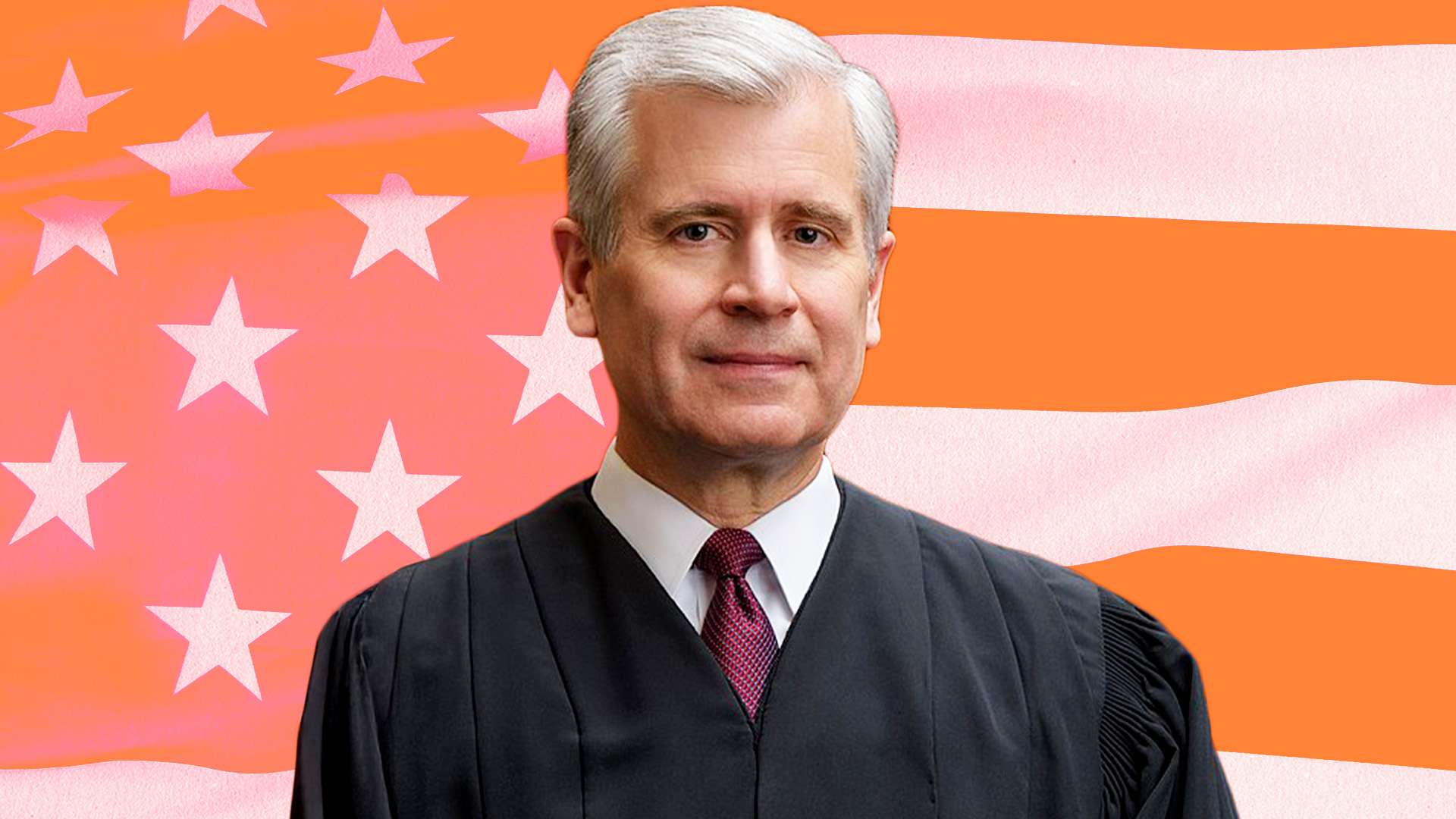
Those are the words of Tricia McLaughlin, assistant secretary of the Department of Homeland Security (DHS). My guess is that her statement elicited quite the snort of laughter from Schiltz, who is not normally attacked for being some sort of far-left “activist.” If anything, the 65-year-old Schiltz, a George W. Bush appointee who currently serves as chief judge of the U.S. District Court for the District of Minnesota, is probably more used to being labeled as a right-winger.
You’re reading Injustice System from Damon Root and Reason. Get more of Damon’s commentary on constitutional law and American history.
Schiltz is, after all, a fellow traveler of the conservative legal movement who clerked twice for Antonin Scalia and later recommended Amy Coney Barrett, then one of Schiltz’s law students, for the same Scalia clerkship at the U.S. Supreme Court that Schiltz himself previously held.
So why is a DHS mouthpiece now bad-mouthing Schiltz? This is why:
The Court’s patience is at an end. Accordingly, the Court will order Todd Lyons, the Acting Director of ICE [Immigration and Customs Enforcement], to appear personally before the Court and show cause why he should not be held in contempt of Court. The Court acknowledges that ordering the head of a federal agency to personally appear is an extraordinary step, but the extent of ICE’s violation of court orders is likewise extraordinary, and lesser measures have been tried and failed.
Those words appeared in Schiltz’s January 26 order in the case of Juan T.R. v. Noem. It is a case about a person held in federal detention as part of President Donald Trump’s current immigration crackdown in Minnesota. On January 14, Schiltz ordered the government to “provide petitioner with a bond hearing” as required by federal law within seven days or else “petitioner must be immediately released from detention.” But those seven days came and went and “Juan T.R.,” as the individual is listed in court documents, had neither received a bond hearing nor been released from federal detention. The court’s order had been flouted.
“This is one of dozens of court orders with which respondents [the Trump administration] have failed to comply in recent weeks,” Schiltz noted in his January 26 order. That is why Schiltz decided to so forcefully express his impatience with the Trump administration’s ongoing legal malfeasance.
I wrote a book some years back about the long-running conflict over “judicial activism,” and I must say that the DHS’ use of the term in this context is one of the more ridiculous uses that I have come across. To be sure, disgruntled critics often employ “judicial activism” as a kind of shapeless, all-purpose insult for any judge or legal decision that they dislike. But for the government to attack a judge for being an “activist” simply because the judge has grown fed up with the government’s own chronic refusal to follow basic court orders may be a new low.