Cornwall marks St Piran’s Day today with fresh research revealing the county possesses the most intense local identity anywhere in England.
More than half of Cornish residents – 53 per cent – report feeling a “very” strong connection to their county, making it the sole English county where a majority express such a powerful attachment.
The findings emerge as Cornwall Council continues its push for the Government to grant the county recognition as the United Kingdom’s fifth nation, alongside England, Scotland, Wales and Northern Ireland.
A petition supporting this campaign attracted 24,011 signatures last year.
Across England as a whole, roughly three-in-ten adults describe themselves as having a very strong bond with their ceremonial county, placing county identity on par with regional attachment.
An additional 42 per cent feel a “fairly” strong connection, while just over a quarter report minimal or no attachment to where they live.
The council endorsed the nation status campaign last year, with councillors voting 53 to 22 in favour of the motion.
Leigh Frost, the Liberal Democrat leader of Cornwall Council, championed the cause through a promotional video for the petition last year.
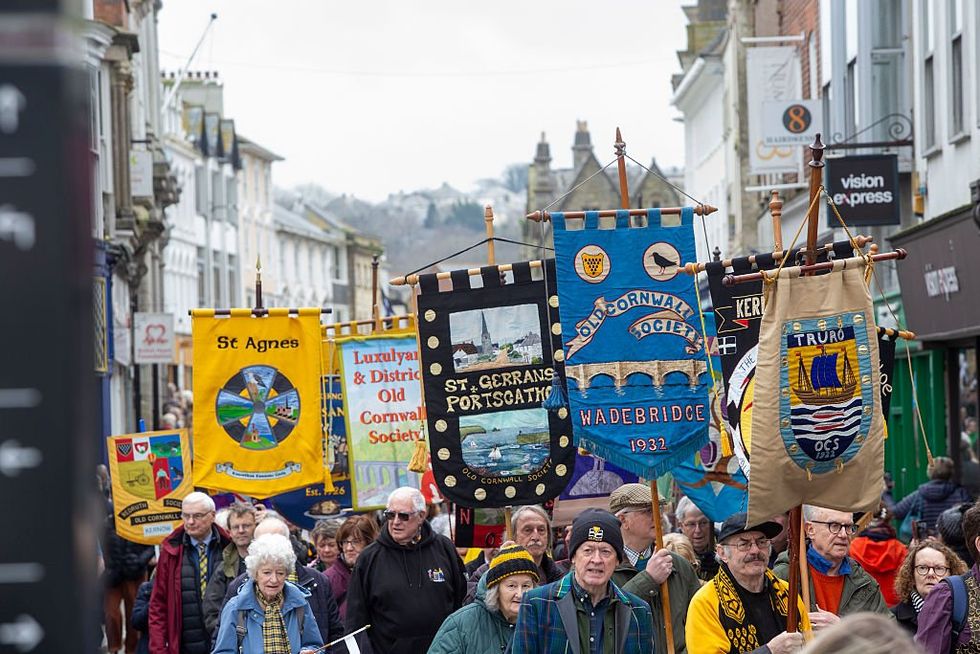
The banners of the Old Cornish Societies who gather in Truro together on St Piran’s Day, one of Cornwall’s key traditions
|
GETTY
He told The Times last November: “This isn’t about independence, it never has been.
“This is about making sure decisions for Cornwall happen in Cornwall. We are not just a bit of England at the end of the train line: we are a strong, proud Celtic nation.”
Councillor Frost maintains that Cornwall predates England as a nation and already holds status as a recognised national minority with its own language.
He envisions an eventual Cornish assembly and argues the county seeks acknowledgement through the Devolution Bill currently progressing through parliament.
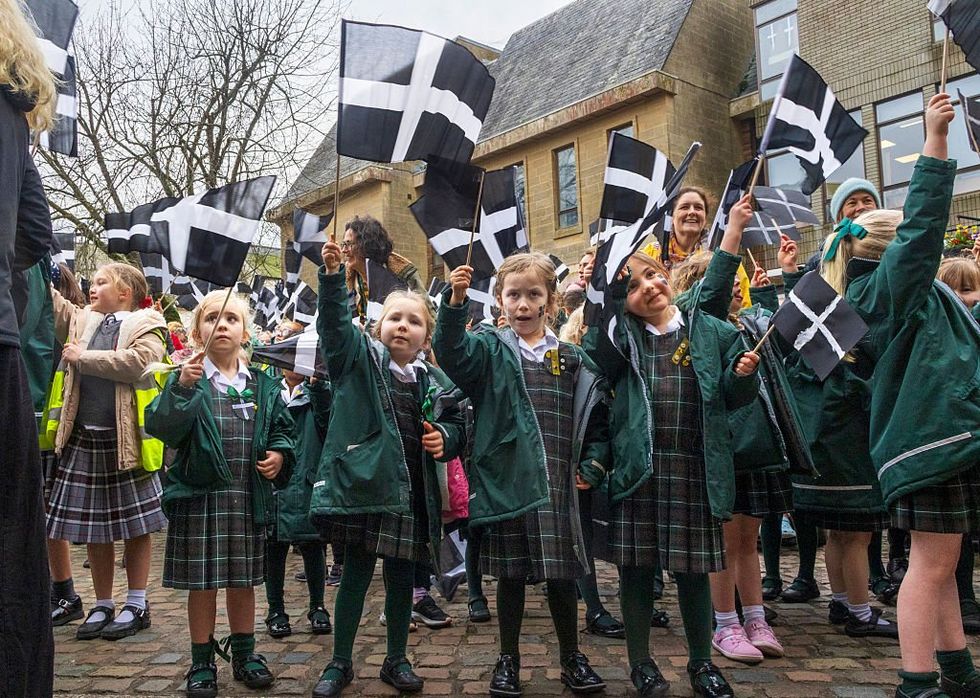
School children join the celebrations in Truro as Cornwall is marked as the county with the strongest identity
|
GETTY
Cornwall became a unitary authority in 2009 and was the first rural English area to secure devolution settlements covering transport, education and renewable energy.
In 2023, the council gained permission to participate in British-Irish Council ministerial meetings alongside other Celtic nations.
Reform UK councillors, who hold the largest number of seats on the council, largely opposed the motion. Rowland O’Connor, the party’s deputy leader on the council, expressed concern about potential social fractures.
He said: “It feels like we are being asked to choose between being English and Cornish. In reality, most of us are very proud to be Cornish and English…I think there is the possibility to see some further division in our society, which is one of the last things we want to encourage at the moment.”
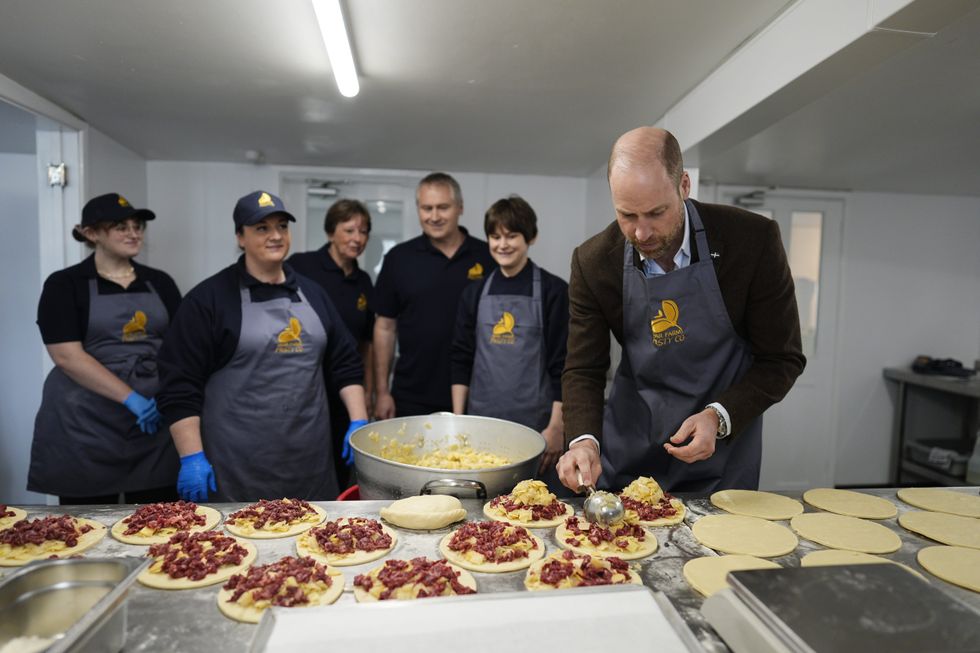
Prince William tried his hand at making pasty’s while at the shop in Helston to mark the day
|
PABeyond Cornwall, several other English counties demonstrate notably strong local identity.
Neighbouring Devon sees 42 per cent of residents expressing very strong attachment, while Dorset registers 38 per cent.
The northern counties of Northumberland and Cumbria show similarly elevated levels, with 42 to 44 per cent of inhabitants feeling intensely connected to their area.
Yorkshire maintains its reputation for fierce local pride, with between 36 and 41 per cent across North, South and West Yorkshire reporting very strong county bonds.
Lancashire records 35 per cent, while Norfolk and Suffolk in East Anglia show 36 and 31 per cent respectively.
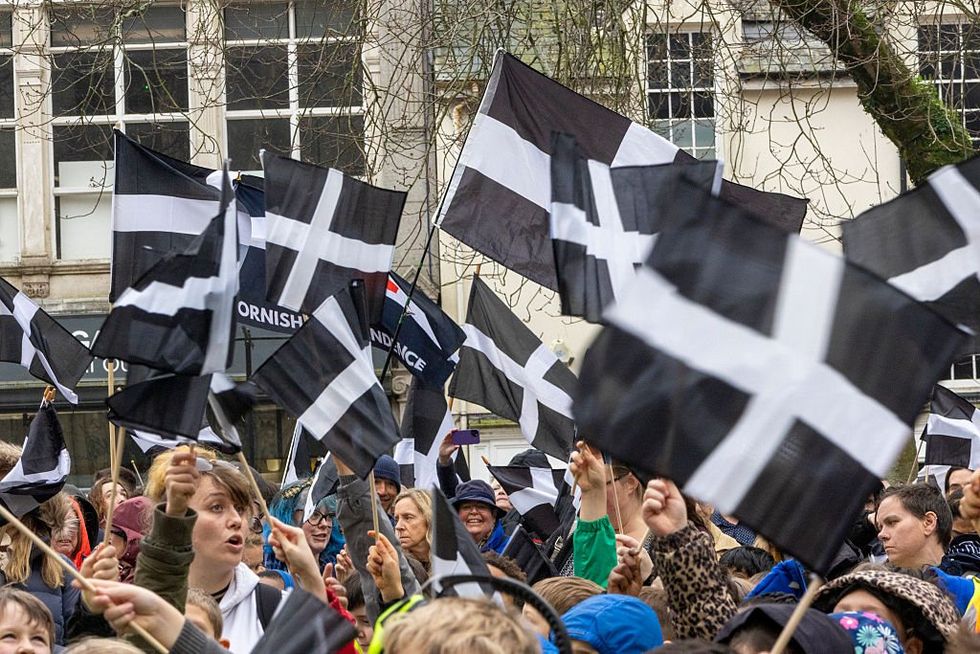
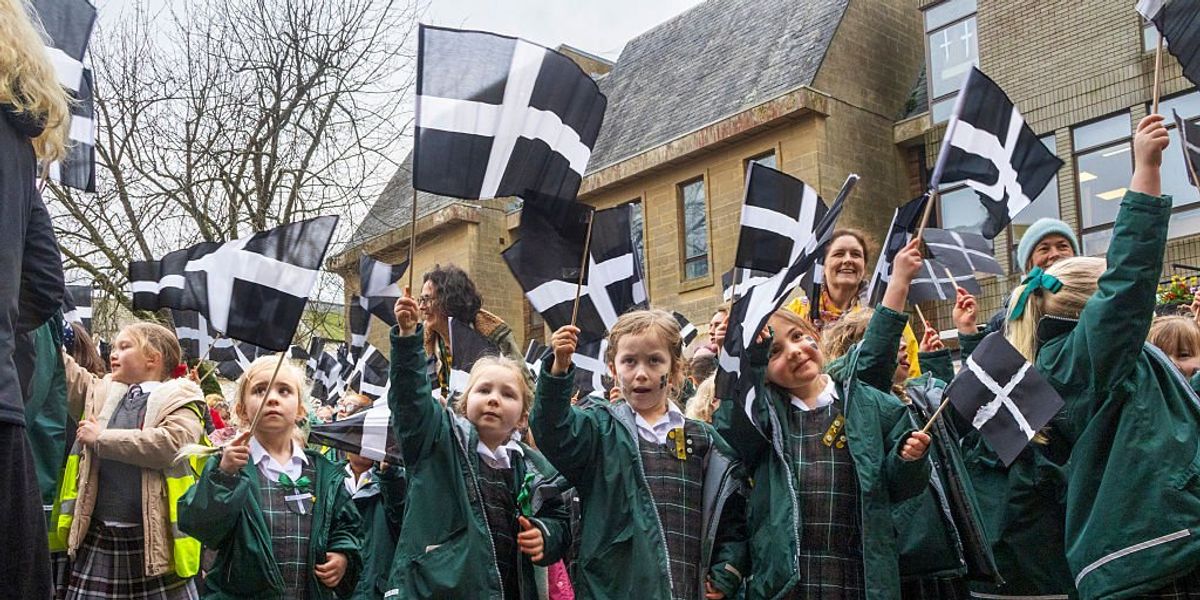
A sea of St Piran’s flags (Cornish Flags) was seen outside Truro Cathedral as the Cornish are the most proud of their identity
|
GETTY
Metropolitan counties created in recent decades show surprisingly robust identities, with Tyne and Wear at 41 per cent and Merseyside at 38 per cent.
The weakest county attachments appear across the Midlands and parts of the South East, where Bedfordshire, Berkshire, Buckinghamshire, Cambridgeshire and Northamptonshire register just 15 to 17 per cent.