THE Bishop of Coventry, the Rt Revd Sophie Jelley, who is the lead bishop for lay ministries, introduced consideration on Friday afternoon of the National Ministry Register Regulations 2026.
A National Register of Clergy had been created, but now it was time to create a register for lay ministers, as originally recommended by the Gibb report (News, 30 June 2017). This would cover deacons, licensed lay ministers (LLMs), Readers, and others working in Bishop’s Mission Orders.
Titles varied widely from diocese to diocese, Bishop Jelley said, but all of those licensed under the canons would be included, except those licensed in bespoke arrangements by the local bishop only. As with the clergy register, every diocesan bishop would be responsible for collating information on lay ministers in their diocese and sending this to the Archbishops’ Council. This register is to be published online and available to everyone.
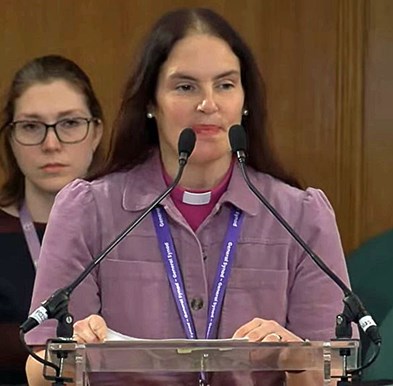 CHURCH HOUSE YOUTUBEThe Bishop of Coventry, the Rt Revd Sophie Jelley
The biggest challenge would be ensuring that every diocesan record was complete. On rare occasions, there might be safeguarding or other reasons to withhold some information about a minister from the register, the Bishop explained. She was also bringing some minor technical changes to the clergy register, which had already been launched.
Nigel Bacon (Lincoln) had long argued that lay ministers, including Readers such as himself, should be held to the same safeguarding standards as the clergy. He agreed that the priority should have been establishing a national register, as for clergy, and received “with great delight” the confirmation that one for lay ministers was following.
Dr Jamie Harrison (Durham) recalled the 2017 Gibb report, in response to the Peter Ball scandal, which first had recommended the national clergy register. He had experience of collating a similar register for GPs in the NHS, and it had been “right and proper” to set up the clerical register before the lay one. He was unconvinced, however, by amendments to expand the remit of the lay ministers to be included on the register, as it was sometimes hard to identify those under authorised ministry rather than nationally licensed.
The Dean of the Arches and Auditor, the Rt Worshipful Morag Ellis KC (ex officio), backed the motion as both a lawyer and Reader. The register was hugely important for safeguarding reasons, she argued: it had been unclear whether John Smyth’s being an authorised Reader had given him more authority than he actually had. Anyone contributing to the Church’s public ministry should be publicly identifiable, she said.
Dr Chris Angus (Carlisle) argued that churchwardens also exercised a form of lay ministry, often taking services in rural areas that lacked clergy.
Lucy Docherty (Portsmouth) wondered whether there were any deaconesses left in the Church, who were specifically named in the regulations.
John Wilson (Lichfield) raised the issue of deanery or diocesan lay chairs, who, he said, were often hard to identify.
Ian Boothroyd (Southwell & Nottingham) was a Reader, but no longer held a licence, and asked why people like him were not to be included. He suggested that all Readers who had ever been authorised should appear, even if their licences had since lapsed.
Nicola Denyer (Newcastle), a lay-ministry development officer and Reader, urged the Synod to support the register to ensure greater clarity and safety. She lamented the huge variety of practice across dioceses concerning local lay ministry, and argued that it was right not to include all these on the national register yet.
Josile Munro (co-opted) asked whether pioneer ministers, who could be lay in her diocese, would be included on the register.
Bishop Jelley said that lay ministers were invaluable across the Church, but there was huge variety and complexity in this space. She hoped that this work would be a legacy to honour the victims and survivors of abusers such as Ball and Smyth. She told Ms Docherty that the C of E did not actually know how many deaconesses remained, and would discover this through the lay register’s establishment. To Ms Munro, she said that any lay pioneer who was an LLM would appear on the register.
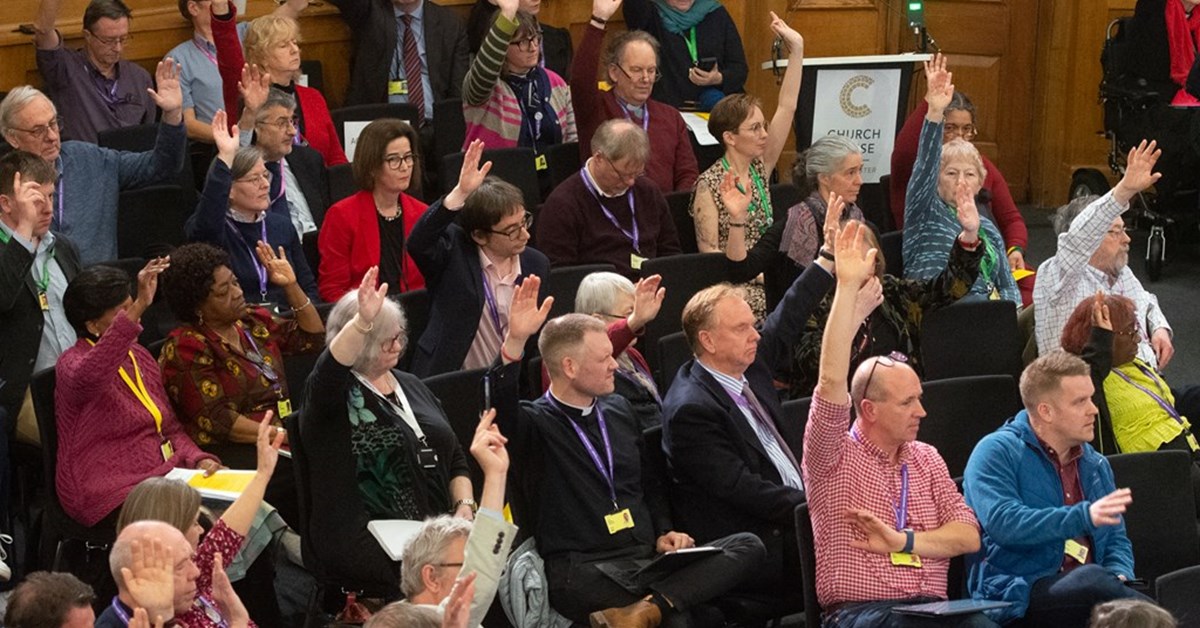
A motion to consider the regulations was carried.
Clive Scowen (London) moved his amendments, which would expand the list of those included on the register. The underlying rationale for the register was that anyone holding themselves out as authorised by the Church for ministry could be verified. Some lay ministry was authorised on a local, even undocumented, basis, but, in recent decades, a variety of ministries had grown that were authorised in writing by bishops, in addition to the canonical categories of deaconess, lay worker, and Reader, he said. These went by many names, but this did not have to be a problem if the category could be identified on the register. He therefore argued that anyone authorised in writing, by a bishop, was “readily definable” — all competent bishops’ offices should have a record of those to whom they have given authority to minister, he said. He saw no reason why a ministry needed to be nationally recognised or recognised in law to count for the register.
Bishop Jelley disagreed with the amendment. There was not a shared understanding across dioceses of what it meant to be an authorised lay minister, she said, and if members of the public were to check this register, it would probably cause more confusion than clarity. She welcomed the opportunity to report back to the Synod on this particular matter, however.
The Revd Charlie Skrine (London) said that the clergy register was a “fantastic thing”, as the lay register would be, but he could not support Mr Scowen’s amendment, and did not see the equivalent practical need to register people who held only local and informal authorisation. “This will make it so broad as to be unworkable.”
The Revd Jenny Bridgman (Chester) agreed that the amendment was too vague to be workable. “Safeguarding depends on clarity; this introduces ambiguity.” Trying to cover all local and informal positions would create excessive administrative burdens, she said. There were about 2000 distinct titles within lay ministry, covering about 40 posts, a previous data exercise had found. “If we broaden the scope of this, then 42 dioceses will make 42 interpretations,” she warned.
Canon Andrew Dotchin (St Edmundsbury & Ipswich) wondered whether a churchwarden would be covered under the amendment.
Responding, Mr Scowen accepted Mr Skrine’s argument that the risks of an LLM arriving at an unknown parish demanding to be recognised were small. But, it was more plausible that they could try to pass off the bishop’s authority at a non-church institution, he said. He denied that his amendment would create excessive ambiguity, but accepted that he had not persuaded the Synod; so attempted to withdraw the amendment.
This was too late, however. The amendment was lost.
Bishop Jelley moved that the regulations be approved, telling Mr Scowen that she wanted to work with him to ensure that they could see “more lay ministers practising safely”.
Adrian Greenwood (Southwark) said that every member of every congregation had a ministry. “For the whole body to flourish, we need every member to flourish in their particular ministry.” It would be impractical to have every person in the C of E on the lay register, he said, and praised the balance struck under the regulations.
Sam Wilson (Chester) emphasised the importance of safeguarding, and asked whether Bishop Jelley and her team had looked at expanding the register to cover children, youth, and family ministers.
Bob Chambers (Chichester) also recognised the safeguarding concerns, and emphasised that legal and operational complexities were not a sufficient impediment to justify not providing the highest possible standards of safeguarding. “Efforts will continue to explore how we can most appropriately ensure that those who are authorised in whatever form, at whatever level, carry that authorisation in such a way that it cannot be misconstrued or misapplied in such a way that it might cause others harm.”
The motion to consider the regulations was carried.
Read more reports from the General Synod Digest here