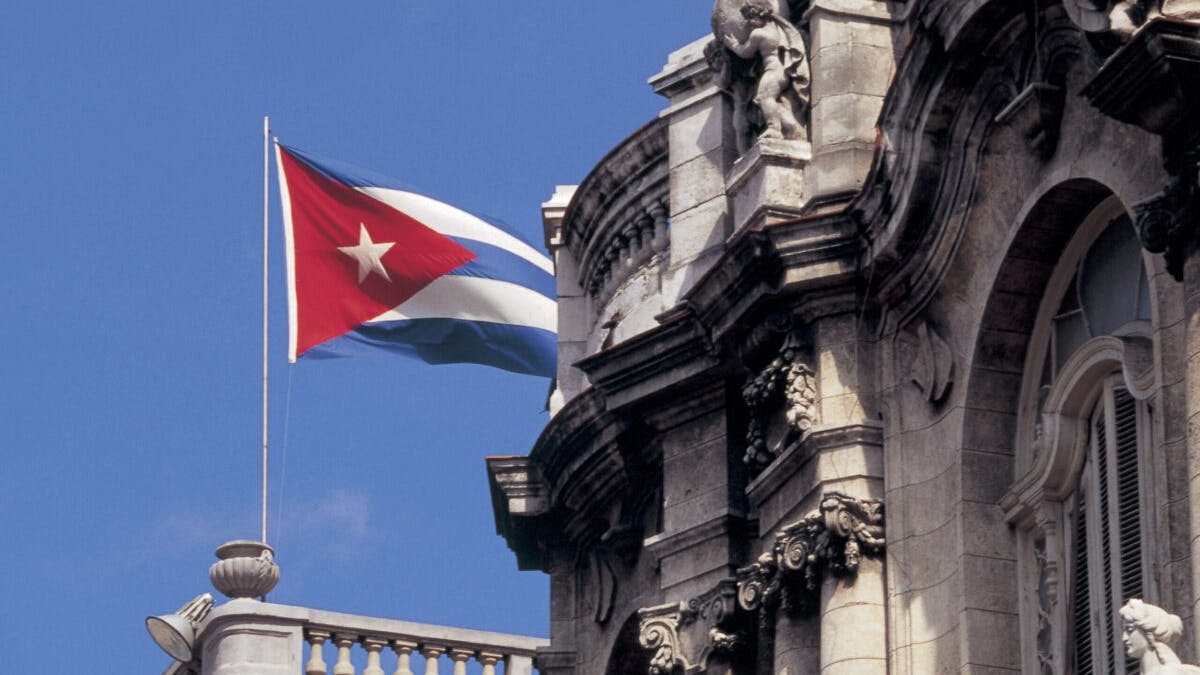
Cuba is preparing for the possibility of military conflict with the United States, a top Cuban official warned Sunday, as tensions between the two countries continue to escalate.
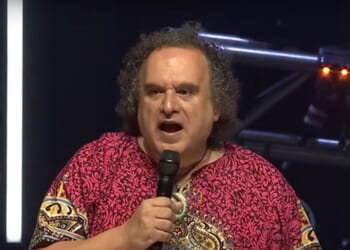
“Our military is always prepared, and in fact it is preparing these days for the possibility of military aggression,” Cuban Deputy Foreign Minister Carlos Fernández de Cossío said in an interview on “Meet the Press.” “We would be naïve” not to consider the possibility, he added, while insisting that Havana “truly hope[s] that it doesn’t occur” and sees “no justification whatsoever” for conflict.
The warning comes after a series of statements from President Donald Trump as his administration ramps up pressure on the island’s communist government. He said he would have the “honor” of “taking Cuba in some form … Free it. Take it. I think I could do anything I want with it.” Secretary of State Marco Rubio has also signaled that Cuba’s leadership is in a precarious position, warning that those in power “don’t know how to fix” the country’s mounting crises.
Fernández de Cossío dismissed those remarks, insisting that regime change is “absolutely” not up for discussion. “The Cuban political system is not up for negotiation,” he said. “Cuba is a sovereign country … and would not accept becoming a dependent state of any other power.”
The standoff comes as Cuba faces a severe and worsening economic crisis, driven in large part by an energy shortage that has crippled the island. The Trump administration has moved to choke off fuel supplies by threatening penalties on countries that export oil to Cuba, a policy Cuban officials describe as a “very severe” blockade.
“What’s happening today is that the U.S. is threatening … any country that might export fuel to Cuba,” Fernández de Cossío said, arguing the pressure campaign “cannot be sustained forever.”
However, Cuba has already experienced repeated nationwide blackouts in recent weeks, including multiple grid collapses that left much of the island without electricity. With limited fuel, transportation, hospitals, and food distribution systems have all come under strain.
Tensions have also intensified following a U.S. military operation earlier this year that resulted in the capture of Venezuelan dictator Nicolás Maduro, a key ally of the Cuban regime.
The loss of Venezuelan oil shipments, long a lifeline for Cuba’s economy, has compounded the island’s crisis and further strained relations with Washington.
Despite the rhetoric, both sides have acknowledged ongoing communication. Fernández de Cossío confirmed that Cuban and U.S. officials remain in dialogue on certain bilateral issues, though he stressed that core political questions such as leadership and single-party governance are off the table.
“No sovereign country negotiates its internal political system,” he said. Cuban officials have rejected calls for political reform, with Fernández de Cossío criticizing the U.S. system in return, noting that America itself operates under a two-party structure.
While Cuban officials emphasized readiness, they also sought to downplay the likelihood of imminent conflict. “Our country has historically been ready to mobilize … for military aggression,” Fernández de Cossío said. “We truly always see it as something far from us. We don’t believe it is something that is probable.” Still, he reiterated that failing to prepare would be a mistake given current global tensions.
The warnings come as Cuba faces one of the most precarious moments in decades: economic collapse, widespread blackouts, and growing public frustration. At the same time, the regime continues to reject any discussion of structural political change, even as pressure mounts from both abroad and within the island. For now, Havana is signaling two things at once: it wants to avoid war, but is preparing for it anyway.