THE Archbishop of Canterbury’s Lent Books have not had much luck lately. Last year’s production was stripped of the former Archbishop’s preface at the last minute and repackaged as a “Big Read”. This year’s book under the aegis of his successor (not announced until October) had to be pulled together during the vacancy.
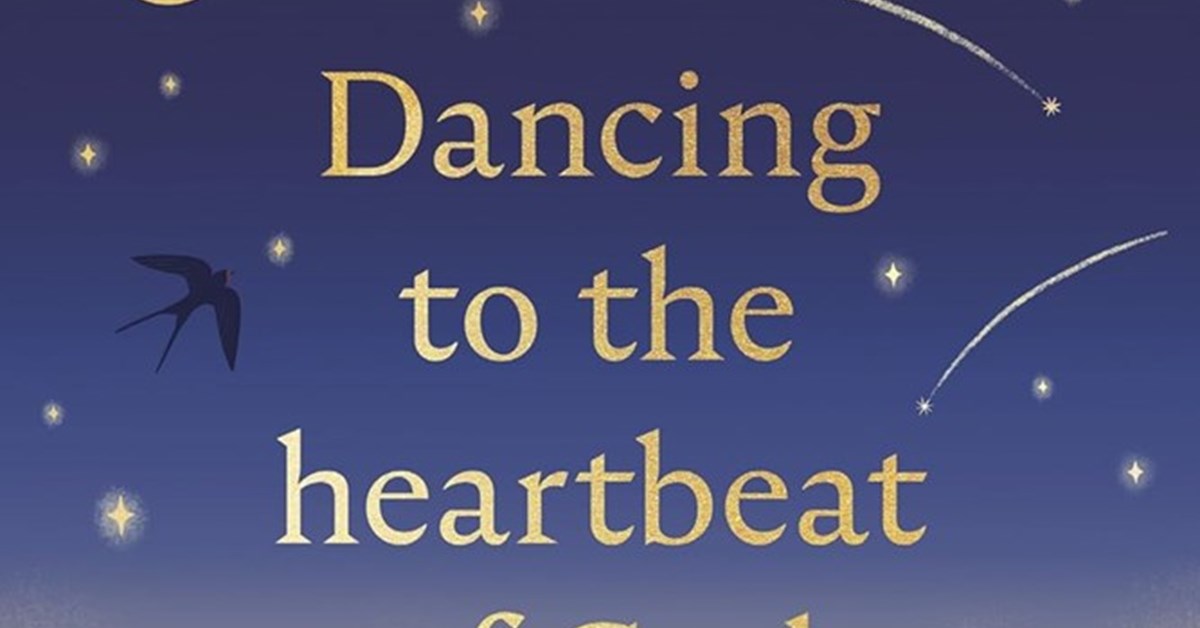
The ingenious solution has been to invite 26 contributions from different parts of the Anglican Communion which tell, as our new Archbishop writes, stories of “inspiration and encouragement” about Christian discipleship in each local context, and encourage us to be more confident in the talking to others about our faith.
Contributors are straight from the ACC address book. Twenty-three are bishops, with more Primates than even David Attenborough could handle. We gain a vivid sense of the diversity of the Anglican world, with often moving personal stories. Chapters range across personal testimony, pastoral encounters, the recollection of a gap year, a community disaster, a thumbnail diocesan history, rhapsody on the local landscape, a prospectus for the work of the ACC, an indictment of the nation’s new political order (no prizes for guessing where), and celebration of a special tree in the forest — “Sometimes it is enough to go to a place that is familiar and safe . . . and to open your heart to God — wordlessly.”
Archbishop Mullally’s afterword describes her teenage conversion, complete with reference to The Light of the World, and an invitation to personal faith-sharing. The book’s tone is firmly upbeat, with scarcely a hint of the tensions that are pulling the Anglican Communion apart.
Inevitably, with a string of independent chapters, there is no sense of cumulative development as the book progresses. The inconsistent provision of the customary Prayer and Questions for Reflection adds an editorially makeshift feel.
With a couple of exceptions, references to Lent are sporadic and incidental, and this may bear upon the volume’s curious arithmetic. Chapters are arranged, as we would expect, into the six weeks of Lent, and yet each week contains only four or sometimes five items. Have we moved on to a four-day week for Lent? As it happens, we have just the number of chapters for an Advent calendar. With a running theme of Christian hope, and a substantial disregard of Lent, Dancing to the Heartbeat of God could almost be the ghost of an Advent book.
Given such a heterogeneous album of Anglican snapshots, each reader is likely to find a different mixture of something to enjoy and something to annoy. If what you are looking for this Lent is a quick, easy, and uplifting read on the bus or in the coffee break, which will also widen your Church of England horizons, this could be the book for you.
But, for next year, I hope that our Archbishop will be able to commission a book from a single creative Christian mind, whose geographical reach may not go so far, but who will be able to take us on a Lent journey that goes deeper.
THE book To Hell’s Mouth and Back was not supposed to exist. Trystan Owain Hughes began a sabbatical by taking on the 140-mile Pilgrims’ Way to the saint-haunted Ynys Enlli (Bardsey Island) at the tip of north Wales, across the turbulent strait whose English name is Hell’s Mouth. 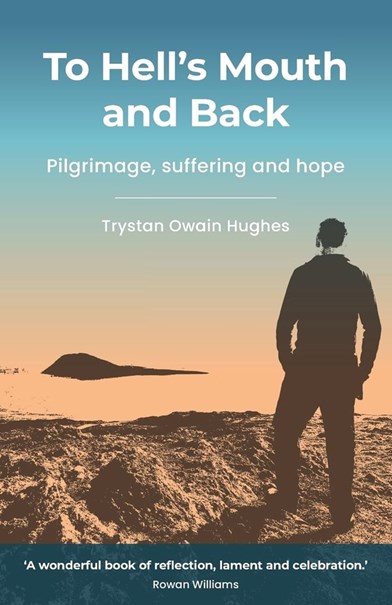
He had recovered from major back injury and, despite persistent knee pain, completed his pilgrimage. What he did not expect was a severe spinal relapse as soon as he got home. Instead of further planned travels, his second journey proved to be the painful journey from injury to recovery, through depression and anxiety, never extending much further than his sofa.
To Hell’s Mouth and Back is about both journeys, but it is neither a pilgrimage travelogue nor the diary of an illness. Instead, the author builds his book around “six experiences that could be said to define such sacred travels: suffering, wonder, signs, company, dependence and hope”. Each chapter reflects on his experience of one of these, firstly on his walk, and then on his sofa, leading into theological reflection that is simply expressed but searching: “On the cross, we are taught something that human parents also instinctively know — that sacrifice, suffering and love are all intertwined.”
There is also a third section, which opens out the theme to the reader’s experience: “as you read, consider the journey you are on right now” — a journey perhaps of illness or vocation, of work or education, of faith or family life.
Hughes pays tribute to the various people who shared parts of his journeys; and frequent reference to favourite writers — from Kierkegaard to Jane Goodall via Michael J. Fox — makes us at least as aware of his intellectual companions. Occasional citation overload is a small price to pay for being introduced to the conversation partners of the author’s thinking.
This attractive and unusual book aims at a general Christian readership, but digs deep. As well as the usual brief questions ending each chapter, it includes a short guide for those wanting to think further, as individuals or as a group, and makes a good choice as the Archbishop of Wales’s recommendation for Lent.
The Revd Philip Welsh is a retired priest in the diocese of London.
Dancing to the Heartbeat of God: Stories of discipleship (The Archbishop of Canterbury’s Lent Book 2026)
Contributors from the Anglican Communion
SPCK £11.99
(978-0-281-09231-4)
Church Times Bookshop £9.59
To Hell’s Mouth and Back: Pilgrimage, suffering and hope
Trystan Owain Hughes
BRF £10.99
(978-1-80039-426-1)
Church Times Bookshop £9.89