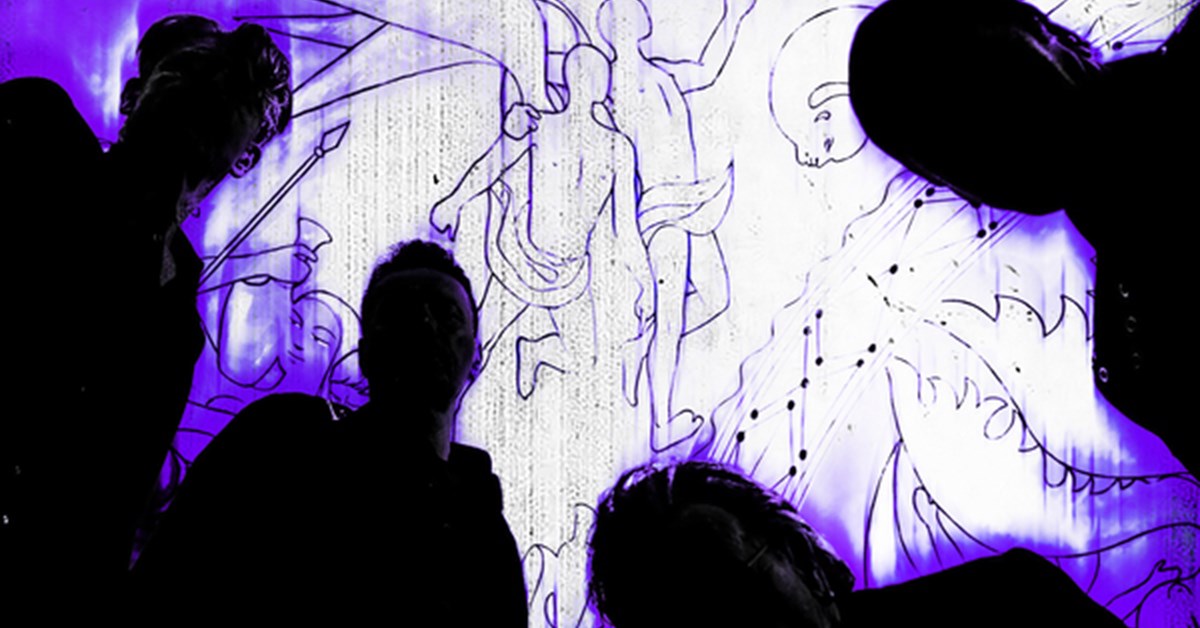
THIS was a surprise. On Ash Wednesday, U2 released their first collection of new songs since 2017, appropriately titled Days of Ash. The EP contains five songs and a poem alongside a one-off digital version of their fan-club magazine, Propaganda, celebrating its 40th year. A new album is due in late 2026, but these songs represent, to quote Bono, “the moment we wish we weren’t in, but are”.
They’ve chosen all the hot potatoes: ICE (“American Obituary”), Iran (“Song of the Future”), Ukraine (“Yours Eternally”), the Holocaust (“The Tears of Things”), and Palestine (“One Life at a Time”). To many, this will appear as a political record. But U2 have always mixed up the personal, the political, and the spiritual. The songs are centred on the death of three individuals — Renee Nicole Macklin Good (US), Sarina Esmailzadeh (Iran), and Awdah Hathaleen (Palestine) — and the life of an army medic and rock singer, Taras Topolia (Ukraine).
Bono is still having conversations with God. “American Obituary”, the angriest of all of the songs, has him talking about the death of Renee Good: “I’m not mad at you, Lord / You’re the reason I was there. . . Could you stop a bullet in mid-air?
. . . 3 bullets blast, 3 babies kissed / Renee the domestic terrorist???” U2 believe “America will rise against/The people of the lie.” “At the heart of evil,” Bono remarks, “there’s the ability to easily lie, and worse, believe our own lies.” U2’s love-hate relationship with America continues — “I love you more / Than hate loves war” — but, the refrain continues, “the power of the people is so much stronger than the people in power.”
“The Tears of Things”, based on Fr Richard Rohr’s recent book, examines how the Jewish prophets “found a way to push through the rage and anger at the injustices of the day”. Bono warns that “when people go round talking to God / It always ends in tears.” The real indictment is the silence of the Christian Church during the Jewish Holocaust, “the silent song of Christendom / So loud everybody hears”. Bono is talking to God again: “Was it you, Lord, I was listening to? / You didn’t say much.”
“Song of the Future” is dedicated to the 16-year-old Sarina Esmailzadeh, murdered by government forces for protesting as part of the “Women, Life, Freedom” movement that emerged after the killing of Mahsa Amini in 2022 for not wearing the hijab according to regulated standards. “Sarina, Sarina / She’s the song of the future / Playing in my mind / Gotta find a way to get to her / She’s holding up the sign.”
The late Israeli poet, novelist, and playwright Yehuda Amichai talks of “Wildpeace”: “Not the peace of a ceasefire / Not even the vision of the wolf and the lamb”. The poem wants peace “Without the big noise of beating swords into ploughshares”. There is the haunting image of orphans’ howling being passed from one generation to the next: “As in a relay race / the baton never falls.”
“One Life at a Time” documents the killing by an Israeli settler of Awdah Hathaleen, a non-violent activist, shot in the chest in front of his home village’s community centre in the Hebron Hills of the West Bank. The settler was freed a couple of days later. Hathaleen was a cameraman on the Oscar-winning film No Other Land, made by four Israeli and Palestinian filmmakers. Basel Adra, one of the four, commented: “This is how Israel erases us: one life at a time.” The line resonated with Bono and led to the song: “One life at a time / If there’s no law, there’s no crime / No crime?”
The final song, “Yours Eternally” (featuring Ed Sheeran), is about a man writing a letter from the Ukrainian front line. Taras Topolia, singer with the Ukrainian rock band Antytila, met Bono and The Edge when they busked in Kyiv subways not long after the Russian invasion. Sheeran gave Bono Mr Topolia’s number. But, when Bono called, Mr Topolia had to cut him off as he was “on manoeuvres and not exactly in a place to discuss music!” It is dark humour, but it concentrates on essentials: “Forget whatever doesn’t fit / Regret none of it / Don’t bet / On getting rid of me / Yours eternally.”
Musically, it’s circa “Experience + Innocence” with some great drumming from Larry Mullen after his break for surgery. Lyrically, it feels like the spirit of War (U2’s 1983 breakthrough album): a slap in the face for the great and powerful, a reminder that the little people, together, can be the change they want to make happen. “The songs being presented here”, Bono quips, “are all reactions to present-day anxieties . . . all likely to offend or annoy some parties, but that’s kind of our job!”