GRANADA shimmers in a mellow golden light as we make our way through the city in the warm morning air. The saying goes that if you see only one place in Spain, make it Granada, and we soon discover why. A spritely minibus bumps and roars through a maze of streets, ferrying us to Granada’s crowning glory: the Alhambra, which straddles a high hill overlooking the city.
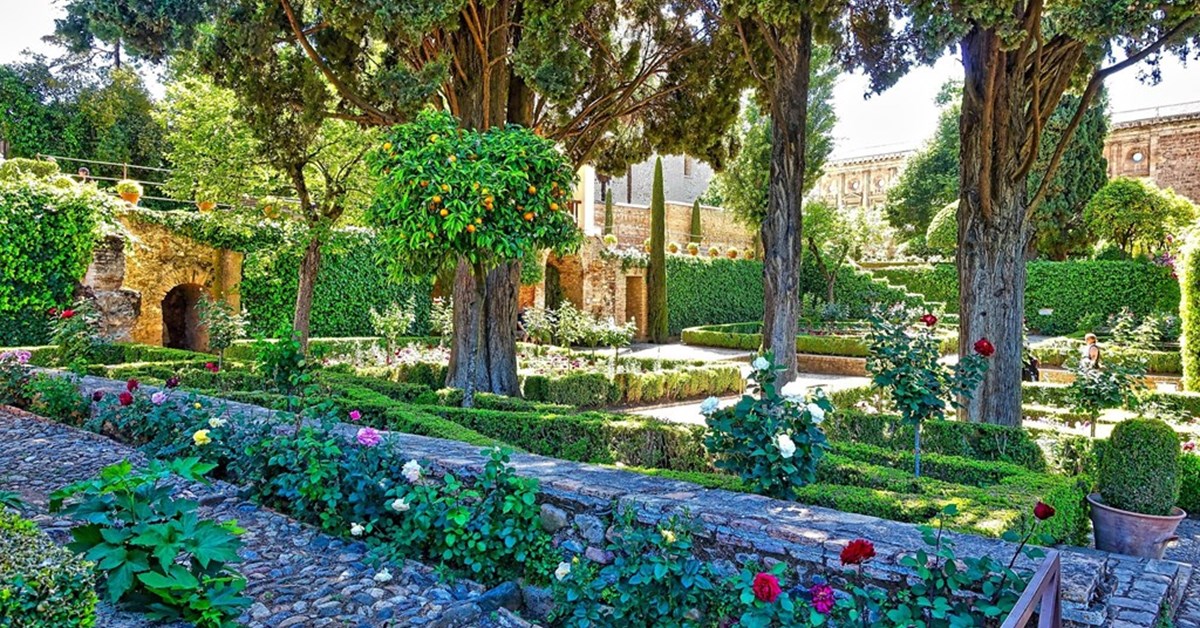
Inside, hours slip by as we explore this vast dreamlike complex of palaces, halls, and courts, a triumph of medieval Moorish architecture, intersected by gardens and tranquil pools. Part fort, part palace, it’s a city in itself. We pause occasionally to sit in its quiet cafés to recharge, ready for another feast for the eyes: the dazzling Generalife palace and gardens, traced back to the 13th century, where lofty trees are reflected in shimmering ponds.
Lying in Andalusia in Spain’s vibrant south, Granada was first occupied by the Moors in the eighth century. Its heyday came from the 13th to the 15th centuries, when it rose to become an exotic powerhouse that drew artists, merchants, and scholars from afar, with the Alhambra at its heart. When Granada fell to the Christians in 1492, a new era of Renaissance splendour began, and much remains from those times.
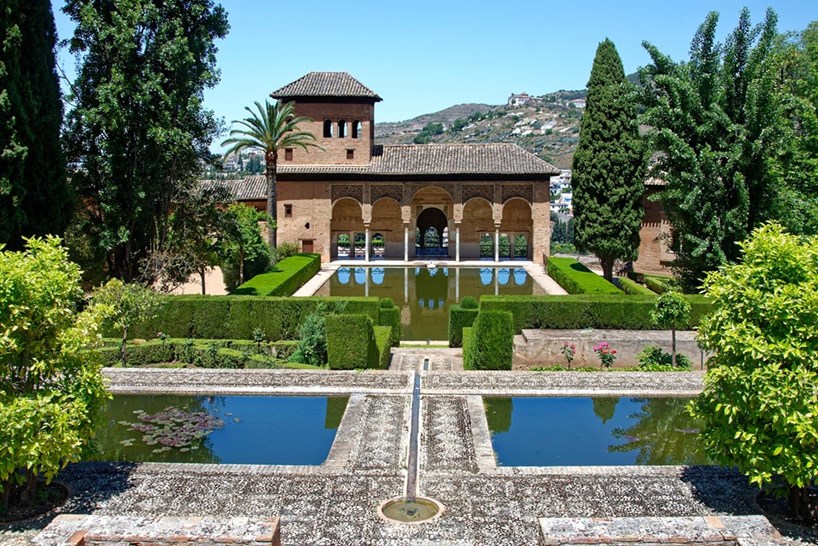 Pixabay/MakaluInside a section of the Alhambra
The next day, we stroll about Granada’s streets and sunlit squares, resplendent in marble and stone, that radiate out around its cathedral. In the magnificent Capilla Real, in the cathedral complex, we admire the tombs of the legendary monarchs Ferdinand and Isabella, and the art treasures in its gallery. But the city contains many a Christian masterpiece. In the San Juan de Dios Basilica, we’re almost overwhelmed by Baroque opulence. The Renaissance Iglesia de San Jeronimo near by is a quiet haven.
Next morning, we hike up to the Sacromonte neighbourhood, which lies on the hill opposite the Alhambra, and discover the caves where some local gypsies made their homes. Now a secluded, outdoor museum, with stunning views of the Alhambra, it’s one of the highlights of our stay. Afterwards, we weave our way downwards towards the city through the Moorish Albaicin district, with its cobbled streets, and pause at the square in front of the Mirador de San Nicolás, again to take in the tremendous sight of the Alhambra.
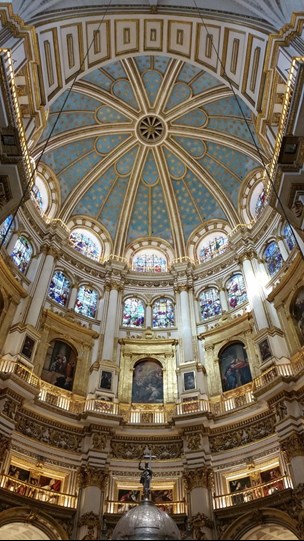 Pixabay/Waldo MiguezInterior of Granada Cathedral
A short journey from the city centre, takes us to the 16th-century Monasterio de la Cartuja, with its magnificent church and cloisters. Later, we tour the summer home of Lorca, Spain’s beloved poet, in rose-filled gardens on the fringes of the city.
In Granada, everything is within walking distance. You can while away hours in tapas bars and tea houses, and savour local dishes in the outdoor cafés that line the squares or shop in the Alcaiceria bazaar. You’re sure to find something here to take home, but, like us, what you’ll probably treasure most are your memories of Granada.
Travel details
EASYJET (easyjet.com) flies from the UK to Malaga from approximately £32 one way. Buses travel directly from the airport to Granada; trains go from Malaga.
Room Mate Leo is a stylish four-star hotel in the city centre. Double rooms cost from approximately £100 per night (room-matehotels.com).
The Man in Seat 61 website (seat61.com) has information about travelling to Granada by train.
spain.info/en/destination/granada
TRAVEL AND RETREATS is edited by Christine Miles. Tours and holidays advertised are not guaranteed or underwritten by the Church Times or Hymns A&M. Readers should check for ATOL/ABTA guarantees and take out insurance. Details are correct at the time of publication. See also www.gov.uk/foreign-travel-advice