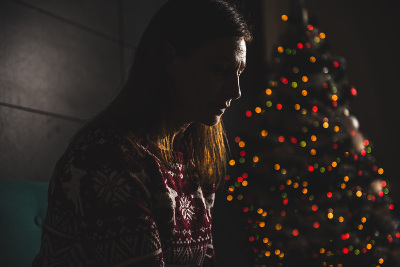
My favorite Christmas song is not one of the usual frontrunners. It isn’t “O Holy Night” or “Mary Did You Know” or “Hark the Herald Angels Sing.” It’s Henry Wadsworth Longfellow’s “I Heard the Bells on Christmas Day.”
A few years ago, the Mormon Tabernacle Choir performed it with Ed Herrmann narrating the tragic story behind the poem, written after the death of Longfellow’s wife and while his son lay gravely wounded in the Civil War. This was not a man insulated from suffering, humming about peace from a safe distance.
In the middle of the poem, Longfellow admits what many of us are afraid to say out loud:
Then in despair, I bowed my head,
There is no peace on earth, I said.
For hate is strong and mocks the song
Of peace on earth, good will to men.
That stanza feels bracingly honest. It names the dissonance between what we sing and what we see, between the theology we affirm and the ache we carry. It’s where many of us live, especially those holding things together for everyone else. This is the third consecutive blog I’ve written in this tone, and I promise to return to the main event of unflinching women’s advocacy in the near future, but today, I think it’s important to continue extending a lifeline to those struggling to stay afloat. People desperately need to know they’re not alone.
At church last Sunday, the sermon made careful distinctions between happiness and joy. Happiness is situational. Joy is not. Joy does not wait for circumstances to resolve. It does not require emotional equilibrium. It is not fragile.
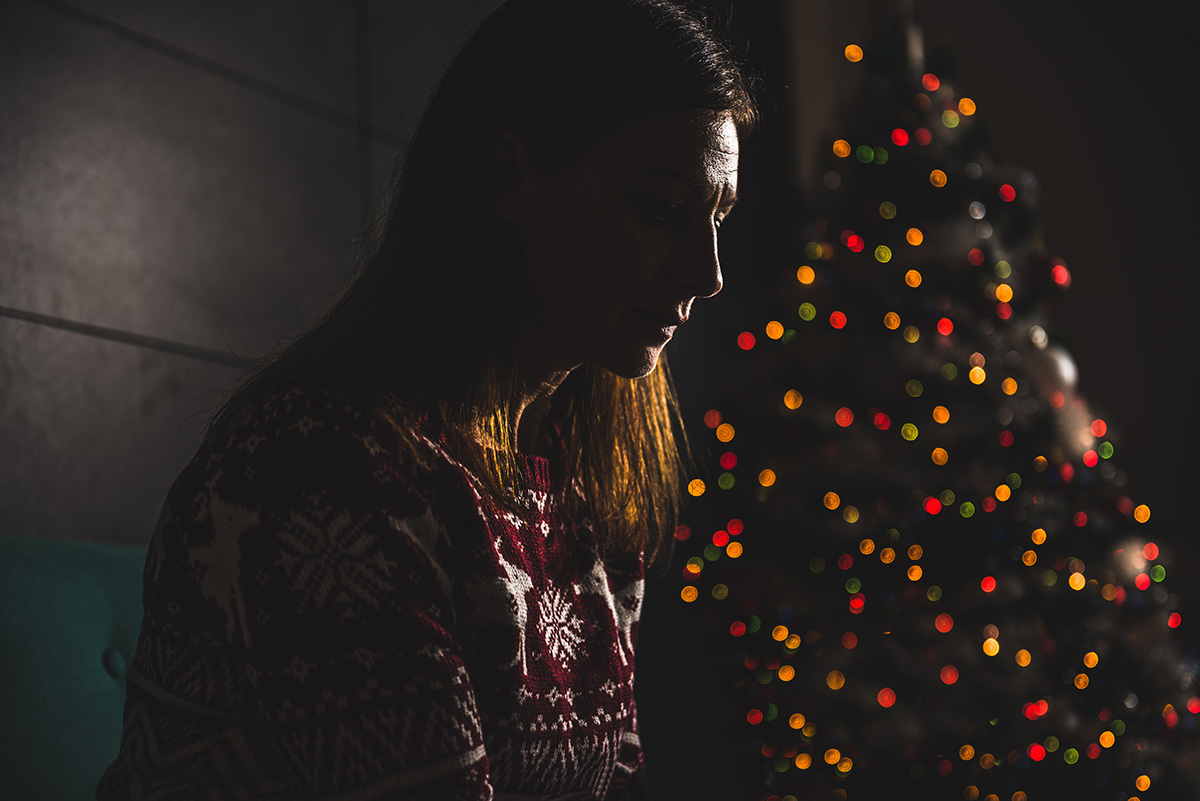
This week, joy has felt less like an emotion and more like an act of rebellion. Depression does not feel holy, which means it often goes unnamed. It feels like sin to say it out loud, like ingratitude dressed up as a diagnosis. How can you be depressed when the Lord has been so faithful? How can you be depressed when He has given you so much? Those questions burn, and they quietly shame people like me into the sidelines. I laughed with a friend this week and called it happy depression. I like my life. I am grateful for it. And my brain chemistry is still a complete gong show, despite prayer, obedience, and the medication I take to balance everything the heck out in my head.
For Christians, joy is anchored in the love of Christ and the promise of a happy ending. It is not dependent on circumstances, chemical balances, or the absence of grief. Joy is the courage to engage life fully, to show up at the table, to wrap presents, to carve out moments with your children, because even in the middle of loss, God’s faithfulness remains. It is the quiet assurance that nothing, not even despair, has the final word. Joy is a stubborn trust in the God who redeems, a trust that lifts us to act, to love, to live, even when our hearts are heavy.
This week at women’s Bible study, one of the discussion questions asked whether we saw ourselves as rule breakers or rule followers. At 42, I was the youngest at my table by a good 10–15 years and the only one who identified as a rule breaker. What struck me — and amused me — was realizing that the rule keepers and I were all motivated by the same thing: the illusion of control. We just had different means of achieving it. Some followed rules, some bent them, some ignored them entirely. Depression, in its stubbornness, reminds me how little control I actually have. Choosing joy in the middle of it feels like rule-breaking too. It is a deliberate defiance, a refusal to let despair dictate my life, even when my mind and body insist otherwise.
This week, it was triggered when my kids didn’t get callbacks for theater auditions. The cast list won’t be posted until tomorrow, which leaves just enough space for hope to bruise. I refuse to be a stage mom, but rejection has a way of resurfacing by proxy, wearing my children’s faces, pressing on old wounds that know exactly where to ache. I remind myself this doesn’t carry eternal weight. I’m actually privileged to have this as my problem. Others face real catastrophes, grief, death. In the grand scheme, this is a nothing burger. But depression doesn’t yield to truth bombs. Knowing it’s small doesn’t make it feel small when your brain insists the sky is falling. Facts can be true and pain still real, coexisting in stubborn tension. Depression ignores perspective. It amplifies every fear and mutes hope. So I hold the dissonance: grateful yet hurting, privileged yet heavy. I speak truth without denying the ache, because pretending it isn’t there only strengthens its grip.
When my thoughts spiral, I notice how tempting it is to retreat, to reduce the world to my own interior weather. But joy, if it’s real, does not hide. It insists on participation. It demands embodiment. It slaps you upside the head and invites the cessation of wallowing. “Get up and dance, sister,” it urges. “These are the sacred days you have. What will you do with them? Make them count.”
I get out of bed and enter the land of the living. I wrap Christmas presents even when my chest feels tight. I turn on “It’s a Wonderful Life” and let its insistence work on me slowly. I carve out one-on-one time with each of my children, quiet pulse checks, intentional moments to listen, to refill love buckets that leak faster than I can fill them. I show up not because I feel light, but because I refuse to let heaviness make the decisions. “A garment of praise for the spirit of heaviness,” I coach myself.
Joy, I am learning, is not the absence of depression. It is the refusal to grant it authority. It looks like presence. It looks like attention. It looks like choosing to live, right here, stubbornly, imperfectly.
And this is why Longfellow’s song stays with me. Because despair is allowed to speak, but it is not allowed to conclude.
Then pealed the bells more loud and deep:
God is not dead, nor does He sleep;
The wrong shall fail, the right prevail,
With peace on earth, good will to men.
That is not naïveté. That is hard-fought joyful defiance. Find me in this space this Christmas.
Originally published at Honest to Goodness.
Kaeley Harms, co-founder of Hands Across the Aisle Women’s Coalition, is a Christian feminist who rarely fits into boxes. She is a truth teller, envelope pusher, Jesus follower, abuse survivor, writer, wife, mom, and lover of words aptly spoken.