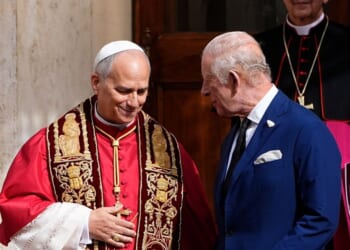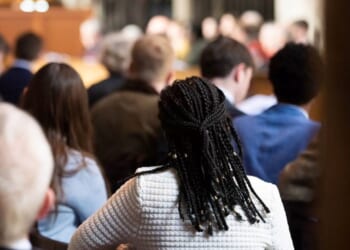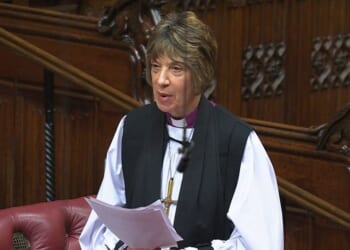
THE creation of the diocese of Cyprus & the Gulf 50 years ago was commemorated with thanksgiving services last weekend, celebrating an “ecumenical milieu” that presented an opportunity to deepen mutual understanding with other traditions.
Cyprus & the Gulf is the second largest Anglican diocese, after Europe. It covers half of the Middle East and ten countries, of which nine are Muslim-majority.
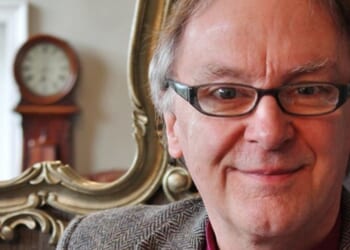
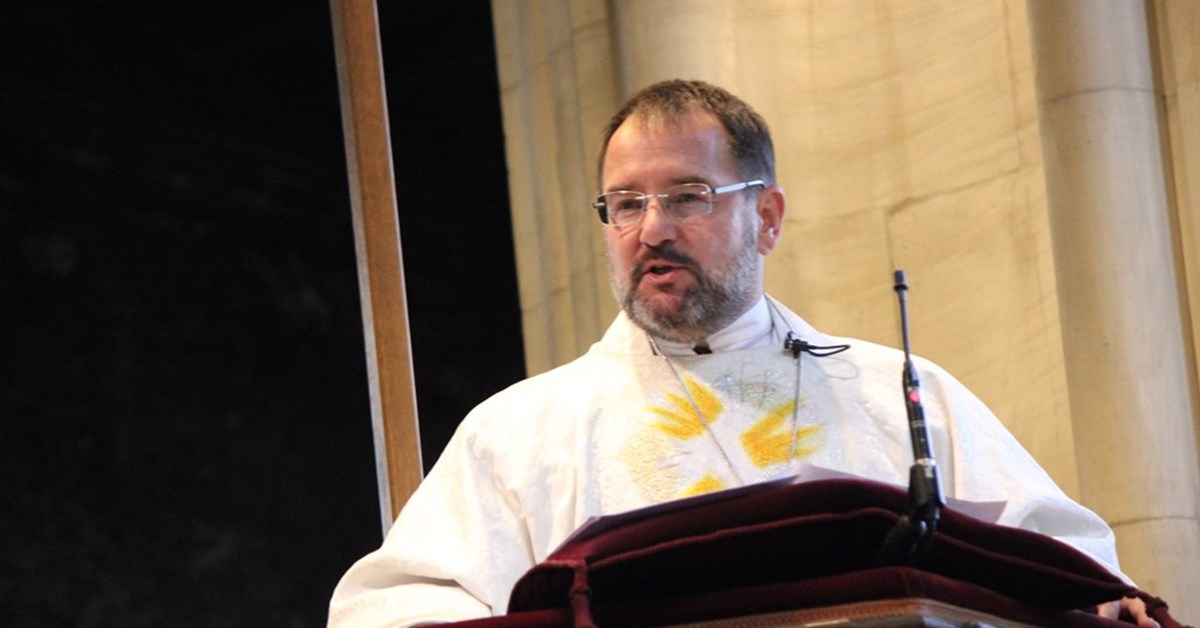
Speaking to the Church Times before the two services, the sixth and current Bishop, the Rt Revd Sean Semple, said that the celebrations were “an opportunity for us to be with one another, to share stories, to worship and give thanks to God for everything that he’s given us in these 50 years”.
He said: “We’re in an ecumenical milieu. Day to day, we will be engaging with Orthodox Christians of the East and the Orient, mixing with clergy of the Mar Thoma Church, Protestants, Roman Catholics, and more. There’s a wonderful opportunity to deepen our understanding of other traditions and to expose them to Anglicanism, and to work together in common cause.”
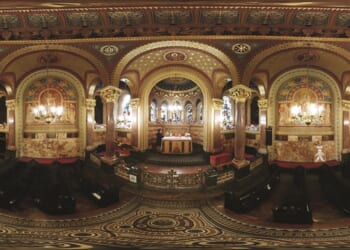
A eucharist was held at All Hallows-by-the-Tower, in London, which “has become a spiritual home for the diocese for the last 48 of its 50 years”. It was attended by people who have served in the diocese and by supporters.
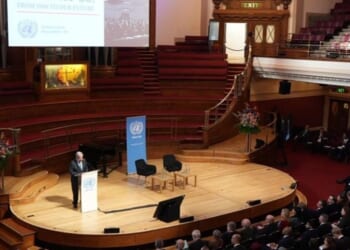
The second service was choral matins in St Clement Danes, to celebrate the long history of the association between the Royal Air Force and the diocese.
Born in South Africa and ordained in the diocese of Natal, Bishop Semple served in Hereford, and Larnaca, in Cyprus, as he and his late wife were looking for an opportunity to move to Europe, and Cyprus had the sun that South Africans were used to.
“We hadn’t lived [there] previously, and those years were challenging, but obviously Cyprus & the Gulf as a diocese left its impression on me,” he said.
He described the diocese as the most interesting and stimulating diocese in all the world.
“We are invited to be present by the rulers and the religious authorities of the countries that we’re in. They are welcoming, and they are very gracious and tolerant of Christianity by and large, which is a narrative you don’t always hear,” Bishop Semple said.
“All of our congregations are wonderfully diverse, with mainly people from the Indian subcontinent, followed by South-East Asian people, followed by Africans and Westerners. Lots of people find our Anglican churches a spiritual home from home.”
Bishop Semple also welcomed the many opportunities for interfaith dialogue and positive relationships with Muslim communities and authorities. He said: “Now that is something that I think has been really a revelation to many people, that actually Christians and Muslims can get on very well, they can work together very productively, that there is a mutual respect and tolerance even in the heartland of Islam.
“So, we as Anglicans are not persecuted in these countries, we are tolerated and there is a strong sense of countries wanting to exist coexist peacefully with us, to respect our beliefs.”
The Bishop reflected on how his responsibilities differed from those of most diocesan bishops: “Most [of them] are bishops of a county, and I’m the Bishop of ten countries; so I do far more miles in aircraft than I do in the diocesan car,” he said.
“I have to fly between parishes. And then there is the reality of being the Bishop of Anglican churches most of which exist under sharia law in Muslim-majority countries. So that’s a very different context from being a bishop of Anglican churches in Western countries, and particularly in Britain.
“Our witness is one that cannot extend into proselytising: we are not allowed to convert people, Muslims, particularly in these Islamic countries, nor are we allowed to convert the Orthodox in the Republic of Cyprus; we are guests of the Orthodox Church. So we have to exist in a way that bears witness to Christ that does not extend into actively trying to convert people, but, hopefully, by our good witness, people will learn to know who Christ is.”
The dioceses rely on contributions from their own parishes. They have a donation from the Episcopal Church in the United States through its Good Friday offering, as well as some other charities “that provide small but significant amounts of money to us each year, but primarily we have to fend for ourselves”, the Bishop said.
“I do want to move us from a kind of surviving to thriving mode. And I think we’re beginning that journey now, which is wonderful news.”
It was estimated that there were between three and four million Christians in the Gulf, Bishop Semple said. “The diocese is in the process of creating new parishes in the region. We are in an area of church growth rather than church decline.
“Since we have no absolute right to exist in most of our countries, we have to wait for land to be granted to us by the ruler, and only then can we build new churches. . . Many of our churches, particularly in the UAE, are bursting at the seams.
“I think rulers of countries are recognising that, if they want international workers, they have to provide for their spiritual needs. And so there’s a gradual but definite support of the need to provide more and more churches.
“Just a few months ago, I was granted a piece of land by the Sultan of Oman to build a new church in Muscat. The fact that His Majesty Sultan Haitham bin Tariq Al Said is a Muslim leader, ruler, very graciously giving land for the further ministry of the Anglican Church, is a story that, I think, needs to be told.”