Good Friday
HE IS dead. He has reached the end of his life. And they — the fragments of his following — have reached the end of his story. They have followed him as far as they can go, and as far as he can take them. This is the end and, by any standards, it is a bad end.
Who will write about this? Who will sing about this? Who will want to tell anyone about this? This death — this execution — is an appalling spectacle. It is a crushing disappointment. A shocking failure. And, for those who love him, it will be a terrible grief to come.
They look up at his body. They don’t want to, but they have nowhere else to look. Even though he has breathed his last, they half wait for a word. Something, anything, they can take with them, that might console them, help them carry on.
In the last hour, as he hung on the cross, they hung on his every word. How precious are the last words of someone we love. Every word, however muffled or whispered, has extra resonance and meaning.
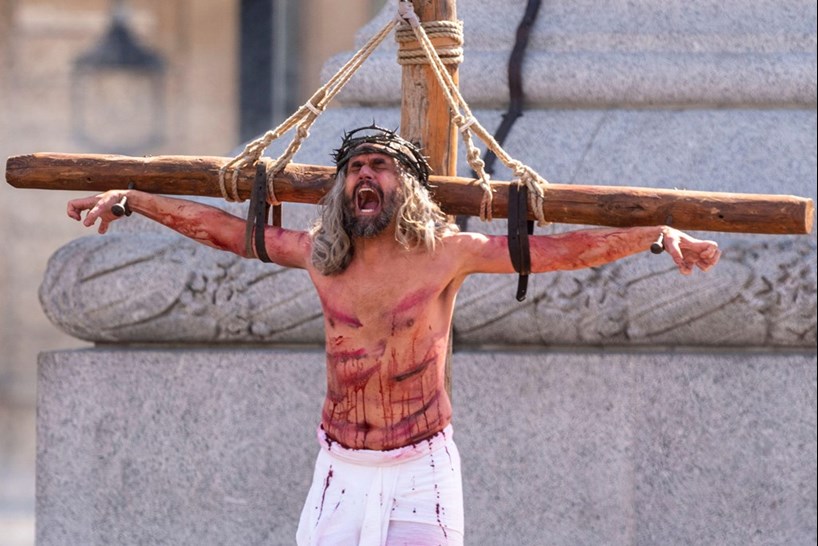
What did he say? He did speak. Words of care — for his family, his friends; words of forgiveness for the criminal, for his executioners. And then, at the end, he cried out the despair of the psalm: “My God, my God, why have you forsaken me?” And, like him, they felt the full abandonment.
In all the noise and violence and ugliness, it is hard to think. Hard to find hope and construct meaning when the subject of our love is no more. When someone we love dies, we’re left with the shock and haze of grief. Like this sky, it is a black blanket shrouding all. Time slows and even seems to stop, as an indifferent world rushes on. And they wonder: are we the only ones who care?
It is finished. But what is “it”? Perhaps it is too soon. Too soon to extrapolate meaning from what they have witnessed. They are in shock. They should be kind to themselves. Spare themselves any exegesis while in proximity to such loss. No theological formula is going to redeem how they feel. In their need for solace, they should not freight this execution with a meaning it can’t carry; stack it with sentiment, to hide the dread possibility that it means nothing more than that a good man has been unjustly killed by an unjust world.
Perhaps later, when their eyes have dried, and their vision has cleared, there will be a time to ascribe meaning to this moment. Or others in the future will be able to make sense of it. Perhaps they will write it all down. And make, at the very least, a fine eulogy out of this. But not now. Explanations and abstractions about death and the What Next don’t really cut it. Death is unacceptable.
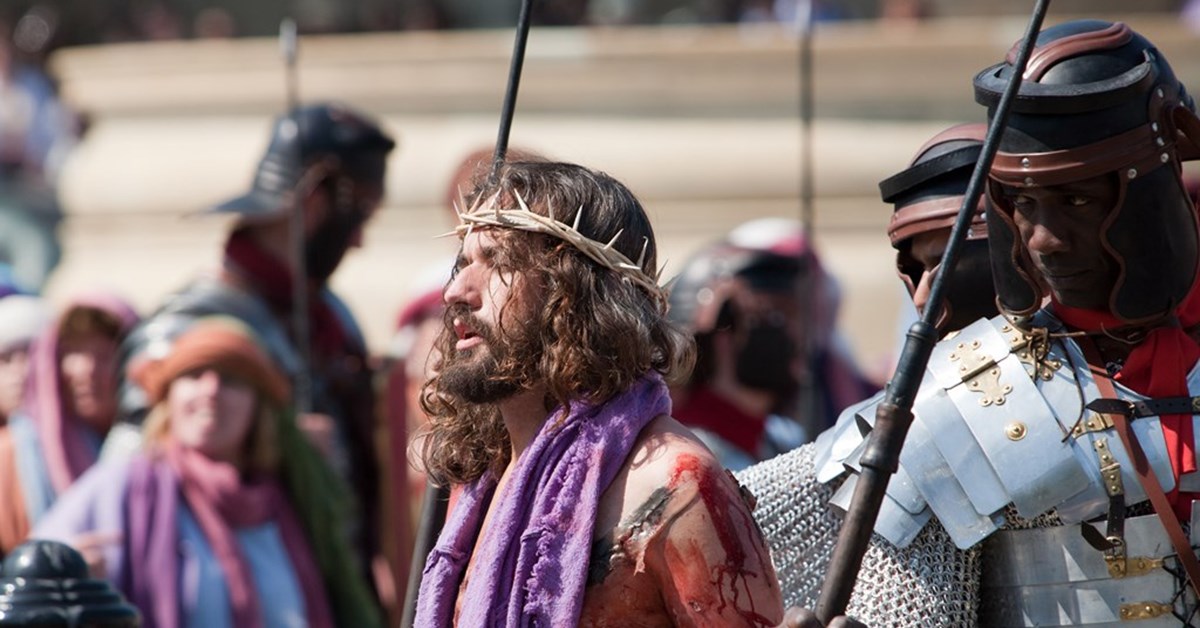
ALL they have is this unseemly execution. This cross. They have to look because that’s where he is. This is where he led them and left them. If they had looked away, they might have saved themselves the pain of witnessing the suffering and the dying. If they had looked away, they might have saved themselves watching the end game of violence, and a scene of utter defeat and failure. And avoided the ridicule of having to explain why they’d been following someone whose story ends like this.
Oh, Jesus. Where did it go wrong? Was it when you raised that man from the dead and demonstrated a power that was too wonderful and too threatening for some? Or when you claimed that even the stones would praise you as you rode into Jerusalem — just six days ago? It could have been when you entered the Temple and flipped those tables. Or when you entrusted your Kingdom to the likes of Judas or Peter. Or your refusal to deny your divinity in front of the very people who had the motivation to kill you for saying such things.
All of the above, and more. They wanted this story to go a different way — and there were moments when they thought they could bend it towards a happier outcome — but this is the way it’s gone. This is the story they have to work with. They imagined interventions: deus ex machina; eleventh-hour reprieves, super-heroic escapes; the sudden overthrow of oppressive power. But that is not what has happened.
Because that was not his way.
 AlamyAlamy
He did not become the hero they anticipated. What power he had he kept in check. If he had a superpower, it was restraint in the face of massive physical attack and psychological provocation. How did he do it? How did he not cough up a confession to his torturers, who tried to get under his skin and in his head with their taunts: “Come on, Jesus, why don’t you give sin a taste of its own medicine? Reveal your supposed divinity and start putting all this oppressive power back in its place. Strike back with that water-to-wine power, that sea-calming power, that dead-raising power.”
He had a right to defend himself. But he didn’t. They want him to come back and say something. To ask him: “What did you mean when you said with your penultimate breath, ‘It is finished’?” It was hard to hear for the wailing and the whispering. They could have misheard him: “I am finished” would make more sense. His exhausted body was completely done.
But no, he said, “It is finished.” As though something had been accomplished. But what? For, as they gaze upon his spirit-emptied form, the only thing that looks finished is him. It is only death that whispers back from his still lips: “I’m not finished, you are!”
What did you mean, Lord? “It is finished.” What did you accomplish? Because from where they stand, it is hard to see what has been accomplished. His last words matter. They are all they have in this moment, and he never said anything that wasn’t meant. So what did he mean?
They see that his suffering is finished. That the world’s abuse of him, its mistreatment, its misunderstanding, its wrong answers and muddled thinking, and its treachery towards him is finished. That its constant speculation as to who he was — criminal, blasphemer, drunk, devil-possessed, rebel, prophet, false teacher, so-called Messiah — is finished. Perhaps now he can be who he really is when he returns to his Father.
Was the accomplishment he sought simply “to die” as one of them? To accomplish a solidarity with humanity? He has done this, but they hoped for more. And his death still leaves them to face their own, alone. Without him.
Is it his mission that’s finished? That is as far as they understood it: to usher in the kingdom of heaven in this land. He told them that they would continue the good work he started, and do the things he did — and more. And perhaps that is enough. Perhaps that is “it” : to spread the good news until they too die and pass on the mantle to others. They might manage to continue for a few months. Maybe more. But without him, can they really go on?
What isn’t finished — what is so crushingly clear, as the darkness descends over the land — is the domination of the world by corrupt and prideful people. For a few years, he showed unflinching resistance to violent power. He refused the opportunity just to pass by and say nothing; he confronted the self-preserving way of the world — even though he said it would kill him.
They want to believe that the sinful forces that lie behind such powers are finished. He gave it a go. He showed that worldly power can’t handle any threat to its position; he exposed the connection between the collusions of the heart and the outworking of worldly powers. That the fault lines of envy and pride running through the hearts of people lead them to betray or deny or even kill the one who exposes those fault lines.
Is he the one the prophets predicted, the sacrificial lamb that cleanses us from sin? Because, from where they stand, this is hard to believe. Even this week, as a hundred thousand lambs have been slaughtered as an offering, sin holds sway. Could he be the one who “takes upon himself the iniquity of us all”? Because from where they stand, it looks as if the iniquities of the world have defeated him. That all the sin-forces of betrayal, denial, misunderstanding, pride, greed, envy, stupidity and indifference have got dressed up in the uniforms of priests and soldiers, and even his disciples, and conspired to kill him.
Perhaps he has made a spectacle of sin and shocked some into seeing what sin does. And the shock brings awareness of our true condition. He woke many up. But did he have to die to wake us up? Will the meaning of his words come to light later? He never said anything that did not mean something. Even as his life flashed before his eyes, he was quoting scripture, telling them something. Was he reminding them, with his last words, that all the promises and prophesies that God made are fulfilled in him. All accomplished in him?
 AlamyAlamy
Is that “it”? That he is a prophet like Moses? A champion like Joshua? A high priest like Melchizek? A king like David and Solomon, a Judah and a Joseph? Every type from the red heifer to the Temple? That he is a lamb slain? And a scapegoat not slain? A dove dipped in blood? The show bread? And the altar? The tabernacle and the mercy seat? Someone to whom all kings shall bow down?
And yet one who was despised and rejected, born of a virgin? And a man without spot who meets the iniquities of us all? Someone through whom all sacrifices cease? That there is no more remembrance of sin? No more separation between us and God? That his body before us is the sacrifice, this cross the altar? That everything is summed up in him? Is that “it”?
AS THEY take his body down from the cross and take him away to be laid in the tomb, they walk with his last words turning in their minds, “My God, my God, why have you forsaken me?” These are hard last words to hold on to. But in the pain and the grief, they can still just about remember that those words are the first of the psalm, which has a better end than this. Perhaps he was trying to get to the end of it. Or trying to tell them to keep going to the end.
As they make their sorry pilgrimage, from cross to grave, they try to finish it for him — for what it’s worth. Try to get to the end of what he didn’t have the breath or strength to finish himself:
All who go down to the dust will kneel before him – those who cannot keep themselves alive.
Posterity will serve him; future generations will be told about the Lord.
They will proclaim his righteousness, declaring to a people yet unborn:
He has done it.
Easter Day
THE day I sat down to write this Easter reflection, I received the news that my mum had died. I tried to get this Holy Week story to its extraordinary end, but I couldn’t do it. I couldn’t think straight. I was blinded by a powerful grief.
I momentarily forgot what happens next. I was stuck in Good Friday, and Jesus was still on the cross. The end. I decided that I’d leave Jesus there for now, and return to him later. He wasn’t going anywhere. I’d come back, when I could stop crying, and maybe string a few sentences together; write something that might be a help to others, or even to me. So, I put down my pen, left him on the cross and went for a walk.
As I walked, I thought about my mum. I couldn’t believe that I wouldn’t see or talk to her again; that this was the end of her story. I had hoped to see her that week. But the loss — the utter finality — had to be faced. She was not here any more. I would not see her again. Death is an end. For her, for me, for all of us.
In my mind, I was walking to Emmaus, the village about seven miles from Jerusalem, like those two downcast travellers, who had witnessed the death of Jesus and with it the death of their hopes. They too were grieving the loss of someone they loved, someone utterly essential to their lives and whom they could not imagine being without.
In the gospel story, Jesus pulls up alongside them, as they are walking, and they don’t recognise him. Why would they? He’s meant to be dead. And they are in shock, with their heads down and their hearts low. They were trying to make sense of what had happened, in a tumultuous week that had ended, so painfully, with the death of this person they loved.
They tell the traveller about the sad events in Jerusalem and mention a rumour that some women claimed to have seen Jesus alive at the sepulchre. Although when they went to the tomb, they found no evidence of his presence.
The traveller walks with the two disciples on the road. And, as they go, he suggests that this man, whom they loved so much, sounds very much like the one prophesied in scripture. The one who would suffer and die, and then rise again. As they walk, he starts to walk them through the scriptures, pointing to where these things are said. And then suggests to them that the one they are mourning must be the one the prophets foretold.
When they reach Emmaus, the two travellers invite this stranger to have supper with them and, just as they break the bread, they suddenly recognise who it is who’s been walking with them all this time. It is Jesus, risen to life.
As I walked from Good Friday — head bowed in grief — I felt that same presence, gently walking me through the story, coaxing me back to remembering how it goes. At first it goes to the darkest place we can go — to death — but then it emerges in an encounter, not with an abstract idea but with a person. From cross to grave, from grave to a risen Christ.
This encounter reminds us what it is that we hope for, and who it is we hope in. It reminds us that Jesus himself promised that he would not leave us as orphans; that he would be raised to life, and will remain with us.
The gospel is sad news before it is glad news. And the good news comes at a cost. Death is an end. But not The End. It takes the risen Christ to explain and give meaning to what happened — back there on the cross. It requires a resurrected Jesus to helps us make sense of loss, and to tell us that death does not have the last word in this life.
To transform this story into something unexpected. Make it a beginning, rather than the thing we feared it might be: The End.
It may be that you have missed the events of these last few days. And that you are here just in time to hear this good news. You have been spared the confrontations, the betrayals and trials, and a terrible death. You have not had to think about the detail of all that has come to pass, from the moment Jesus arrived in Jerusalem on Palm Sunday to his final words on the cross, and his broken body being taken to the tomb, and the disciples broken and scattered and not sure what to do next.
But that doesn’t matter. If you are here for the good news, the good news is that the last get to be first anyway. The joy of this story is that the risen Christ meets us at whatever point in our own journey we have got to. And that we join his story at any point in time.
His very presence is the answer to the impossible questions that we have. He is a pilgrim walking with us on the road, transforming our despair and disappointment, and setting our hearts on fire with hope. Confirming us in our faith and empowering us to follow him.
He encounters us with the reality that death is not the end, for him, for you, for me and for the ones we love. The risen Christ finishes the psalm he started crying on the cross and ends with the astounding news: ‘He has done it.’
He is risen, indeed!
This is an edited extract from Notes on an Execution: Lenten reflections on the last days of Jesus by Rhidian Brook, published by SPCK, £9.99 (Church Times Bookshop £8.99), 978-0-281-09172-0.