THE nine-year project of Living in Love and Faith (LLF), exploring provisions for LGBTQ+ people in the Church of England, was formally drawn to a close after one final marathon debate at the General Synod on Thursday afternoon.
After nearly five hours of argument — and no less than eight failed amendments — members voted in favour of a motion from the Archbishop of York to conclude LLF.
The motion included an apology for the “distress and pain” many had suffered during the LLF process, and approved the bishops’ decision to establish two new working groups — the Relationships, Sexuality and Gender Working Group, and the Relationships, Sexuality and Gender Pastoral Consultative Group — to continue the work started by LLF.
Some conservative members sought, through amendments, to reshape the motion so that it chastised the bishops for failing to keep to legal advice; one attempted to scrap the new working groups entirely.
From the liberal wing, there were efforts to amend the motion in the other direction, directing the working group to move at speed towards permitting standalone blessings for same-sex couples or, in one case, perpetuating the LLF programme into the future.
After much debate, however, each amendment was defeated, and the bishops’ original plan to turn the page on a contentious season in the life of the Church of England was approved.
Opening the debate, Archbishop Cottrell was candid that where the Church had ended up on the issues was not where he had hoped to be three years ago, when the Prayers of Love and Faith had first been brought to the Synod (News, 9 February 2023).
While the bishops were sorry for disappointing many on both sides, the reality of their division, and the legal and theological advice received, had meant that they had not “been able to find further ways forward that honour the consciences of those who arrive at different conclusions”, he said.
There had been “failures of process”, excessive ambiguity, and too much focus on striking “deals” between the different factions, Archbishop Cottrell said. But through this failure, he believed that the Church was now better placed to have fruitful conversations via the new working groups.
“There is hurt on all sides, but the Bible tells us when one of us is hurting, we all hurt. Let us continue to reach out to one another and pray that the Holy Spirit will lead us in all truth,” he concluded.
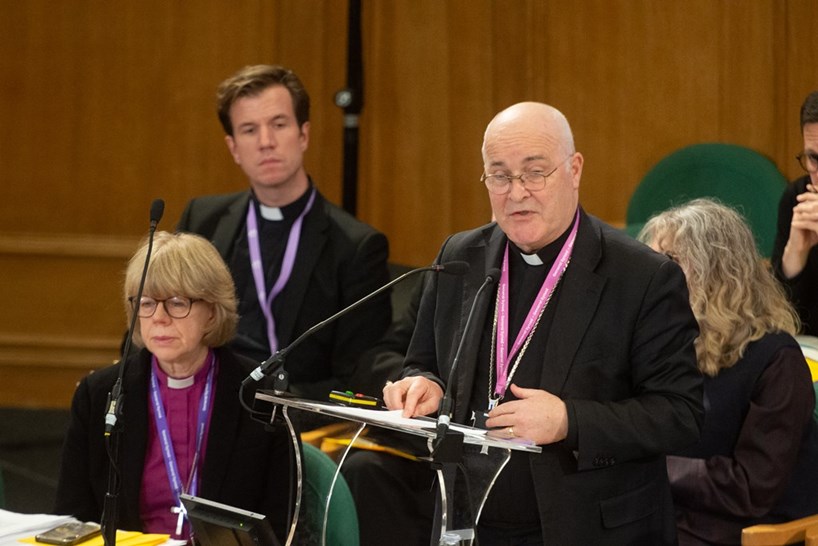 Geoff Crawford/Church TimesThe Archbishop of York opens the discussion on LLF on Thursday afternoon
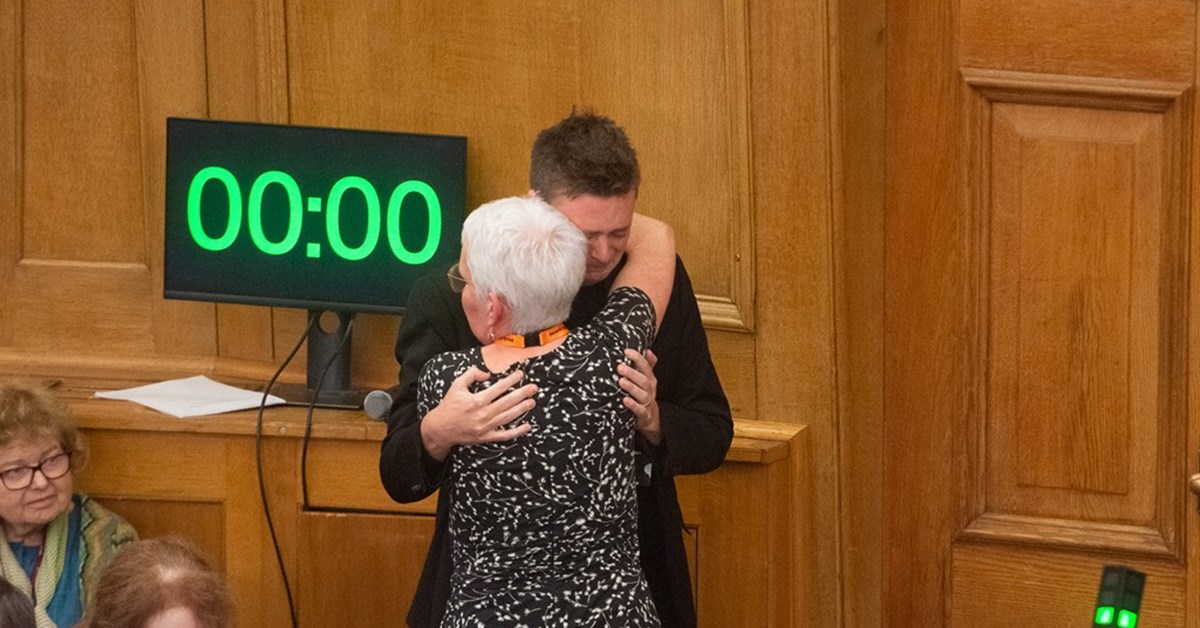
The pain and betrayal felt by many LGBTQ Christians and their supporters was evident throughout the debate. Many members spoke of their anguish at how hopes of more lasting reform had been gradually dashed over the past three years.
The Revd Jody Stowell (London) spoke for many when she lamented how the C of E had not found a way to unequivocally welcome and honour LGBTQ Christians, despite years and years of LLF. But she would reluctantly vote for the bishops’ motion as “the least bad option”.
The Archdeacon of Bolton and Salford, Dr Rachel Mann (Manchester), felt similarly, and was almost “embarrassed” that nearly a decade of conversation under the LLF banner had ended with such a meagre motion. “Woe to us if in ten years we are still talking and arguing,” she warned.
In an impassioned speech, the Revd Dr Charlie Bączyk-Bell (Southwark) said that “many gay people will be leaving [the Church] quietly” and denounced the “facetious charade” that LLF had become. “We queer people have been brutalised through this campaign of intimidation. We have been made bargaining chips,” he said.
Yet, the Revd Kate Massey (Coventry) said that her LGBTQIA+ friends were still prepared to give the Church another chance, despite the last few years having “broken” them.
Canon Stuart Cradduck (Lincoln) sought through an amendment to extend the life of LLF, arguing that to end the project now would send a “harmful signal” to LGBTQ people that a time of listening and learning had ended.
Others sought through amendments to re-open the issue of standalone blessings, which the bishops had shut down on the basis that these required full synodical authorisation and a two-thirds majority vote.
This was resisted by other members, however, who hailed the commitment to due process from the House of Bishops, and cautioned against trying to force the issue once more.
Some speakers rejected the careful framing by Archbishop Cottrell that there was hurt on both sides of the debate. Simon Friend (Exeter) argued that that the lived experiences of LGBTQ Christians and the discomfort of those conservatives who feared change could not be the same.
There were also many contributions from those opposed to PLF, who mostly did not see the bishops’ motion as a victory, either.
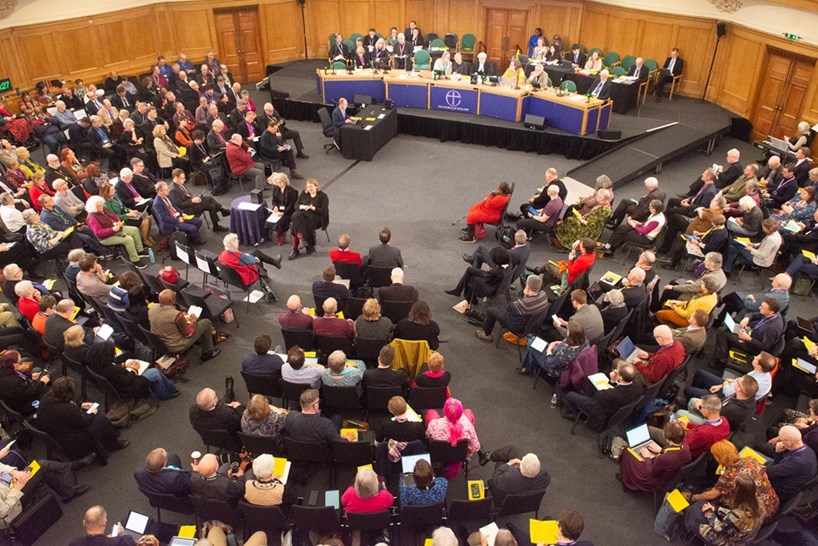 Geoff Crawford/Church TimesThe Synod listen to the debate on the closure of LLF
Laura Oliver (Blackburn) complained that her perspective, as an LGBTQ person who held onto traditional teaching on marriage and sex, had been too often absent from the LLF process. “My efforts to live a life as a treasured child of God, rejoicing in a life of singleness as modelled by Jesus himself, have been undermined and diminished,” she said.
Dr Ros Clarke (Lichfield) attempted to amend the motion to make the House of Bishops apologise for not heeding legal advice. Until there was some “confession and repentance”, she said, the hierarchy could not lead the Church into “forgiveness and reconciliation”.
Others questioned why the Church was about to embark on another round of divisive discussions on sexuality via the new working groups, when this might produce the “same bitter fruit” as the LLF project.
The Revd Mike Smith (Chester) said that LLF had to be stopped before it was reborn under a new acronym which would resume the “interminable escalator” and further poison relationships within the Church.
But the bishops were mostly united in their determination to both turn the page on LLF, and to continue conversations under new auspices.
The Bishop of Sherborne, the Rt Revd Karen Gorham, said that it was tempting to think that the work could come to an end and the Church could close its eyes to the people around it. But Christians were still called to embrace the stranger and the marginalised, she said, and therefore they had to “keep the work alive” through the new working groups.
Although “far from perfect”, the bishops’ way forward was the only way to prevent either faction losing faith in the process and getting the Church mired in stagnation and frustration, the Bishop of Birmingham, the Rt Revd Michael Volland, argued.
The Bishop of Chelmsford, Dr Guli Francis-Dehqani, denied claims that the bishops had been blocking progress and offering “stones instead of bread”. While there were deep disagreements, there was also broad consensus against “anything that would undermine our ecclesiology of our Anglican identity”, she said, referring to renewed calls from some conservatives for more permanent and separate provision.
The Bishop of Leicester, the Rt Revd Martyn Snow, who had led the LLF process before stepping down last June (News, 6 June 2025), apologised for his “mistakes” during his time in the role, but insisted that LLF had not been “a waste of time of money”. Instead, it had taught the Church what it meant to be the Church, he said, and how to live well despite division.
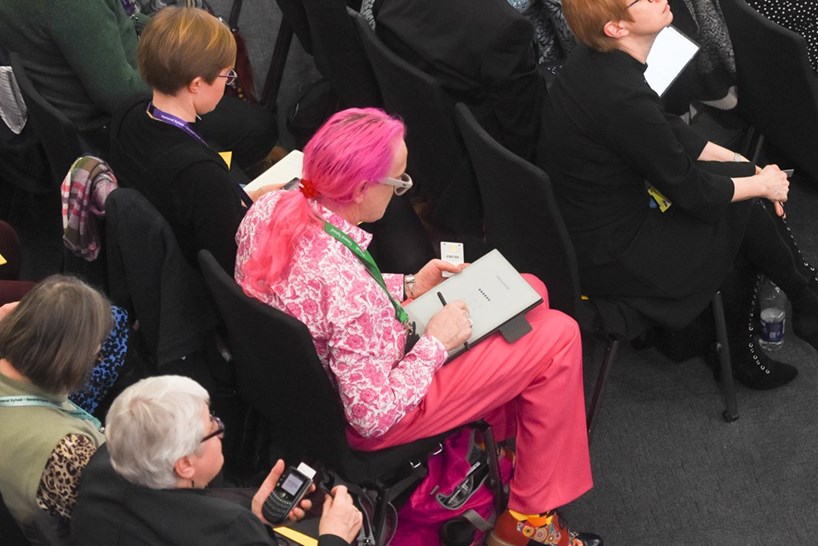 Geoff Crawford/Church TimesSynod members vote on the final motion, unamended
Towards the close of the debate, the Archbishop of Canterbury rose to praise the Synod for their constructive engagement in LLF over many years, despite it being a wounding experience for many.
The motion, she believed, created a “sensible way forward to the next steps”, and she closed by urging the Synod not to lose hope that God could make a way forward. “Hope is a muscle that we need to flex,” she said — hope, not in the Church, but in God.
When the unamended motion was finally put to the vote, it passed in all three Houses (unanimously in the bishops and with strong majorities in both the clergy and laity). The final vote was Bishops, 34-0 with two recorded abstentions; Clergy, 109-62 with ten recorded abstentions; and Laity, 109-70 with nine recorded abstentions.
That this Synod:
a) recognise and lament the distress and pain many have suffered during the LLF process, especially LGBTQI+ people;
b) affirm that the LLF Programme and all work initiated by the February 2023 LLF Motion and subsequent LLF Motions will conclude by July 2026;
c) thank the LLF Working Groups for their committed and costly work, which will now draw to a close with the conclusion of this synodical process;
d) commend the House of Bishops in establishing the Relationships, Sexuality and Gender Working Group and Relationships, Sexuality and Gender Pastoral Consultative Group for continuing work.