THE Bishop of Sheffield, Dr Pete Wilcox, has declared himself fully satisfied with the terms of reference for the Orgreave inquiry, which he chairs. These were published on Friday. The foundations, the Bishop said, “allow us to begin the inquiry’s work with confidence, and engagement with stakeholders will begin immediately”.
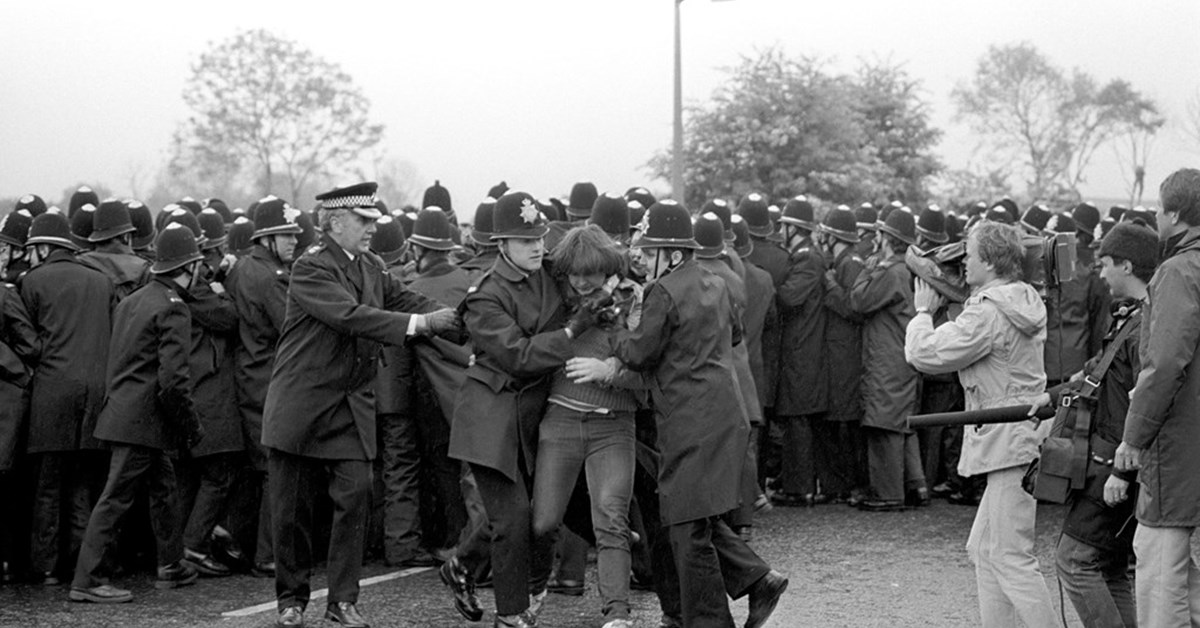
Campaigners have never ceased to press for a public inquiry into the violence and injury that ensued when 6000 police confronted and cordoned a mass protest of striking miners at the Orgreave coking plant on 18 June 1984. The men had assembled to prevent lorries’ conveying coke to the Scunthorpe steelworks.
As riot squads pursued fleeing miners into Orgreave village, 120 injuries were recorded, and 95 picketers were arrested and charged with riot and violent disorder. All charges were later dropped, after police evidence was discredited. In 2024, Northumbria Police destroyed any remaining papers associated with the strike.
The Labour Party made a manifesto commitment in 2024 to holding an inquiry. It will focus on securing and disclosing historical material so that the full picture of events acknowledged to have cast a shadow over communities for four decades can be finally understood, and unanswered questions can be addressed.
The inquiry will have statutory powers to obtain access to relevant records, including those held by police, central government, trade unions, media organisations, and other public and private bodies. It will examine planning undertaken by the police and government for the policing of the demonstration. The terms of reference specify: “This includes relevant decision making in the lead-up to the day.”
It will seek to establish “the immediate aftermath, and the lasting impact on individuals and communities, as well as the public narrative”. It will also examine what happened to those arrested: “This includes the charging decisions and prosecutions, all of which collapsed after police evidence was discredited.”
It will also establish a publicly accessible digital archive of disclosed material. “This approach reflects the strong views of campaigners that transparency must sit at the heart of the inquiry.”
The Minister of State for Policing and Crime, Sarah Jones MP, said: “The terms of the inquiry have been shaped by the Chair’s close engagement with campaigners, and they place transparency at the very heart of the panel’s work.
“I am confident that they will bring the independence, expertise, and balance needed to uncover the truth of what happened — however difficult that truth may be.”
The four panel members were also announced on Friday. Wendy Williams, a former chief prosecutor in the Crown Prosecution Service, who chaired the independent Windrush Lessons Learned Review in March 2020, will provide “independent insight on police governance, and the decision making and effectiveness of police forces”.
Baroness Bousted, a former senior trade-union leader representing teachers, leaders, and support workers, led the independent review of the Police Federation of England and Wales panel which reported in April 2025. She will provide “relevant knowledge and insight concerning the strategic and operational leadership and management of trades unions”.
Dr Joanna Gilmore, senior lecturer in law at the University of York, has research expertise in public order law, human rights, and policing policy, and will “draw on her sociological and historical research into the 1984-85 miners strike”. Dr Angie Sutton-Vane is a historian with extensive experience in “evidence based research, historical accountability and the archiving, preservation of and access to police force records”.
Dr Wilcox said: “I am acutely aware of the weight of expectation placed on this inquiry. It is my ambition, with the panel, to deliver an outstanding inquiry as swiftly as thoroughness will allow.”
The general secretary of the National Union of Mineworkers (NUM), Chris Kitchen, welcomed the Government’s announcement. “We have full confidence that the chair, . . . Dr Pete Wilcox, and the panel members, have the knowledge required to get to the truth about what happened, why it happened, who orchestrated the events at Orgreave on 18 June 1984, and why no one was held accountable. The NUM is fully committed to assisting the inquiry in its work,” he said.
“Our hope is that once the truth has been brought to light, those directly and indirectly affected can finally start to move on.”
Dr Wilcox has the task of producing a written update to the Secretary of State for the Home Department after 12 months, which the Home Office will make publicly available online. The inquiry should aim to provide a final report within 24 months, and “may make recommendations for any actions it feels are necessary to address issues arising from this work”.