IT IS extraordinary how people persist in writing about the Church of England as though it were an organisation. The Economist’s digital magazine, 1843, carried a long and thoroughly researched piece about the state of the Church, which was blemished by a couple of throwaway lines about the Rt Revd Justin Welby and the John Smyth case.
“John Smyth, a well-connected barrister in the conservative evangelical wing of the church, had inflicted sadistic beatings on boys at Christian summer camps in the 1970s and 1980s,” wrote Georgia Banjo, the Britain correspondent of The Economist. “The church concealed his crimes, dispatching Smyth to Zimbabwe, where he abused yet more boys.”
But only one flogging took place near an Iwerne camp. All the rest were administered at Smyth’s house, outside Winchester. Nor did “the Church” conceal his crimes: two priests decided not to report them to the police, as did the headmaster of Winchester, and almost all the parents of the boys involved and the boys themselves. None of the bishops then knew anything about it, although they would certainly have respected what they took the boys to want.
Least of all did “the Church” dispatch Smyth, a layman, to Zimbabwe. He went of his own accord, because the same network as had not told the police had ensured that he was cut off from all future potential victims in England. It is true that individual Anglicans subsidised him — and one of them became the safeguarding officer at Holy Trinity, Brompton (HTB) — but others made great efforts to limit the damage that he could do out there, even if these were ultimately unsuccessful.
Finally, Ms Banjo writes: “Welby said he’d been assured the Smyth case had been reported to the police, when it hadn’t” — but it had been, as the Church Times has established (News, 29 November 2024). If ChatGPT had come up with those errors, we’d call it a hallucination; but the mechanism is the same: this is what happens when you try to make sense of what has been published without checking further, whether you are an expensive computer or merely a journalist in a hurry.
The joke is that Ms Banjo had come up against a real organisation in her researches: “When I tried to get in touch with churches in the HTB network, I encountered a kind of networked power: priests would immediately contact HTB’s communications director before agreeing to talk to me. ‘We don’t feel pressure from them; it’s like having an older sibling, a familial relationship,’ said Ali Hughes, a pastor at Gas Street, when I put this to her.”
This is a wonderfully revealing quote, and the piece is full of such illuminations that come from real reporting on all kinds and conditions of Christian: “In a former mining town in northern England, one church volunteer recalled how a vicar sent to ‘transform’ her parish arrived in shorts and brought his dog to funerals; it barked through the services. Vicars are ‘not even allowed to use the pulpit now’, she complained. ‘Everything’s being dumbed down for people who have no idea about God.’
“In another village in the Midlands, one church has been left with no vicar at all. A local woman explained how she and her husband pull up weeds, make sure the step is not slippery and liaise with bereaved families who want a priest to do a funeral. ‘We’re basically running a caretaking service — and my husband’s not even religious.’”
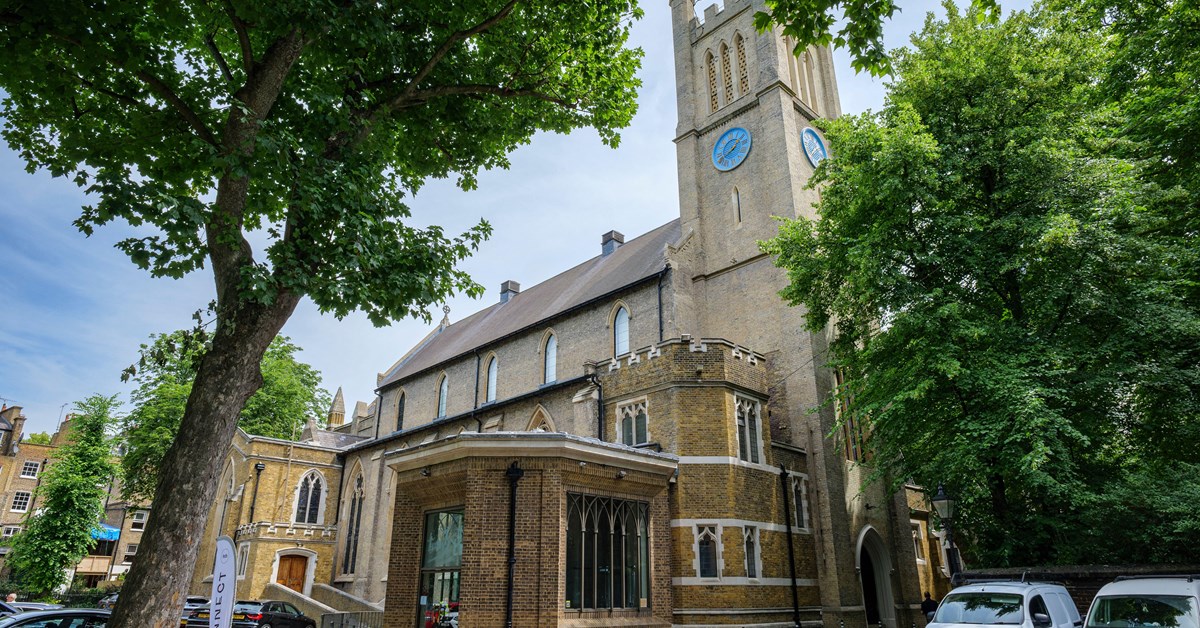
The article continues: “At HTB’s mother church in London, I watched an intercessor lay his hands on a homeless man in a duffel coat whose hair and beard were wild and grey. He pushed gently at his forehead; the man fainted against a windowpane. The intercessor stood there, hand on the homeless man’s head, for a minute or two, until he came to and began dancing, arms aloft at the back of the church.”
Such moments are much closer to the general excellence of the piece — and the work that went into it — than the stuff that I have been quibbling over. But quibble I must, since the truth of the Smyth scandal matters.
What is novel about the whole article is how clearly it frames the future of the Church as a contest between HTB and the rest, the organisation and the institution. This is, I think, fair; but Ms Banjo goes further. For her, the likeliest outcome of an HTB triumph is disestablishment. “During the last reformation the church broke with Rome. This one could cleave the church from England itself,” her piece ends.