ALMOST £10 million was given last year towards parish share through the Ephesian Fund, set up to enable individuals and PCCs to restrict their giving to other churches “that are holding on to the biblical and Anglican position on sexual ethics”, the Church of England Evangelical Council (CEEC) reports.
The sum is the total across 32 dioceses and “continues to grow, month by month”, a spokeswoman said this month. “We expect this growth to accelerate if the trajectory in the Church of England continues towards clergy same-sex marriage and standalone services.”
The fund was established in 2023 (News, 24 November 2023) and can be used by PCCs to pay parish share. In passing the money on to the relevant diocese, the Fund requires that it be used to support only churches that endorse the Ephesian Fund Basis of Faith.
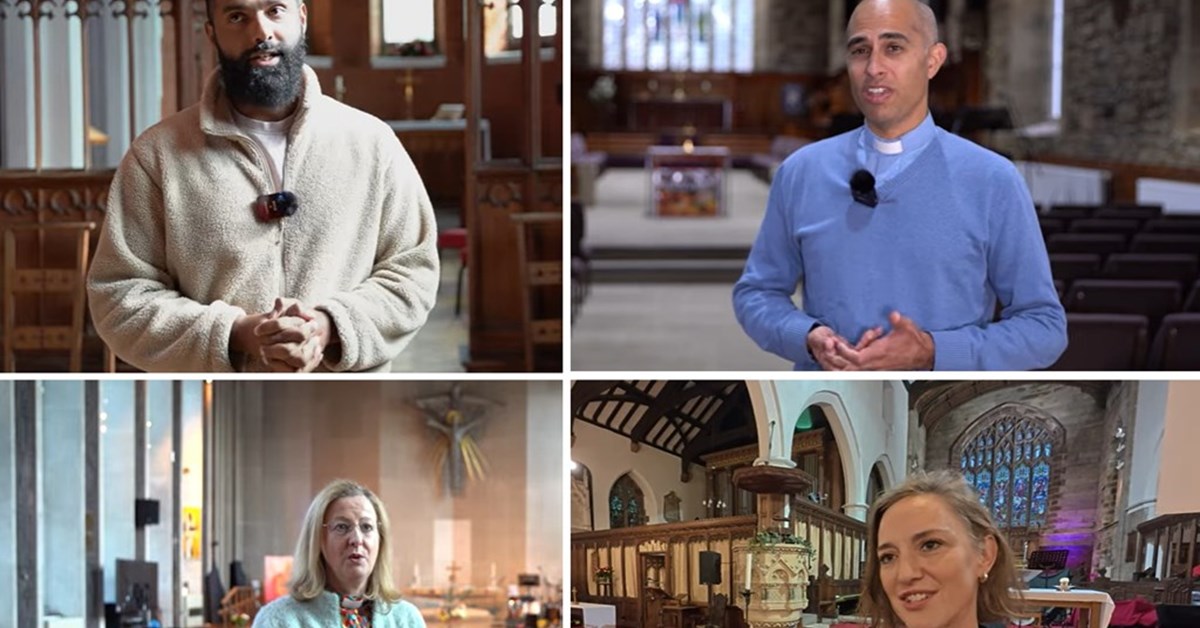
Last month, the CEEC released four short films in which clergy whose PCCs had agreed to use the fund describe their rationale and the process. The Revd Dr Ian Somasundram, Priest-in-Charge of Christ Church, Jarrow Grange, and St John’s, Hepburn, in Durham diocese, described how the church had been concerned about “what has been discussed in the Church nationally regarding” Living in Love and Faith and Prayers of Love and Faith.
“Some have left the church over that direction; so we felt we wanted to take action at least to safeguarding the integrity of the people who give towards our church.” There was a desire to “express that concern” and “make sure that the money that we pass to the diocese isn’t funding something that we think God does not agree with”.
A spokesman for Durham diocese said that, out of 209 parishes, two paid their share through the Ephesian Fund and had done so since the end of 2024.
The total was £34,718 in 2025, “helping towards the cost of providing their ministry, and we are grateful for their contribution. As their contribution is less than the cost of ministry in these parishes, the remainder is made up from mutuality and Lower Income Communities funding.”
The Revd Madi Simpson, Rector of St Mary with Holy Trinity and St Jude, Ulverston, in the diocese of Carlisle, said that the decision to use the fund had enabled many people who would otherwise not give to the Church of England to continue to do so.
“Conversations haven’t always been easy,” she said. “It can be complex, understandably, and we are all invested in our own relationships and friendships, but . . . we need to have these conversations in these days.
“The consequences of shifting away from our inherited beliefs on core things like sex, marriage, relationships, or the life of the Trinity — and, funnily enough, I believe those two things are connected — has consequences we can’t even begin to imagine.” She told clergy not to be afraid to bring it to their PCCs: “Do it for yourself. Do it for your own conscience. Do it for the Lord.”
The “vast majority” of churches in Carlisle diocese paid their ministry offer directly to the diocesan board of finance (DBF), a spokesperson said. The diocese “continues to be in constructive dialogue with representatives of the Ephesian Fund and a handful of churches who pay their Ministry Offer through the fund”.
The DBF “draws on other sources of income to invest in mission and ministry in churches whose costs of ministry are higher than their Ministry Offer, including churches that pay through the Ephesian Fund”.
The Revd Sally Baily, Vicar of Holy Trinity, Hounslow, in the diocese of London, said that she had assumed that the fund was for those churches that could pay more than their parish share, but had learned that it was possible to pay what they could to the diocese and also receive from other churches in the fund which could pay more and be generous.
The diocese had received a “top-up” from another church in the fund to help to pay for ministry at Holy Trinity. The fund meant that it was possible to support those churches that were “really serious about spreading the gospel, the true gospel, and not selling it short”.
The 2024 annual report for the diocese of London states that £260,000 (down from £750,000 in 2023) was “withheld by parishes to register their disquiet regarding General Synod decisions over the blessing for same sex relationships”.
A spokesman said that the diocese had “chosen to prioritise the wishes of each donor parish on a case-by-case basis when it comes to the Ephesian Fund”, and that “this process is working well.”
The Vicar of St Andrew’s, South Wimbledon, in the diocese of Southwark, the Revd Santhosh Thomas, said that both clergy and “senior church members” were “becoming increasingly concerned with the national direction of travel . . . particularly on issues of sexuality and marriage. . .
“Therefore, finding a way for us to express our clear commitment to the orthodox gospel . . . was something we wanted the chance to talk honestly about.”
It was “a great way for everyone’s consciences to be put at ease and for a clarity that we want to be part of the diocese, we want to give, we want to contribute, as we’ve had a good working relationship as God has renewed this parish, but we couldn’t thoughtlessly just give money into a system which has now sadly become very compromised and divided on what we believe to be a primary issue.”
Mr Thomas was licensed at St Andrew’s in 2024, having served as an honorary associate minister in the parish while he was Senior Assistant Pastor at Dundonald Church, in Raynes Park. This church is part of Co-Mission, a church-planting network established in 2005.
In 2024, the diocese of Southwark reported that the total money expected to come in from parishes that had opted to pay their contributions and pledges through the Ephesian Fund, or similar organisations, was expected to amount to £316,000. Parish share in total was £16.4 million.