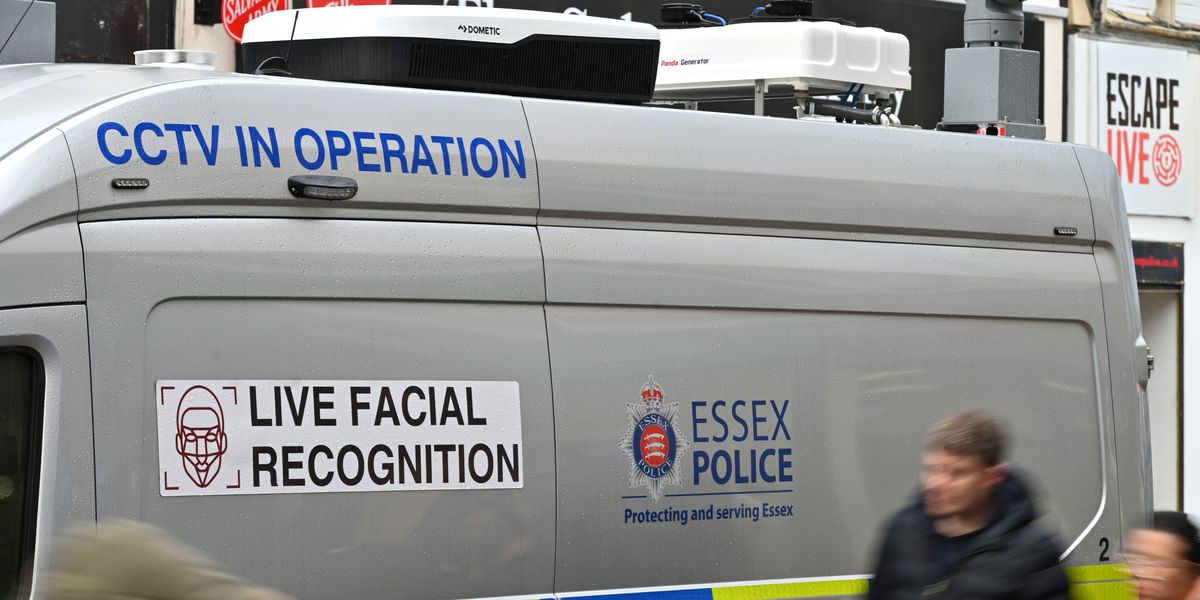
A police force has stopped the use of live facial recognition (LFR) cameras after it identified more black people than other ethnicities.
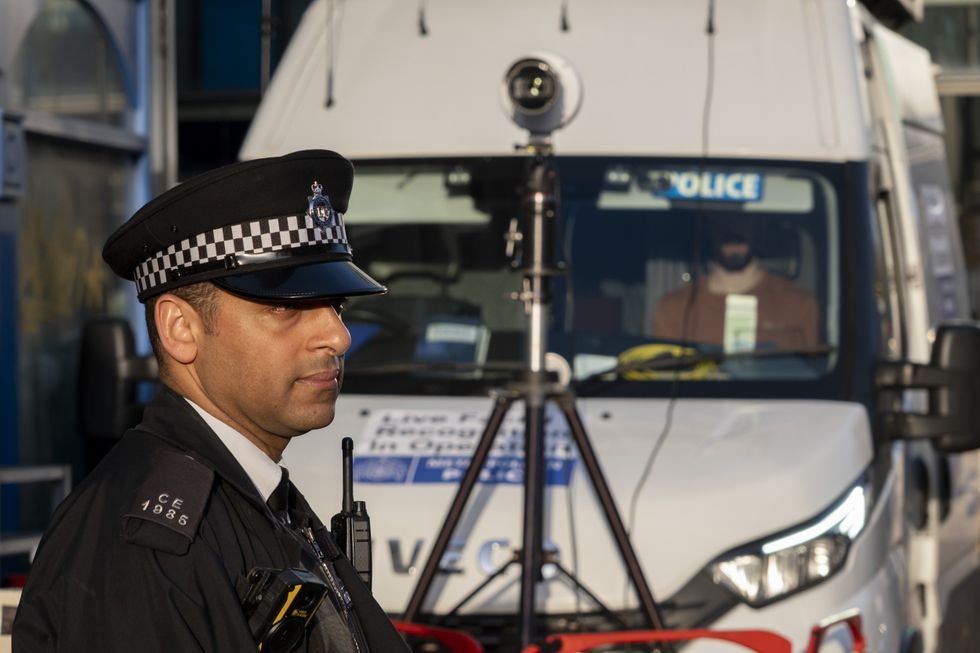
Essex Police’s facial recognition cameras, mounted on vans and used to identify people on watchlists, will be be paused over “bias” concerns.
The force said it paused the use after “potential bias in the positive identification rate” – but now believes the issue has been corrected with an update to its algorithm.
University of Cambridge researchers tested LFR during one of Essex Police’s deployments, with the help of nearly 200 volunteers.
The study found it was significantly more likely to correctly identify black people.
Black people were 27 per cent more likely to be identified than all other ethnicities, and 31 per cent more likely than white people.
The technology was also 14 per cent more likely to spot men than women.
The research found it correctly identified around half of those on the watchlist, and was extremely rare for someone to be flagged who was not on the list.
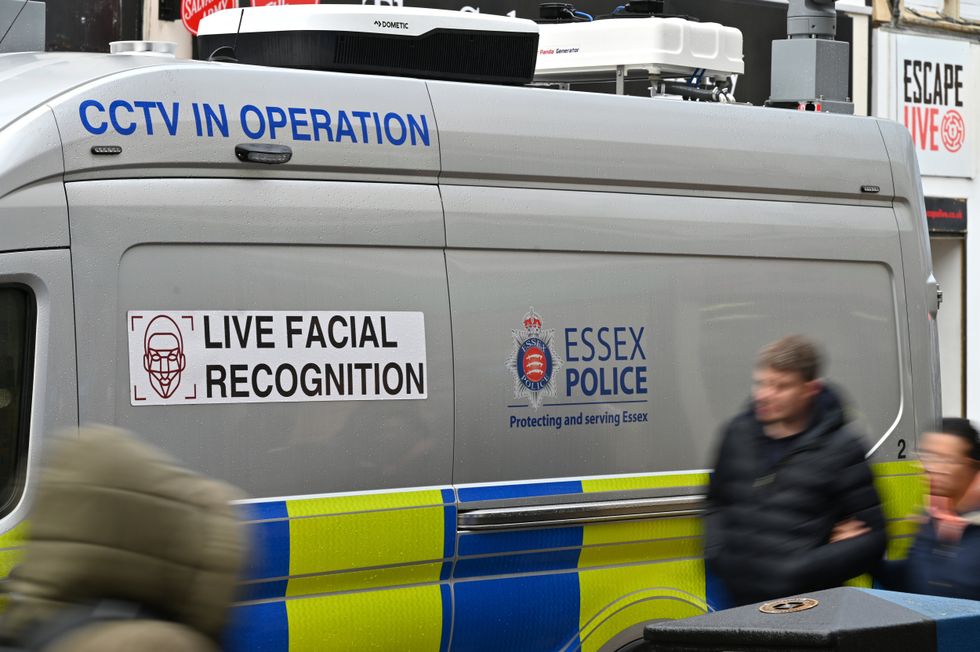
An Essex Police live facial recognition van, which identified black men more than white
|
GETTY
Researchers said it raised “questions about fairness” that should be monitored.
Essex Police told Sky News it commissioned two studies, and the second one suggested no bias.
But the force has paused the use of LFR to work “with the algorithm software provider” to update the system.
Essex Police added: “We have revised our policies and procedures and are now confident that we can start deploying this important technology as part of policing operations to trace and arrest wanted criminals.
Home Secretary Shabana Mahmood said police forces throughout the country will be able to use LFR
|
GETTY
“We will continue to monitor all results to ensure there is no risk of bias against any one section of the community.”
The study also investigated the effectiveness of LFR by the force.
Thirteen police forces were using LFR by the end of last year, and Home Secretary Shabana Mahmood said usage of the technology was set to expand from 10 vans to 50.
Researchers found about 1.3 million faces had been scanned from August 2024 to February 2025 and led to 123 interventions, where police spoke to someone identified by LFR.
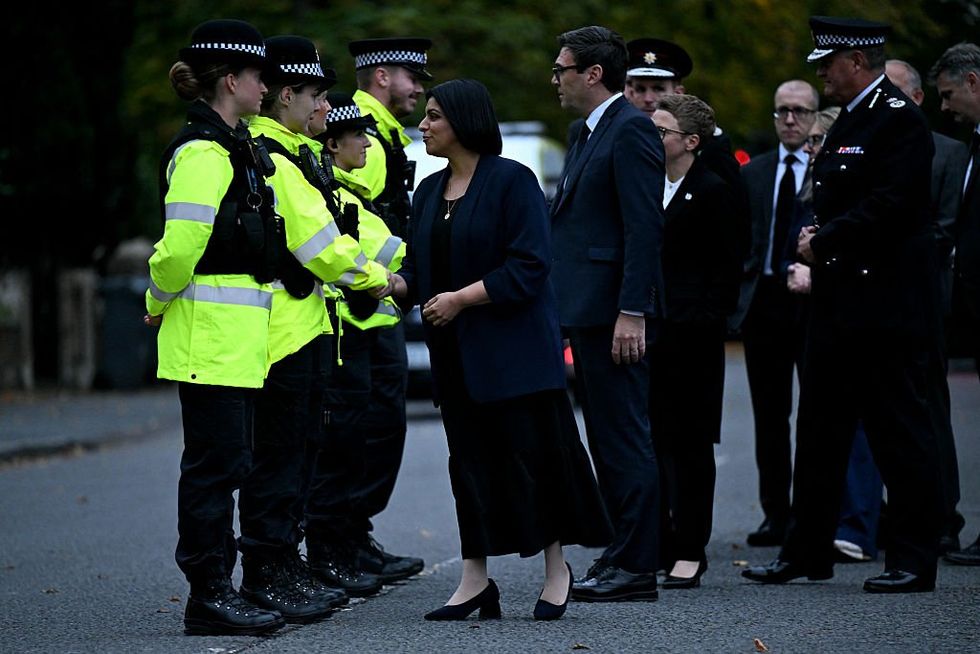
The Home Secretary announced an expansion of LFR from 10 vans to 50 amid widescale police reforms
|
GETTY
From those interventions, 48 arrests were made.
There was only one case of mistaken intervention caused by LFR technology.
Home Secretary Shabana Mahmood said £115million would be invested into a national centre for artificial intelligence called Police.AI to free up police paperwork and ensure new technologies, such as LFR, are used responsibly in January.
She also announced a British equivalent to the FBI, called the National Police Service.
The Home Office said a person’s image is “immediately and automatically” deleted if it does not match the watchlist and all deployments are “targeted, intelligence-led, time-bound, and geographically limited”.
More than 1,300 people suspected of serious crimes had been arrested in London thanks to LFR between January 2024 and September 2025.