THE headstone of a deceased woman may bear the two nicknames “Lucy” and “Cinders” — rather than her given name, Lucinda — even though this does not comply with the requirements of the Churchyard Regulations, a Chancellor has ruled.
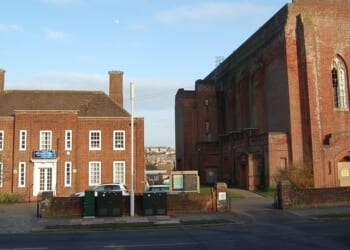
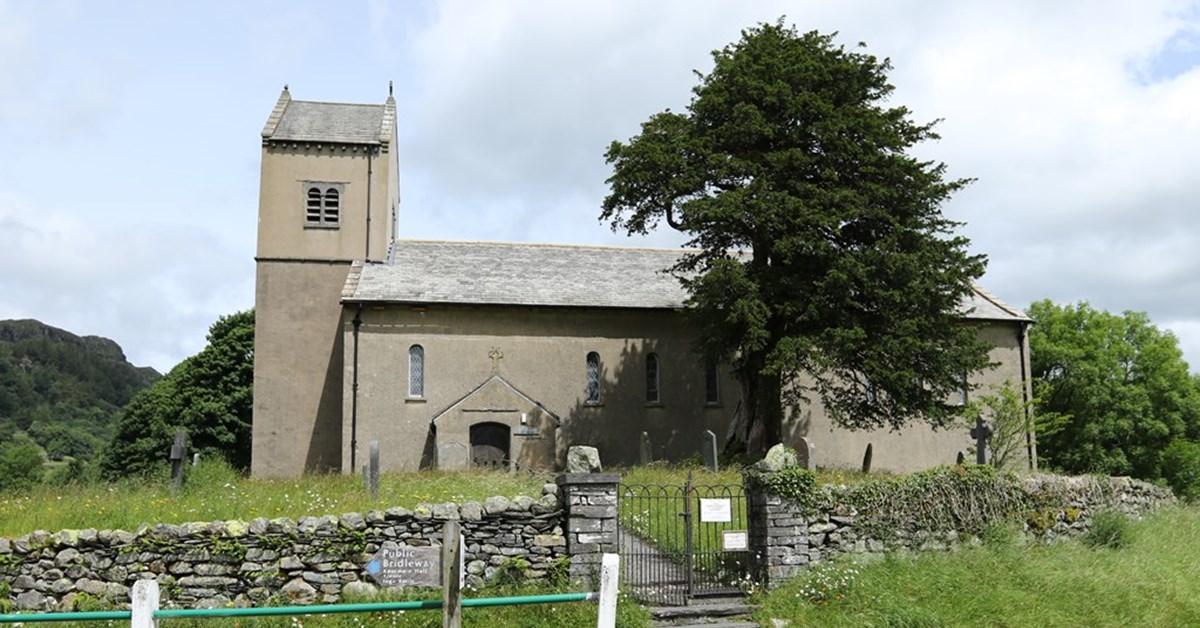
The Consistory Court of the diocese of Carlisle granted permission for the headstone to be installed, with the nicknames, in the graveyard of the Grade II listed St Cuthbert’s, Kentmere.
Andrew Yeats first applied informally to install a headstone commemorating his late wife, Lucy Nelson, who was widely known as Cinders. He did not want any reference to her given name, Lucinda, which she had actively disliked.
That was contrary to the Churchyard Regulations, which, in paragraph 2.5.4 of Appendix B, state: “The Christian and surnames of the deceased should be given.” Mr Yeats also proposed a design with a large sunflower on the reverse of the headstone.
At least one member of the PCC of St Cuthbert’s had reservations about the design. A bare majority favoured Mr Yeats’s proposal. Other members raised concerns that the Diocesan Chancellor, the Worshipful James Fryer-Spedding, regarded as “not obviously unreasonable”.
After further engagement with the PCC, Mr Yeats presented a petition for a faculty for the installation of the headstone designed by a letter-carving specialist, Pip Hall. The PCC unanimously supported that design, and the diocesan advisory committee (DAC) commended the high quality of Ms Hall’s work, along with the proposed use of V-cut lettering in a stone made from riven slate.
The DAC did not consider that the design would set an unwelcome precedent, and the tenor of its advice was that it was of a high quality.
In regard to the use of the name “Lucy” rather than “Lucinda”, the Chancellor agreed with the DAC’s view that “Lucy” was suitable, appropriate, and commonly recognised as a familiar form of the name “Lucinda”.
Regarding the use of the name “Cinders”, the DAC’s view “was not one of outright objection (given its significance for the family) but of concern about its placement and presentation”. Mr Yeats’s suggestion was that the name (in inverted commas) be placed on the base of the reverse side of headstone, below the sunflower.
The DAC proposed that, in view of the “substantial open space available elsewhere on the stone, the name ‘Cinders’ appeared isolated and without clear context or reference, particularly as the name ‘Lucinda’ does not appear in the main inscription”. The DAC was also concerned that “its low placement could, over time, become obscured by grass or foliage, and thus be easily lost.”
The DAC, therefore, favoured placing the name “Cinders” on the front of the stone beneath “Lucy Nelson”, leaving the reverse to focus on the carved flower motif.
Mr Yeats’s response, while expressing his gratitude for the DAC’s “well-considered and sympathetic comments”, was that he would nevertheless like to avoid putting the name “Cinders” on the front of the stone. That was partly because he wished to leave space for an inscription in his own memory in due course.
He also explained that to have “Cinders” under the sunflower on the reverse reflected his wife’s original design. He also reasoned that adding the name “Cinders” to the front might risk making the design unduly busy when it came to Ms Hall’s hand-carved calligraphy. Furthermore, his wife was a great lover of nature and wild flowers and “would rather like the idea of her name sometimes being partly obscured by the wild grass and flowers”.
The Chancellor said that he had had to weigh the DAC’s “thoughtful advice” against Lucy Nelson’s “evident preparedness for part of her design to be intermittently hidden by nature”.
“On balance”, he decided that Mr Yeats’s design should be permitted, even if that involved “allowing elements of personal expression to prevail over strict practicality”.
In the particular circumstances of this case, the Chancellor granted a faculty allowing the gravestone in the design proposed by Mr Yeats in his wife’s memory.