A NEW theological education institution, St Martha’s College, has been established by the diocese of Guildford in the hope of training more men and women for both lay and ordained ministry in the region.
St Martha’s is to expand the work of the existing Local Ministry Programme (LMP) by offering candidates “high-quality theological training and formation, practical experience, and opportunities for people taking their first steps in exploring a calling to ministry”, a diocesan announcement said on Monday.
Courses will include the LMP (for ordained ministry), as well as Foundations in Ministry (the lay-ministry programme), the Elizabeth Pathway (formerly known as the Caleb track, for ordination training for the over-55s), and occasional courses, for those seeking to “dip their toe” into exploring ministry.
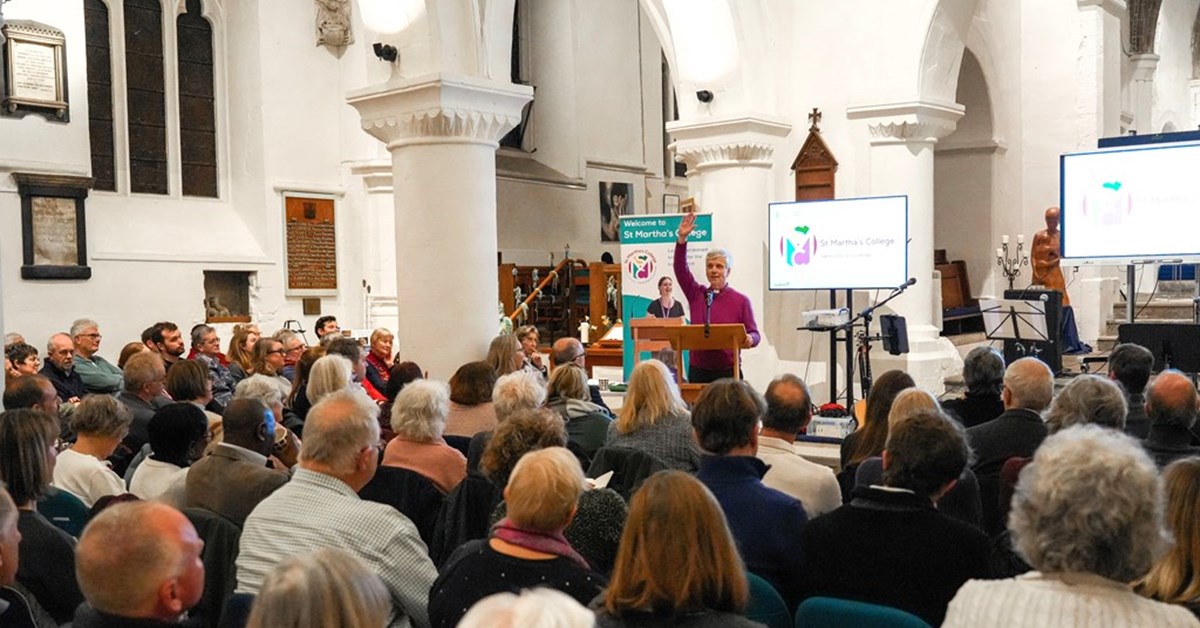
St Martha’s was officially launched at St Mary’s, Guildford, with more than 100 clergy and lay leaders, including former students, in attendance. Licensed graduates were also presented with their certificates.
Opening the event, the Bishop of Guildford, the Rt Revd Andrew Watson, said that St Martha was one of only five people in the Bible described as being “loved by Jesus”. He hoped that graduates would manifest this love in their ministry, growing in their ability to disciple others. The name also drew inspiration from the church, he said, which is geographically at the centre of the diocese, along the Pilgrims’ Way.
A second-year student on the Foundations in Ministry (FIM) programme, David Godwin, said that he had begun to attend church regularly about 11 years ago, but had more recently decided to “take a leap of faith” and explore a call to lay ministry.
“I saw FIM as a chance to become more intentional in my faith and more confident in sharing the Good News. I have gained in biblical knowledge, deepened my faith, and feel recharged. I know that God has a plan, and faith (in my calling) is more important than certainty.”
The Revd Sarah Murphy, who completed the Elizabeth Pathway, praised the practical elements of the course, including learning about prison chaplaincy through visiting a prison, and understanding church-planting by meeting the ministry team at a Holy Trinity, Brompton, plant.
The Interim Principal of St Martha’s, the Revd Dr Anna Poulson, said that the essence of St Martha’s — in the words of students — was: “Fellowship, family, togetherness, community, hope, belonging, and joy. They even used the word ‘exciting’.”
She continued: “My hope and prayer for St Martha’s College is first and foremost that we can be a community of people formed and transformed through our relationship with God, with one another, and with the world around us.”
Bishop Watson said: “St Martha’s will create an even stronger vocational culture in the diocese.” He challenged those attending to consider who, in their own lives, they might “tap on the shoulder” to encourage them to explore a vocation in ministry.