MYSTERY surrounds a letter and accompanying documents from Charles Lutwidge Dodgson (pen name, Lewis Carroll) unearthed in the archives of Lincoln Cathedral and described as “an extraordinary find”.
Dated 29 May 1875, it is a dinner invitation to Henry Ramsden Bramley, Precentor of the cathedral from 1895 to 1905. It is not known where he and Carroll met. One suggestion is through their mutual acquaintance with John Stainer, with whom Bramley collaborated on the 1860s collection Christmas Carols, New and Old. Stainer was organist for the wedding, at Westminster Abbey, of Alice Liddell, the inspiration for Alice’s Adventures in Wonderland and Through the Looking-Glass. Her father, Henry, was Dean of Christ Church and an Oxford contemporary of Dodgson’s.
 ‘Curiouser and curiouser’
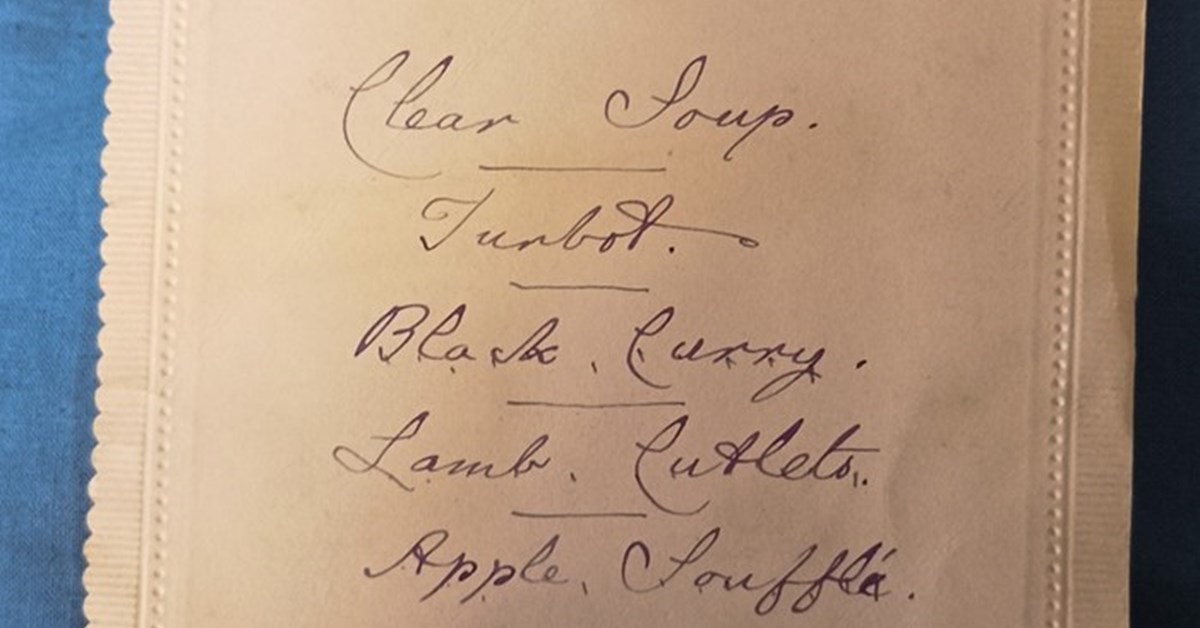
The letter contains a menu and a seating plan, which, the Lincoln archivists speculate, may have been sent with the letter or brought back as a memento. On the menu were clear soup, turbot, black curry, lamb cutlets, apple soufflé, and apricot cream.
The seating plan shows a second cleric present: the mathematician William Ranken, another Oxford contemporary, Vicar of Sandford-upon-Thames, and, like Dodgson, a chess player. Professor Bartholomew “Bat” Price, a fellow mathematician and Master of Magdalen, was another guest.
One curiosity in particular is baffling the archivists. The roughly sketched plan includes a quotation from Shakespeare’s The Tempest — “The Cloud-Capped Towers” — written down the middle of the table. It comes from Prospero’s speech in Act 4: a reflection on the brief and fragile nature of a life where all things will pass away.
The discovery has sparked a unique collaboration with the Lincoln School of Creative Arts, whose production Alice in Wonderland 2025 opens at Lincoln Arts Centre on 11 December. The show’s costume designer, Helen Symonds, has created a fabric using images of the documents which, to the delight of the cast, has been stitched into the costumes.
“It’s an amazing find, which we are delighted to have in the collection here,” said Fern Dawson, the archivist who made the discovery.