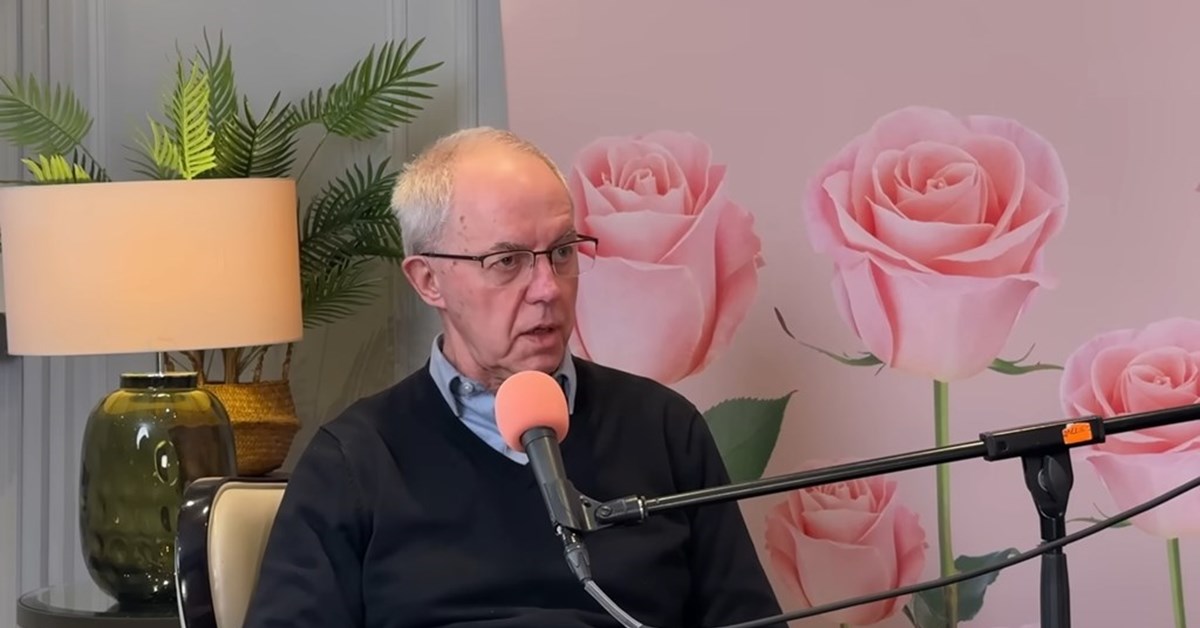
WHEN the former Archbishop of Canterbury the Rt Revd Justin Welby spoke recently about his mental health (Quotes, 6 March), his honesty was striking.
Speaking to Gyles Brandreth on the podcast Rosebud, he reflected on the failures surrounding the Church of England’s handling of abuse allegations, and revealed that he had sought professional help. “I’ve been seeing a psychotherapist for a considerable period of time, and a psychiatrist: very helpful,” he said. He went on to say that therapy was not about excusing mistakes, but about confronting them honestly: “It’s not about saying, ‘Oh, it didn’t matter,’ . . . quite the reverse. How does one live with such a failure?”
That candour should have been welcomed. Instead, it prompted a deeply damaging column in The Daily Telegraph by Celia Walden, who asked: “What’s the point of God if even Justin Welby is seeing a therapist?”
Reading her article left me shocked, distressed, and very upset at such ignorance about mental health. I felt shamed and triggered. As a serving clergyman who has lived with serious mental-health challenges, I felt guilty and embarrassed simply for seeking help. Her column was extremely damaging, heartless, and cruel, and lacked any compassion for clergy and people of faith who live with mental illness. It implied that faith alone should replace therapy: a view that is both wrong and pastorally reckless.
Walden recounted a lukewarm personal experience of therapy while writing a book, which included the unusual advice to “tie your hair up very tightly for the whole day . . . then you can really shake it out.” She acknowledged that therapy could be life-saving for “the big stuff”, and yet suggested that, while professional help might make sense for most people, it should not apply to a Christian leader. Instead, she proposed that Bishop Welby should simply have “got himself an appointment with the Almighty”.
This flippant remark was not only dismissive of the very real pressures faced by the clergy, but it reflected a profound ignorance about mental health. It reduced the complexities of depression and anxiety to a simplistic notion of faith, disregarding the practical, life-saving support that therapy and medication provide. For someone struggling with mental illness, comments such as these can reinforce shame, stigma, and isolation, making it far from harmless “advice”.
I SHOULD be clear: I am not writing as a defender of Archbishop Welby’s leadership. His tenure ended after a damning report on the prolific abuser John Smyth exposed grave safeguarding failures in the Church of England which caused profound harm. Many people, me included, have been affected by those failures. I am myself a victim of safeguarding failures in the Church.
But the suggestion that a Christian leader should not need therapy because he has access to God is something else entirely. Walden’s article risked reinforcing the very stigma that prevents clergy and other Christians and people of faith from seeking help.
I have recently come through one of the most severe mental-health crises of my life. It was dark, frightening, and overwhelming. Recovery has involved my own prayer, my walk with God, and, reluctantly, having to seek medical treatment. My reluctance was due to a sense of failure and shame that God was not enough, and that I needed medical intervention.
The medication that my doctor prescribed has helped to stabilise my life and allowed me to continue serving my parishes and wider community. Walden’s article has left me wondering whether taking antidepressants meant that my faith was weak and that, as a priest, I have failed furthermore: was I somehow a hypocrite for preaching hope while relying on medication myself?
My doctor reassured me that it was not so. Treatment is not a denial of faith: it is healthcare. Bishop Welby himself has previously spoken openly about living with depression (News, 25 October 2019). He once described how faith could co-exist with deep struggle, saying that during periods of depression he felt both “a real, vicious sense of dislike of oneself” and yet also the knowledge that he was loved by God.
In his words, faith acted as “a safety net”. And we would never suggest otherwise in any other area of medicine. I have never told someone with cancer to refuse chemotherapy and to “just pray”. I have never suggested that insulin betrays belief. So, why is mental health treated differently?
FAITH does not make Christians, including clergy, immune to mental illness; nor does prayer replace the skill and knowledge of doctors. Often, God’s care comes through the very medical professionals whose work restores health and preserves life.
Today, I remain in recovery. I continue to pray and walk with God, and to serve my communities. There is no contradiction in that. Commentary such as Walden’s is deeply disturbing and needs to be challenged. Her article has reinforced mental- health stigma, and succeeded in shaming me and, no doubt, other clergy who have sought help. I went on to medication that literally saved my life; and what is more disturbing is that a national newspaper printed her article.
The Revd Mark Edwards is a Team Vicar in the Christ the King Team Ministry, in Newcastle diocese.