AS A very small boy, I used to spend summers at my uncle’s hilltop vicarage. When people talked about heaven, I knew where it was. From the window on the staircase, you could see the Lakeland hills; outside was a noble yew tree that I loved to hide in; and half a mile away, in the valley, was the cobbled ford across St Sunday Beck, and a humpback packhorse bridge, just wide enough for a pack pony’s delicate tread. (Once, this was an important route to Kendal.) The bridge’s parapets were low; so the pony’s burden would clear the masonry.
I loved rain; for then the ford was exciting — nearly too much for the Morris 8. It had to take a run at it before starting up the steep hollow lane on the other side, just broad enough to take it. A “little” country: small, steep, green drumlins, sweet as the hazelnuts of its hedges. . . The beck chattered along, chewing into the drumlins here, and dawdling into shallows there, before making up its mind to turn and bustle through its passage under the Kendal-Lancaster canal.
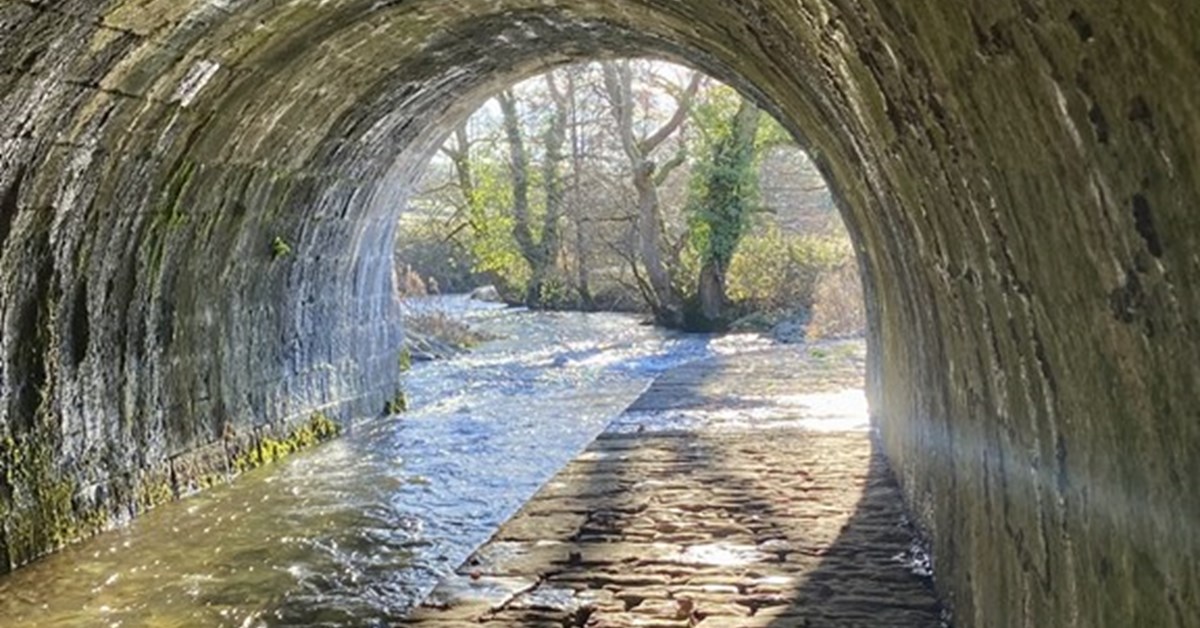
ONCE there was a weaving mill near by — one of the many making Kendal Green cloth. When they built the tunnel under the canal, the company made a wide path beside the beck so that their employees could get to work. Iron stanchions were leaded into the stone, with a chain to hold on to when the river was high, or to guide you in the dark. I loved that place, despite having to pass three mean cottages with unfriendly dogs — but the dogs I got to know, as the vicar and his wife called regularly to give little helpful gifts to these people, the poor of the parish. (Those weavers’ houses are now expensively modified des reses.)
Leaving the sunlight, the beck rushed under the vault into the echoing shadow, cool on the hottest days. Damp slowly percolating from the canal overhead had made miniature stalactites. On each tip, the latest drip glistened. The beck sang you through the gloom beside the cobbled path.
ONE golden memory: I went down there alone one day, and — as I came out of the tunnel into the summer sunlight — there, where the stream’s smooth curve fell over a little lip of stone in a pool, was Frank the heron, fishing. As he saw me, he took off with a slow flap of his great wings, long legs straight behind him. I sat down, took off my sandals and socks, and dabbled my feet in the cool water and let the little trout nibble my toes — or I like to think they did. One foot in Eden, indeed.
A lifetime later, in my autumn, I took my beloved there to try to explain to her why Crosscrake mattered. We went through the cool gloom along the cobbled path, with signs of where the stanchions had been, and — as we came out into the sunlight — there, in the pool into which the stream still fell over its lip of stone, was Frank the heron, fishing. He took off, like his forebear, on slow wings, long legs straight behind him. . . Times elided.
My beloved would not take her shoes off, even on my holy ground. But she understood.
Dr Charles Moseley is a Life Fellow of Hughes Hall, Cambridge.