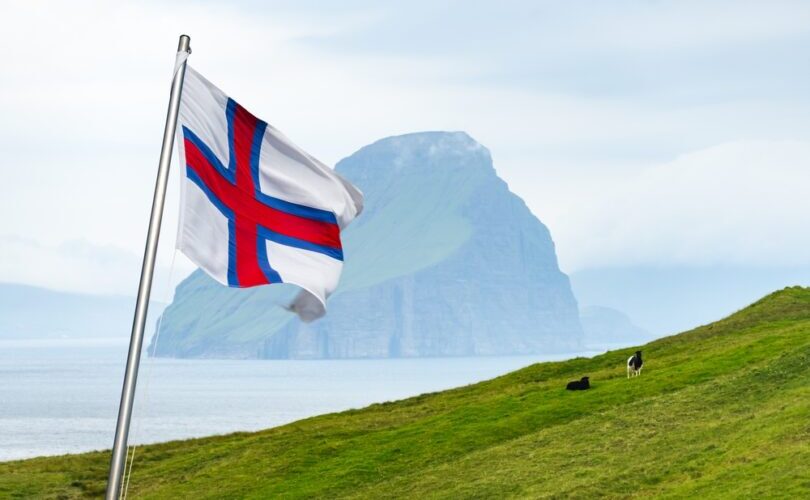
(LifeSiteNews) — On December 4, the parliament of the Faroe Islands voted to legalize abortion-on-demand up until 12 weeks (three months) of pregnancy. The Faroe Islands is self-governing archipelago of 18 islands between Iceland and Norway and is part of the Kingdom of Denmark. Until Thursday, it had retained one of the most pro-life regimes in Europe. The population of the Faroe Islands is about 55,000 people.
Abortion supporters won the parliamentary vote by the narrowest of margins: 17 votes to 16. A previous attempt to legalize abortion last year failed on a tie vote. The new abortion regime is slated to come into effect on July 1, 2026.
Since 1956, abortion was only permitted in the circumstances of rape, incest, or risk to the mother’s health—although there were several significant loopholes. Abortion was also permitted if “severe fetal health problems” were present, or if the mother was deemed “unfit” to care for the baby. The mother’s “fitness” was decided by a doctor and subsequently by a “second medical body” before an abortion was permitted.
“This is truly a historic day in the Faroe Islands,” Ingilín Didriksen Strøm, one of the four members of parliament who tabled the proposal, told the BBC. “This change finally affirms women’s autonomy over their own bodies in the Faroe Islands. It guarantees access to safe healthcare, and it also protects our freedom to make decisions about our own lives without fear, without stigma, and without criminalization.”
The vote was a culmination of a decade-long culture war between abortion activists and a culturally conservative population, where over 70 percent belong to the Lutheran Church. While some women still traveled to procure abortions, the abortion rate was a staggeringly low 3 per 1,000 women, as opposed to the European average of about 16 per 1,000. Pro-life parliamentarians warned that legalizing abortion would result in a dramatic spike in the abortion rate (as evidenced by countries such as Ireland).
Pro Vita Faroe Islands, the country’s main pro-life organization, praised the MPs who “did not hesitate to defend the unborn child and point out errors in the bill,” and warned that legal abortion would have a poisonous effect on society.
“Statistics and countries around us also showed how free abortion changes societies and the soul of a people,” the group wrote on their website, “including how accommodation for those with disabilities weakens, because they are proportionally at much more increased risk of abortions in the womb where liberal abortion laws are chosen.”
The Faroe Islands is another example of how a combination of external pressure and internal abortion activism successfully overturned a pro-life regime, despite a majority of islanders opposing the change (the most recent data indicated that 46 percent supported updating the abortion law, with a majority opposed). One academic account described “a group of young women” who “began to meet secretly in a room in the public library in Tórshavn to plan the organisation of a pro-choice voice” in 2017 to begin pushing for legalization, leading to the founding of the lobby group Fritt Val (Free Choice).
Externally, both the Nordic Council and the UN CEDAW pressured the Faroe Islands to overturn their pro-life regime, along with international NGOs such as Amnesty International, which celebrated the December 4 vote. “After years of campaigning we finally have a law respecting women’s and all pregnant people’s rights to a safe and legal abortion until week 12,” the group told the BBC. The abortion campaign will likely continue; in June, Denmark raised its abortion limit from 12 weeks to 18 weeks.
The heated parliamentary debate—which lasted a full seven hours on second reading—as well as the narrow margin of defeat means that pro-life parliamentarians have not accepted the change as final. “Erhard Joensen, an MP who voted against Thursday’s bill, told Danish national broadcaster, DR, that he respects the result, but does not believe there is much support for the new law,” the BBC reported.
“I think we will see that some will try to roll it back,” Joensen stated.