NEWS of the closure of the preparatory provision at Exeter Cathedral School (News, 16 January), which traces its history back to the 12th century, has prompted gloom about the sector’s future in recent months.
There is “obviously anxiety across the sector because there are schools closing and it’s always devastating”, says the Choir Schools Association’s (CSA’s) executive director, Rachel Hicks. While the removal of VAT exemption on private-school fees since January has undoubtedly had an impact, she points to wider challenges, too, including changes to the teachers’ pension scheme, the cost of fuel and heating bills, increases to National Insurance contributions, and the loss of business-rate relief for independent schools. “In quite a few instances, the VAT has been the straw that has broken the camel’s back,” she says.
For cathedrals, too, the financial climate has been challenging, not least since the pandemic. While the latest annual reports of choir schools list government policies as driving their financial challenges, closures are not new. Chester Cathedral’s choir school closed in 1975, followed by Truro’s in 1982, and Ripon’s in 2012. The closure of York Minster’s was announced in 2020, amid the financial crisis caused by the pandemic (News, 12 June 2020).
Closures are far from the whole picture, however. Ms Hicks describes it as “very mixed” with easily overlooked nuances. She has found herself describing the Association as home to “about 50 members, and about 45 different ways of doing things”.
She gives the example of the Durham Cathedral Schools Foundation, formed in 2021 from a merger between Durham School and the Chorister School (News, 27 November 2020). This model — in which choristers are part of a much bigger foundation — is now used by most members, she says.
Another trend is that cathedrals are increasingly cutting ties with the independent schools that once educated their choristers. In doing so, the cathedrals are ceasing to subsidise school fees. In 2023, the Dean and Chapter of Canterbury announced the end of their relationship with St Edmund’s (a private boarding school) and said that they planned to recruit choristers from any and all local schools (News, 17 February 2023).
Such moves have prompted some to identify a sea change in thinking. “It is as if a decision has been taken that it is no longer politically correct to support private education, and, therefore, the generous bursaries offered to choristers, many of whom attend private prep schools, are no longer ‘affordable’,” one Church Times correspondent wrote recently (Letters, 23 January).
The letter’s reminder of the financial support available to choristers at such schools is echoed by Ms Hicks. “There is a narrative that sometimes gets promoted that you shouldn’t have your choristers at an independent school, because that makes it too exclusive, but actually there is a huge effort going across all of our members to make sure that that isn’t the problem,” she says. “It’s a lot more diverse than people think.”
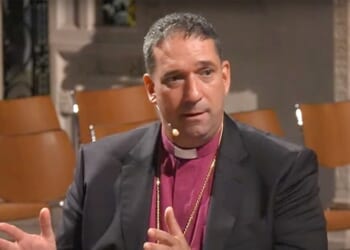
AMONG defenders of the traditional choir-school model is the Dean of Chichester, the Very Revd Dr Edward Dowler. At Chichester, choristers are all educated at the Prebendal School, the oldest school in Sussex, with its roots in the 11th century. The Dean and Chapter fund a scholarship of one quarter of the fees for each chorister.
 PREBENDAL SCHOOL CHICHESTEREaster activities at the Prebendal School, Chichester
Dr Dowler regards the Government’s policies for the private sector as “appalling”, pointing to the majority of choristers, whose fees are made up by scholarships and bursaries. They are, he says, “a far more diverse group in every way” than the rest of the cathedral congregation.
The boarding model enables the choir to manage an intense rehearsal and worship schedule, including an early-morning practice at 7.45, he says. Choir schools should be celebrated amid an increasing appreciation of sacred music, he suggests. “It feeds the spiritual and cultural life in such a unique way, and it’s also incredibly formative for those young people in all sorts of different ways.”
While concerns remain about some schools’ future, a study of the sector reveals that others are thriving. The latest annual report from King’s Ely — where choristers receive an automatic 40-per-cent fee reduction — speaks of “another highly successful year”. At Hereford Cathedral School — where the Chapter supports scholarships of up to 100 per cent of the fees — there are waiting lists in several year groups.
IT is now 30 years since the Christmas Eve when Stephen Parsons, who then chaired the governors of Bristol Cathedral School, alighted on a Sunday Times article, “The Silence of the Choirs”, by the Labour MP Frank Field, chairman of the Cathedral Fabric Commission for England. Field warned that the smallness of the sector’s schools — a reflection of the number of choristers educated — made them costly. It also, he argued, entailed “elitism”. To survive, the schools must return to their heritage as “great schools educating significant numbers of pupils”. The Labour government’s academies scheme offered a lifeline.
“I thought ‘This is us!’” Mr Parsons recalls. In a city “over-endowed” with independent schools, Bristol Cathedral School was struggling to make its numbers. He spent the following year working with Mr Field, and with then Education Secretary, Andrew Adonis, and others, on plans to replace the school with a state academy (News, 3 August 2007). It was, he recalls, a “tricky process”. Battles included securing enough space for the school, and there were challenges to the admissions process, whereby choristers can be given priority (the law was changed to allow it).
But the school opened in September 2008 and has since grown from 400 on the roll to 1200. It is the most over-subscribed school in the city, regarded locally as a “golden ticket”, Mr Parsons reports.
Today, the school — one of only six former independent schools to opt for academy status — advertises itself as “proudly comprehensive and inclusive”, with a “rich musical tradition and a distinctive Christian ethos”. The choristers — eight in each year — have a morning practice and evensong every day.
“The school has made it very clear in terms of its mission and its values that its relationship with the cathedral is incredibly important,” the head, Dr Wade Nottingham, says. Weekly services are part of a “pointed reminder to everyone that the relationship between the school and the cathedral goes hand in hand, and is the reason the school existed in the first place”.
A limitation of the model, he says, is that a minimum number of pupils is required to make the school financially feasible — within which choristers make up only a fraction. “That means that it’s very easy for decisions to be made for the greater good that disadvantage that particular group,” he admits. “That’s why we felt it necessary to have it front and centre within our school mission, because, if we forget that, we allow it culturally to drift away.”
He is a staunch defender, however, of the comprehensive approach. “You have children who probably, before coming to the school, had no idea about choristers, what they did, and they experience it through services,” he says. “You are staying true to the initial reason why the school was established in the first place.”
TO SOME degree, the sector is a microcosm of wider changes in the country’s education system, back to the medieval and Reformation periods. In 1976, the King’s (The Cathedral) School in Peterborough, founded by Henry VIII in 1541, transitioned from being a C of E boys’ grammar school to a C of E co-educational comprehensive. It acquired academy status in 2011 and now educates about 1300 pupils, including the cathedral’s choristers.
Alongside Bristol and Southwell — at the latter, choristers are educated at the Minster School, a C of E academy with a music-specialist junior department — it remains one of the UK’s only three Anglican cathedral schools funded through the state system.
Preserved in this model is the education of the choristers at a single school. A different approach has been in place for some time in Lincoln. Ten years ago, the cathedral ended its exclusive tie with Lincoln Minster School, and began admitting children to the choir from other schools in the area.
Dr Aric Prentice, the cathedral’s director of music since 2003, was previously also director of music for the Minster School. He estimates that the cathedral’s 40 choristers are educated at about 19 schools.
“When we started doing it, we kept more or less the same timetable that we had when they did go to one school,” he says. “Lincoln is reasonably small; so you can have morning rehearsals three days a week. Parents drop them off with us, and we do all the transport.” He describes a “logistics racket” entailing minibuses, taxis, drivers, and chaperones.
“There’s lots of advantages to it, and, from the point of view of recruitment, it’s excellent,” he says. While, like Dr Nottingham, he is honest about limitations (as director of music at the school, he had a greater ability to “influence a child’s whole musical experience”), he is confident about the model. Other advantages include, he says, strong relationships with parents and a diverse friendship group for the choristers.
Other cathedrals occasionally call to learn more about it, he says; “so there’s a Plan B waiting in the wings, if necessary.”