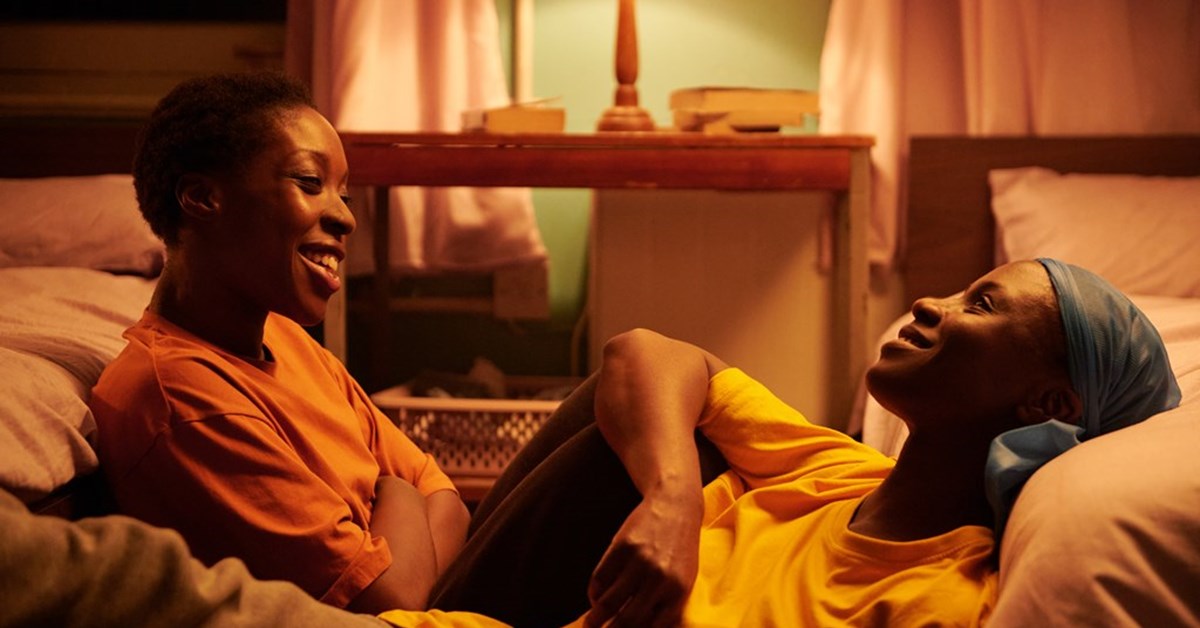
THE film Dreamers (Cert. 15) is heartbreaking and yet hopeful, with a flavour reminiscent of St Paul’s letters from prison. Isio (Ronke Adékoluejo), an undocumented immigrant, is sent to a detention centre, awaiting decisions on her quest for asylum. She is a philosophy graduate, coming from a Christian home in Nigeria, where lesbian activity is a criminal offence. Problems arose there when she was caught in flagrante with another woman. Several churchmen seized and repeatedly raped her in an attempted “cure”.
Terrified, Isio has fled to the UK, where she is now subject to immigration procedures. Stone walls may not a prison make, but that is not how it feels. Detainees are sceptical about staff who say that they are there to help: the detainees believe that the job includes eliciting evidence for deportation purposes.
Isio shares her quarters with Farah (Ann Akinjirin). Wide-eyed without lapsing into cynicism, she gradually coaxes her room-mate out of despair. None of the detainees appears to have any hope that their asylum appeals will succeed. In that respect, Dreamers does no favours to its cause by conveying an inaccuracy. Statistically, nearly half such claims result in being granted protection.
Even so, the film, while being compellingly sympathetic to the plight of refugees, isn’t ultimately about border-control issues. Rather, it is asking profound questions about what constitutes freedom. This is where the Pauline letters are relevant; for they assist our understanding of finding joy instead of sorrow, and hence peace of mind. But heartfelt reflection must first precede it.
Isio has plenty of time for that, using the library as a spiritual resource. We hear her reading lines from Carol Ann Duffy’s “Rapture”: “How does it happen that our lives can drift / far from ourselves, while we stay trapped in time / queuing for death?” The film never makes the mistake that any coming to terms with the inmates’ situation is the equivalent of sheer resignation. It is this feeling of alienation from one’s true self which pervades the narrative. While the film concentrates on Isio’s quandary, this is representative of everyone else.
Nevertheless, the writer-director, Joy Gharoro-Akpojotor, does not maintain a pessimistic outlook for her characters. She doesn’t really need a poet’s words, affecting as they are, to create an atmosphere of hope. Farah in particular, enjoins her companion to discover an inner freedom, which she herself has already found. When things for Isio appear to be at their most tragic, there comes an element of Pauline insight. Out of the dereliction of the cross that she bears comes a moment of triumph, a breaking out of the stone-cold tomb. Our protagonist is surprised by joy, even though the whole film has been building up towards this.
We, the viewers, may have already foreseen it, especially if we know how Duffy’s poem (which the film had earlier cut short) ends: “Then love comes, like a sudden flight of birds / from earth to heaven after rain”. Gharoro-Akpojotor eloquently proclaims that freedom is elusive, but love is eternal.