THE film Oh, Canada (Cert. 15) is a meditation on mortality. The director, Paul Schrader, is no stranger to the subject. From his Taxi Driver script to the recent God’s Lonely Men trilogy (First Reformed, The Card Counter, and The Master Gardener), characters strain towards redemption. Raised in a strict Dutch Calvinist home, Schrader first began training for the ministry before changing to filmmaking.
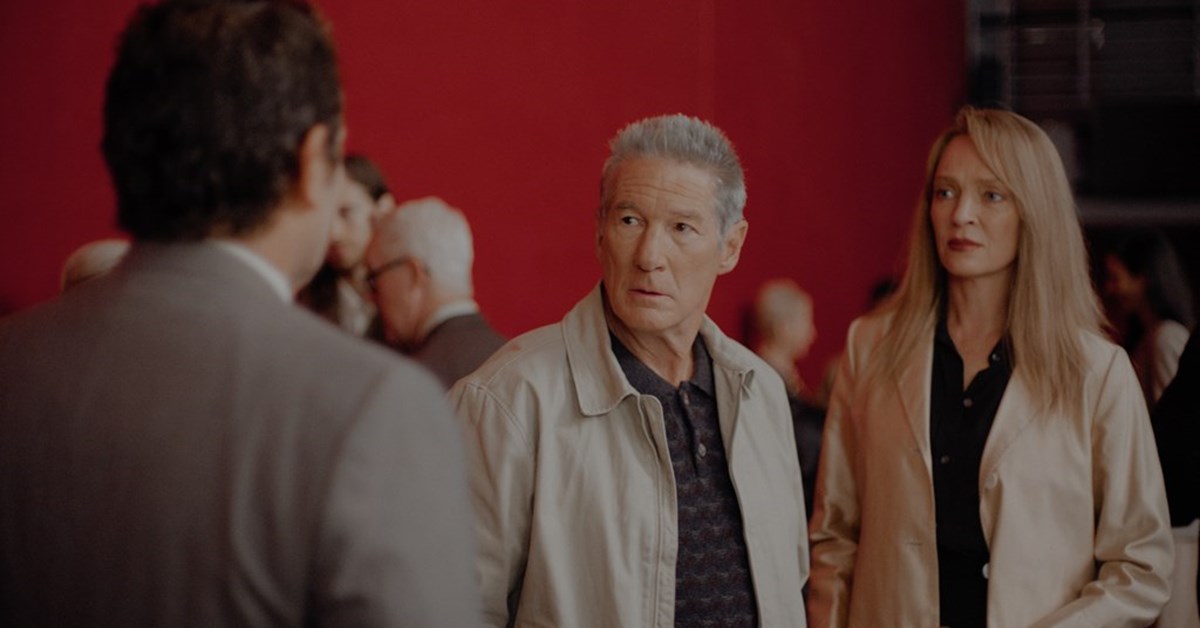
Richard Gere (who also starred in the director’s 1980 American Gigolo) plays terminally ill Leonard Fife. An acclaimed documentarist, he strives in a filmed interview to tell the truth about his life. It has a feel of the confessional as he looks through a lens at Emma (Uma Thurman), his wife of 30 years. “This is my final prayer, and, whether or not you believe in God, you don’t lie when you pray.”
Medication and old age, however, render his account confusing and contradictory. We get mood-setting flashbacks (alternating between monochrome and colour) of Fife’s younger self (Jacob Elordi). The first has him reading The Velveteen Rabbit to his child. In that story, becoming real occurs only after most of your hair has been loved off and your joints get loose. Cut to the older Leonard, and, witnessing Gere’s derelict appearance, that is the picture that we get.
It is hard to reckon with what has been real. The aged Leo is particularly dismissive of his own past. Those listening to his ramblings have a genuinely kinder assessment of his life, but perhaps the man is anxious to avoid being immortalised solely on account of his films. There is a scene in which Leonard quotes to some students Susan Sontag’s notion that photographs can become intimations of immortality, fixing their subjects in a time and place irrespective of where they have subsequently travelled. For Leonard, the past is another country. We are not static human beings, but forever becoming, as with the velveteen rabbit, what we truly are meant to be.
The film takes the Canadian National Anthem as its title, whereas the screenplay is based on Russell Banks’s novel Foregone. Was the book’s original name questioning whether in my beginning is my end? We watch a family worried about a disillusioned young Leonard, calling in their parish priest to drum some sense into him. At the start of the proposed television interview, Fife insists that his life began only after that, moving from New England to Canada. It was 1968, and he could be construed as avoiding being drafted into the Vietnam War. Perhaps. Schrader’s narrative would suggest that he was also fleeing from responsibilities with which he couldn’t cope.
Through his documentaries, Leonard exposed the shallowness and duplicity of other people. Now it is time to turn the spotlight on himself, desiring truth in his inward parts. His physical and mental suffering is achingly portrayed, but so is that of Emma. He wants to confess that he is a coward and never loved anyone. She is like one at the foot of the cross, desperate and seemingly powerless to remove the agony. Yet, for Schrader, she is instrumental in offering Leonard the means of grace and the hope of glory.
Available to stream on digital platforms.