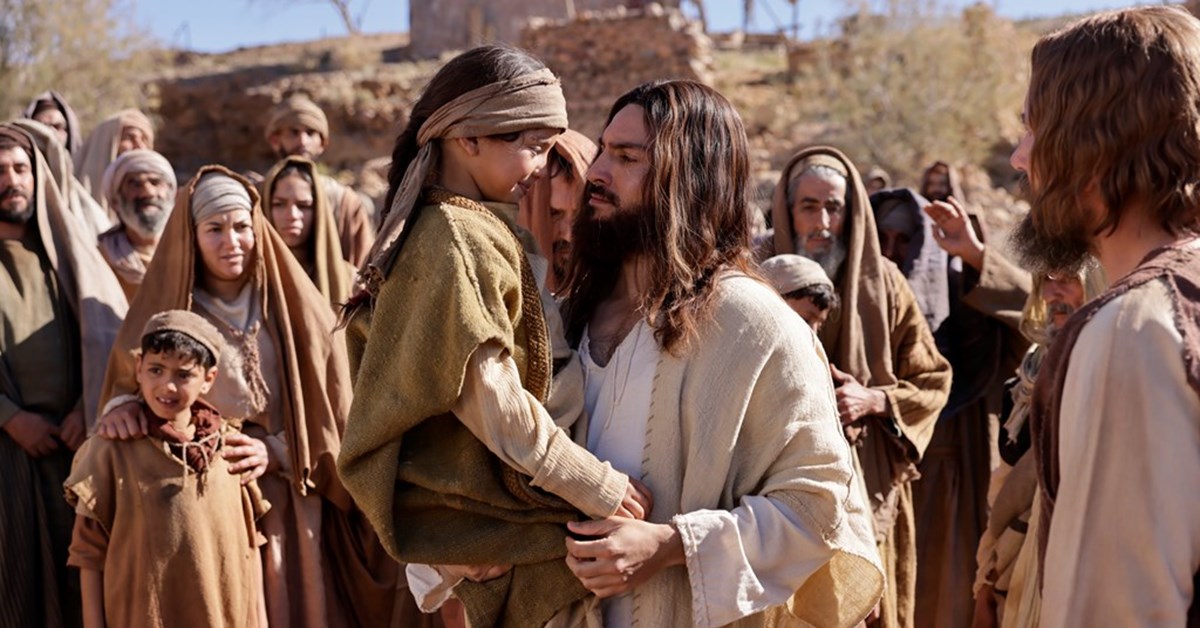
THE film The Last Supper (Cert. 12A) hales from Pinnacle Peak Pictures, an Evangelical company majoring on faith films, such as God’s Not Dead. Never fear. Any overt proselytising is left till the end credits. This is a well-acted, authentic-looking, highly professional production.
The screenplay, written by John Collins and the director, Mauro Borrelli, makes selective use of scripture. (The notable exception to this practice is Pasolini’s 1964 The Gospel According to St Matthew.) The Last Supper adds verisimilitude to its biblical sources with additional material.
As usual, Judas Iscariot challenges filmmakers’ ability to provide credible motives for his treachery. Robert Knepper does his best to portray the torment Judas undergoes. On the face of it, he is tempted by the money proffered — the price of an ox or a slave — but still seems far too enthralled rather than disillusioned by the Master. Initially, we are shown him as the disciple who is always asking questions, torn by doubts over the message of Jesus. Later, that element has disappeared from the narrative. In comparison, it all feels straightforward when James Oliver Wheatley’s Peter denies knowing Jesus.
Most of the action occurs in what we now call Holy Week. As the title suggests, the film gives substantial time to the Last Supper. The crucifixion and resurrection barely figure, being mainly reported rather than anything shown on screen. There are no appearances by Pontius Pilate, the thieves, Simon of Cyrene, the women, etc. We are also treated to a brief prelude, a year earlier, where a crowd avidly listens to Jesus’s teaching.
This leads into the feeding of the five thousand. It is portrayed as sheer miracle, with nothing substantial by way of interpretation. Given that the screenplay seems to place significant emphasis on St John’s Gospel, it is surprising that there is scant reference to miracles as being seen as meaningful signs of who Jesus is and what he represents. The Passover, for example, takes on new substance in the Johannine account, but you wouldn’t know here that Jesus himself was the true Paschal Lamb.
The Synoptic Gospels are also drawn on, especially regarding the Last Supper narrative. Only in St Luke (and 1 Corinthians 11.24-25) does Jesus’s command to consume bread and wine in remembrance of him occur. The Upper Room — its setting and occupants — receive lavish attention. Jesus’s washing of the feet is a moment of huge reverence. Likewise, consternation that a traitor is in their midst adds another emotionally dramatic dimension.
Most strikingly, there is real depth to an understanding of Caiaphas, thanks to James Faulkner’s characterisation. He appears a potentially good man, but one prepared publicly to bend rules if he believes that this will ensure religious stability. In private, he is racked with doubt, even jealousy. Why has he, who has striven to be a faithful priest, never heard (unlike this upstart, Jesus) the voice of God?
All credit is due to Jamie Ward. It would be hard to quarrel with his portrayal of Jesus. While the film occasionally veers into fundamentalism, it is, overall, a worthy effort. And unmistakably, to paraphrase John 20.31, it has been made that you may believe.