(LifeSiteNews) — Exorcist Father Chad Ripperger shared that the sacrament of Confession can liberate people from demonic possession in his recent interview with former U.S. Navy SEAL Shawn Ryan.
While discussing diabolical influence on people, of which possession is the most extreme form, Ryan asked Fr. Ripperger whether stopping a particular serious sin, like pornography use, can clear out a demon’s hold on a person.
The exorcist priest first pointed out that there are different degrees of “ordinary” demonic influence, just as there are different levels of full-blown demonic possession.
Sometimes, if a diabolically influenced person stops a particular sin, a demon’s activity in their life is thwarted, according to Fr. Ripperger. For example, in families where the wife usurps the husband’s headship, if the husband “mans up” and exercises his authority as head of the household while the wife submits to his headship, “80% of the time that clears demons out,” he said.
A specific renunciation of a demon can break its particular diabolical influence as well, such as through a binding prayer. Fr. Ripperger has shared various prayers to break diabolical influence, including basic binding prayers, in his book Deliverance Prayers for Use by the Laity, which also contains a thorough list of demonic spirits that can be bound through these prayers.
“Sometimes too if people develop a discipline in that particular area, that will break the demon’s back,” said Fr. Ripperger.
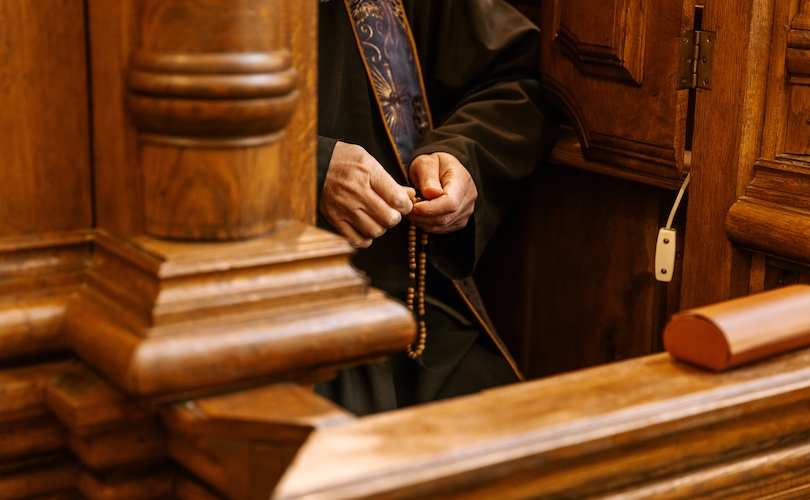
Sacramental Confession in particular has a powerful ability to break demonic influence associated with sins, and even to break demonic possession. When a Catholic confesses the particular sin through which the demon influences them, “the legal binding force of the sin over the individual is absolved” once the priest absolves the person.
“That’s why Christ said, ‘Whoever’s sins you retain, they will be retained. Whoever’s sins you forgive, they will be forgiven’,” noted Fr. Ripperger, referring to John 20:23, the basis for sacramental Confession.
“So we’ve actually had people liberated from possession just by going to Confession and [receiving] Absolution,” said the exorcist.
In some cases where the possessed person goes to Confession but the demon remains, eventually the exorcist may force the demon to reveal what is keeping him in the person, and it will disclose that there remains an unconfessed important sin.
“And the person will say, ‘I totally forgot about that,’ and they’ll go into Confession, and once the priest gives absolution, boom, then they’re free,” Fr. Ripperger told Ryan. “So it just depends on the level and degree of diabolic influence.”
The basic levels of diabolical influence, as Fr. Ripperger explained, include temptation to sin, which all people experience; obsession, which involves intense mental attacks; oppression, which is an attack on a person’s exterior life, such as their money, relationships, or health; and the rare cases of possession, in which the demon takes control of the person’s body.