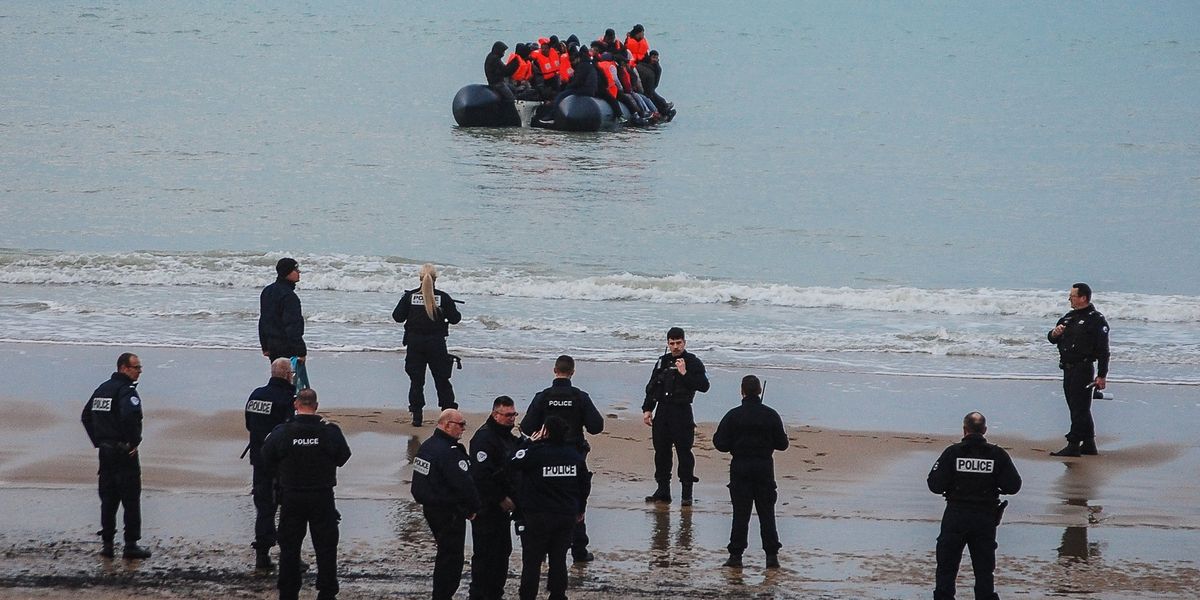
French police will refuse to stop small boats filled with migrants from crossing the English Channel in a fresh blow to the Government’s efforts to control the crisis.
Authorities in France will no longer take action after the nation’s police union ruled its members faced prosecution if any crossers died as a result of efforts to disable the dinghies.
As part of a deal between Britain and France, officers had been instructed to stop crossings through measures such as jamming the boat’s propellers.
The arrangement followed a year of negotiations between Prime Minister Sir Keir Starmer and French President Emmanuel Macron and a £500million payment to Paris to intercept the vessels before leaving shore.
In a letter to his counterpart, Sir Keir insisted it was “essential that we deploy these tactics this month” as he warned: “We do not have an effective deterrent in the Channel.”
France’s Maritime Gendarmerie was due to enforce these measures, which were understood to include “immobilising them (the boats), diverting them back to France, and then handing those on board to the authorities”.
However, the plans were put on ice following the intervention of Alliance Police nationale, which represents tens of thousands of officers, according to The Mail on Sunday.
“People don’t seem to realise how dangerous it is to try and carry out arrests at sea, while trying to force a boat to change course,” a source from the union said.

A French police union has blocked efforts to prevent small boat migrants from crossing the English Channel
|
GETTY
“If there are 80 people on an overcrowded boat, including women and children, then it is extremely dangerous to try and stop them,” they warned.
An insider at the French Interior Ministry explained immunity from prosecution had been rejected by prosecutors, leading to a standoff.
“The police want guarantees that there will be no prosecutions in case of death or injury, but prosecutors say that is impossible.
“Meetings between lawyers and police chiefs have taken place over the past month, but the judicial authorities remain firm – there will be no waiving of criminal liability if things go wrong.
 Keir Starmer and Emmanuel Macron struck the one-in, one-out deal earlier this year | REUTERS
“Any interceptions at sea are extremely dangerous, and the risk has to be accepted by those involved in policing immigrant boats.”
The French Navy has also objected to interceptions at sea on a similar basis.
Interior Minister Laurent Nunez, a former Paris police prefect, is understood to share the concerns and has been less than keen on enacting the plans put forward by his predecessor.
“He agrees that intervening in boats at sea is incredibly dangerous and should be avoided at all costs,” a French National Police insider revealed.
UK Border Chief Martin Hewitt is understood to be “frustrated” at the delays in interceptions of small boats by French authorities as they launch from Calais and Dunkirk beaches.
As many as 40,000 migrants crossed the Channel by small boat over the past year, with most originating from countries such as Iran, Afghanistan, Iraq, Syria, Eritrea and Sudan.
Reacting to the setback, a Home Office spokesman said: “Independent operational matters are for the French authorities. France remains a critical partner in securing our borders, and our joint work has prevented over 22,000 small–boat crossing attempts this year.”
“The Home Secretary has set out the most sweeping reforms to tackle illegal migration in modern times. These new reforms will restore order and control to our border, removing the incentives which draw people to the UK illegally and increasing removals of those with no right to be on British soil,” they stressed.

As many as 40,000 migrants crossed the Channel by small boat over the past year
|
GETTY
The blow to Labour’s pledge to get control of Britain’s migrant crisis comes as Home Secretary Shabana Mahmood imposed visa restrictions on a country for the first time after it refused to take back criminals and illegal migrants.
She took the tough action against the Democratic Republic of Congo (DRC) after it failed to cooperate on deportations.
Two other African countries, Namibia and Angola, changed their position and agreed to accept deportees from the UK after being threatened with similar measures.