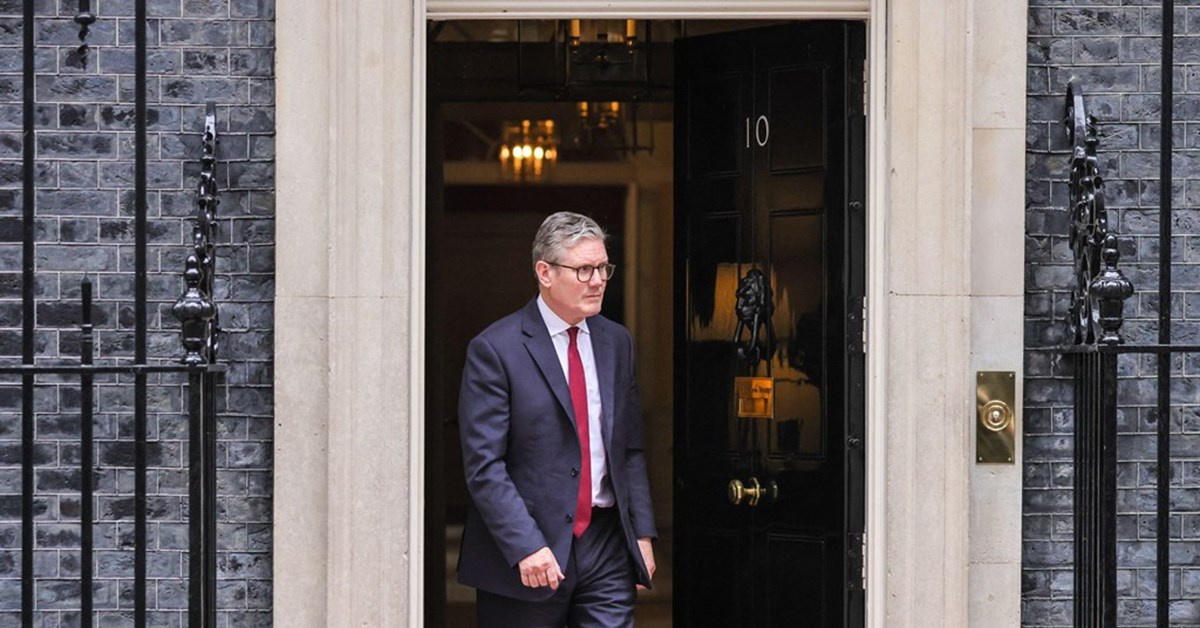
’TIS the season to be plotting, and Westminster is alive with speculation of a coup attempt against Sir Keir Starmer. After the scandals, infighting, and languishing economy of his miserable first year, Westminster pundits are deploying one of their favourite words — “febrile” — to describe the mood of demoralised Labour MPs.
To insiders, the soap opera is diverting; will it be Wes? Will it be Angela? Who will wield the knife? But, if Sir Keir does become the latest Prime Minister to be chewed up and spat out by the British political system, maybe the focus should be less on Westminster’s latest episode of The Traitors, and more on why this country has become so difficult to lead.
In the 21st century, Britain has been pockmarked by crisis and division: Afghanistan and Iraq; the 2008 financial crisis; Brexit; Covid; and the energy crunch that followed the invasion of Ukraine.
Each has cost billions of pounds, and each has overloaded the bandwidth of our leaders. There simply hasn’t been the political capital available to drive sweeping reforms of, say, the tax system, or welfare, or education — the boring bread-and- butter policy issues that are essential to a growing economy. And the consequences are visible in stagnant wages, and struggling public services.
Since the Brexit referendum saw off David Cameron, a succession of very different Prime Ministers have found different ways to implode. Theresa May could not concoct a version of Brexit that her MPs would accept: Boris Johnson did, but his personal failings destroyed him. Liz Truss launched a dash for growth, and fell headlong at the first hurdle. Rishi Sunak tried technocratic diligence, but always looked doomed. Now it’s Sir Keir’s turn.
DEAR ENGLAND, James Graham’s wonderful play about the England football team under the management of Gareth Southgate, depicts players crushed under the weight of national expectation, all too aware of how quickly adulation can turn into scorn. Successive governments have buckled under the expectation (which they stoked themselves in their election campaigns) that they can end the years of economic hurt.
But, like those England footballers, those governments have failed to gel into the kind of effective reforming machines that the country needs. Sir Keir’s is only the latest government to be caught in the same cycle of plummeting poll ratings, followed by leadership intrigues, and another draining bout of Westminster infighting.
His problems are worsened by the fact that Labour’s electoral position has always been more precarious than it looked. That huge Commons majority owed more to the vagaries of the first-past-the-post electoral system than to actual popularity with voters. With rival parties attacking from Left and Right, and perhaps with a new bout of wrangling about the relationship with the European Union about to erupt, many MPs fear doom awaits at the next election, if nothing changes.
The moment of maximum danger may well be after the elections to the Scottish Parliament and the Welsh Senedd, and to numerous English councils, on 7 May. If Labour lost power in Wales, had its hopes of regaining office in Holyrood dashed, and saw other parties taking over in its English metropolitan heartlands, fear could well become panic.
A leadership challenge could follow — or could even come before, in the hope of pre-empting a May election disaster. This is where we move from Dear England to The Traitors. Leadership challenges, successful or not, can lay waste to a political party, sowing division in the ranks and disgust among voters — ask Theresa May or Rishi Sunak.
And, in any event, a change of leaders which merely replaced the current Prime Minister with someone a bit more engaging in TV interviews would not address the underlying problem of making the British State deliver. Somehow, the country needs to find leaders who can re-energise it.
A bit of honesty would be a start. The bills for the pandemic have come due, and, piled on top of earlier accumulated borrowing, mean that the Government is now spending £111 billion a year on the interest on the £2.6-trillion national debt. That’s getting on for twice the education budget, for example. The infamous Liz Truss Budget of 2022 was an attempt to supercharge economic growth to get the UK out of its debt trap, and it ended up as a horrible warning against trying to leap free of it in a single bound.
The country has been in worse economic holes, but, faced with the hard slog of rebuilding the national finances, the lure of charismatic alternative leaders expounding simple solutions on TikTok becomes ever more powerful. Voters beware.
PS: THE most controversial proposed law of this Parliament, Kim Leadbeater’s Terminally Ill Adults (End of Life) Bill, which would legalise assisted dying in England and Wales, is currently stalled in the House of Lords (News, 28 November).
It is a Private Member’s Bill — a law proposed by an individual MP, rather than by the Government — and such Bills are vulnerable to a determined band of opponents.
In this instance, ministers have lent a helping hand by providing extra debating time, first in the Commons, and now in the Lords, where an unprecedented ten extra days have been scheduled for next year. They are needed because more than 1000 proposed amendments have been proposed, all of which, under House of Lords rules, have to be debated. And those debates have been so extensive that peers have not dealt with many of them, thus far, to the increasing frustration of its supporters — who are now accusing opponents of a deliberate go-slow, aimed at exhausting the debating time without coming to a verdict.
Time is ticking away, and the Bill will fall if it fails to clear the Lords before the end of the current parliamentary session, expected in mid-May.
There are genuine concerns about the Bill which deserve thorough examination; but, if it is defeated by procedural means rather than voted down in the clear light of day, then there may well be a backlash against the House of Lords itself, and possibly against the presence of bishops on those red benches as well.
Twenty years ago, something similar happened to several Private Member’s Bills to ban hunting with hounds, and supporters of that cause tried and tried again to overcome resistance in the Upper House. If the assisted-dying Bill is stopped, one way or another, in the Lords, it is not hard to imagine supporters of assisted dying painting this as a “Peers Versus the People” issue, and bringing another Private Member’s Bill to refight the whole thing again next year.
Mark D’Arcy is a presenter of the Hansard Society’s podcast Parliament Matters.