ROMAN CATHOLIC teacher associations in Germany have “unequivocally endorsed” new church guidelines for sexual-identity classes in schools, although several bishops said that the text had been circulated without their consent.
“The Bishops’ Conference is sending an important signal of equal recognition and appreciation for all . . . underscoring that a positive view of diversity (including gender diversity) is central to biblical Christian ethics,” the Federal Association of Catholic Religious Education Teachers said in a joint statement with the German Catechists’ Association.
“It makes clear that the Christian faith is not exhausted by monocausal patterns of argumentation or defined by applying normative templates to people and their gender identity.”
The educationists were reacting to the 48-page brochure on “issues of sexual orientation and gender identity” which was commended by the Bishops’ Conference as offering “appropriate pedagogical and pastoral care for queer individuals”.
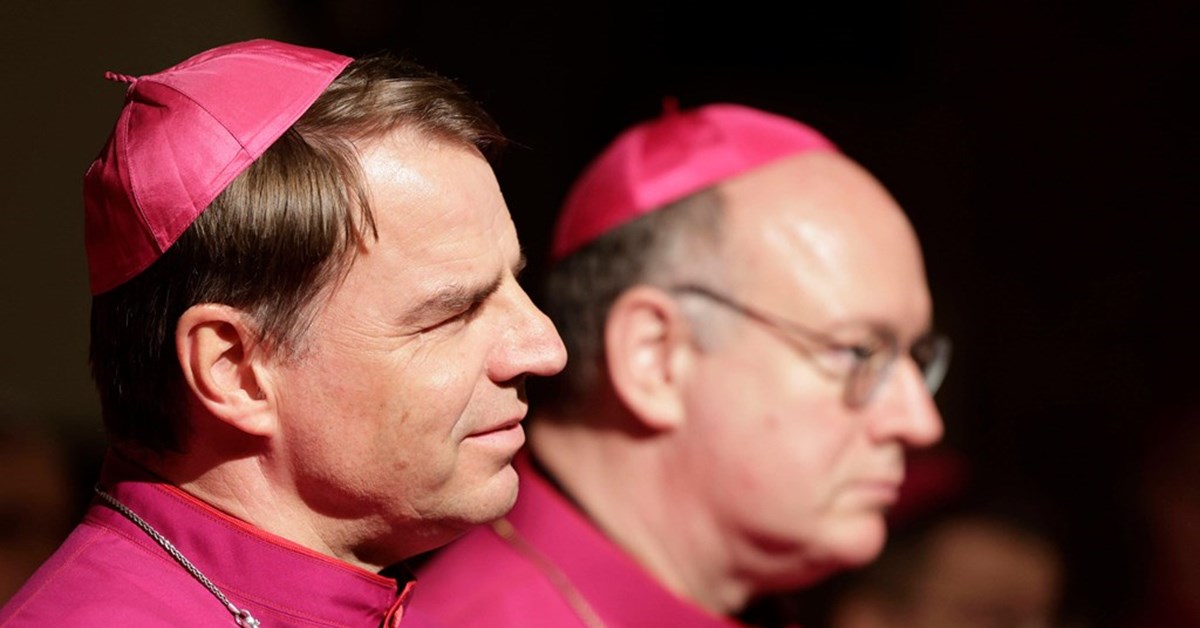
The document was strongly criticised, however, by the Bishop of Passau, Dr Stefan Oster, who accused its authors of violating the “Christian understanding of humanity” by “constantly insinuating” that sexual orientation and gender identity was “inherently natural” and “divinely ordained”.
“It implicitly suggests the true goal of adolescent identity formation lies within the students themselves — pedagogical guidance is restricted to a kind of sensitive midwifery service,” the Bishop said in a website statement.
“The very few remarks on church teaching are problematised to make clear they are fundamentally unsuitable . . . more likely to promote external control through outdated morality.”
The brochure covers issues debated during the German RC Church’s 2019-23 Synodal Way reform process, which also backed same-sex blessings, female ordination, and a re-examination of priestly celibacy.
It says that the challenge of “living and learning together”, despite differences, extends to Germany’s 904 RC schools, which should “unconditionally recognise” the sexual preferences of their 360,000 pupils and 28,000 teachers without “moral judgement”.
“Exploring the social and moral dimensions of sexuality is part of personality development and a core component of the school’s educational mission,” the brochure says.
“A school that aims to foster identity formation of all students cannot ignore the situation of lesbian, gay, bisexual, transgender, intersex and non-binary youth, even if they are a minority.”
Dr Oster’s criticisms were endorsed, however, by the Archbishop of Cologne, Cardinal Rainer Maria Woelki, as well as by the Bishop of Regensburg, Dr Rudolf Voderholzer, who charged the brochure’s drafters with “pushing through a political agenda at all costs”.
The issue is the latest to divide the Church in Germany, where a handbook for same-sex blessings, published by the Bishops’ Conference last April, brought a rebuke from the Vatican (News, 17 October), and has been rejected or ignored by many of the country’s 27 RC dioceses.
Dr Oster was among a dozen German church leaders who attended Vatican talks in mid-November with the Prefect of the Dicastery for the Doctrine of the Faith, Cardinal Victor Fernández, and other senior officials.