A man who was arrested and prosecuted for drug trafficking after unreliable field tests flagged his prescription pills as fentanyl has filed a civil rights lawsuit against the South Carolina sheriff’s office and the deputies involved.
Bryan Getchius, whose case Reason first reported last month, is now seeking a jury trial and civil damages for the emotional distress and fiscal costs of the roughly year and a half he spent defending himself against charges of fentanyl trafficking and possession of cocaine after Greenwood County Sheriff’s deputies arrested him in May of 2024.
Because of deputies’ refusal to believe him, their reliance on faulty tests, and an 18,000-case backlog at the South Carolina Law Enforcement Division (SLED) forensics lab, which handles the bulk of drug tests in criminal cases in the state, Getchius spent 15 days in jail and seven months on house arrest.
When the official results finally came back from SLED in October 2025, they showed that the suspect pills were exactly what the label on the bottle and imprints on the pills said: Dicyclomine, a prescription medication for irritable bowel syndrome.
“How many people are sitting in jail right now waiting for the SLED tests to come back to show it’s really medicine?” Tyler Bailey, Getchius’ attorney, said at a press conference today in Greenwood, South Carolina, announcing the lawsuit. “It’s a civil rights issue because people’s freedom is waiting on tests. Bryan’s freedom waited on that test.”
“And I had a lawyer, thank God,” Getchius added at the press conference, “but there were so many people in [jail] who didn’t.”
The suit alleges unreasonable search and seizure, false imprisonment, malicious prosecution, and negligent training. It names the county of Greenwood, Greenwood Sheriff’s Office, and several individual deputies as defendants.
“They treated me like I was the biggest piece of trash on earth from the second they pulled up,” Getchius said.
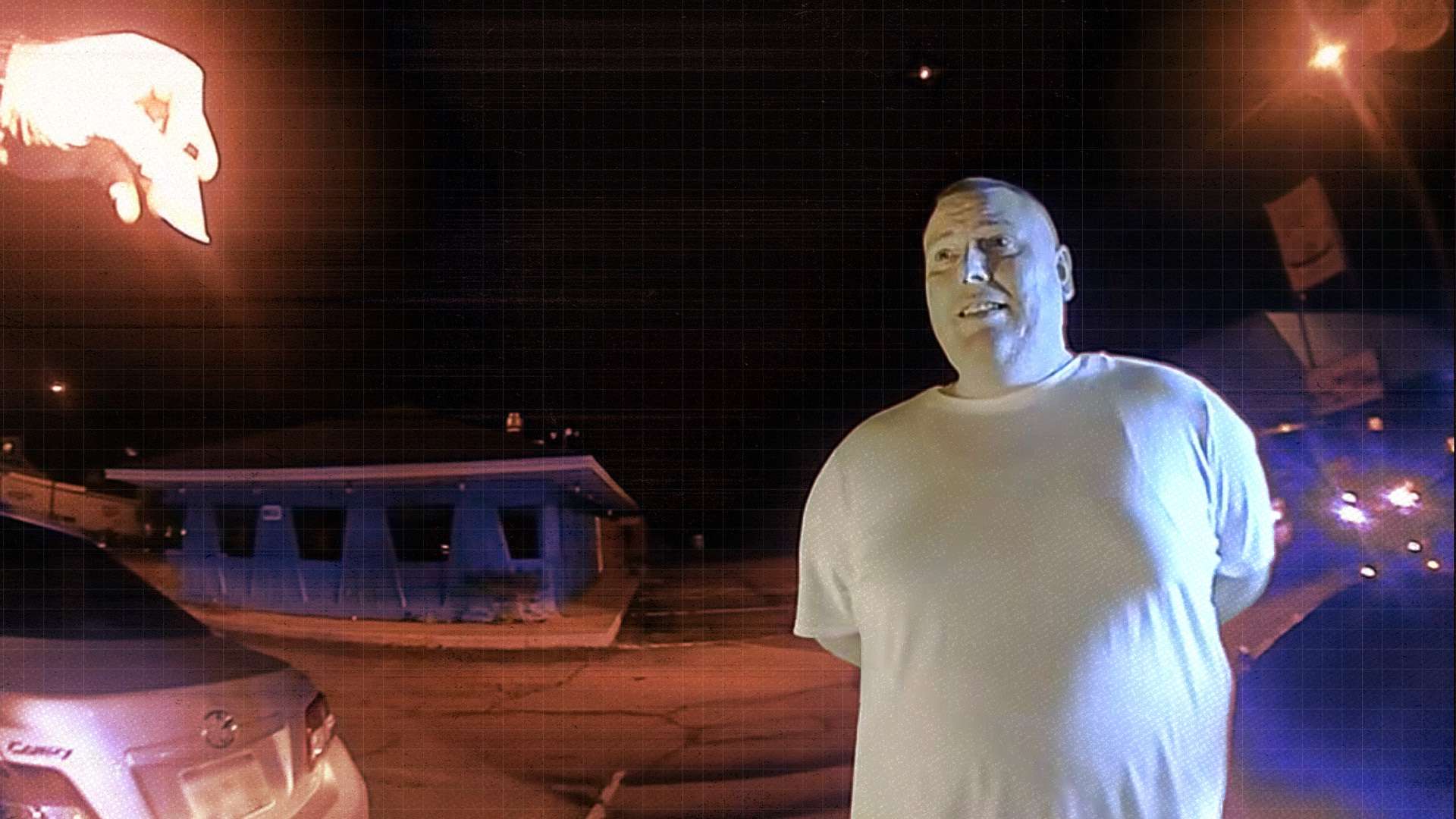
As Reason detailed in its February story, Greenwood County Sheriff’s deputies pulled Getchius over on the night of May 15, 2024, for a traffic infraction. Following the death of his father, Getchius had been splitting his time between South Carolina, where his mother lived, and Florida, where he worked. Although he had struggled all of his adult life with drug addiction, Getchius said he had finally achieved long-term sobriety that year taking care of his parents, and he had found meaningful work helping connect others with addiction support services.
Getchius was driving on a suspended license, so he consented to letting the deputies search his car, hoping they would give him a break on his license. But everything went wrong when one of the deputies found a bottle of prescription pills in Getchius’ luggage.
The deputies became convinced the pills were counterfeit and ran a battery of tests on them using cheap roadside field kits that are supposed to indicate the possible presence of illegal drugs. The tests first appeared to produce positive results for oxycodone, then later fentanyl.
Although Getchius swore that the pills were Dicyclomine, which is what the bottle and the imprints on the pills indicated, the deputies were convinced he was trafficking drugs.
“Listen to me, they don’t look like manufactured pills from a pharmaceutical company, OK?” one of the deputies told Getchius, according to body camera footage. “I know what pressed pills look like. I made ’em myself. They look like you or somebody didn’t have the die set tight enough because they ain’t pressed right.”
The well-documented problem with the test kits that the Greenwood deputies used is that the compounds they test for aren’t exclusive to narcotics—and are in fact found in dozens of innocuous substances.
Over the years, police officers around the country have jailed innocent people after drug field kits returned “presumptive positive” results on bird poop, donut glaze, cotton candy, and sand from inside a stress ball. In 2017, a Florida handyman spent 90 days in jail after a police officer tested drywall dust in the man’s car and claimed the results were positive for cocaine. A 2018 investigation by a Georgia news station found that one brand of test kit produced 145 false positives in the state in one year.
A 2024 study by the Quattrone Center for the Fair Administration of Justice at the University of Pennsylvania estimated that roughly 30,000 people every year may be wrongfully arrested and jailed because of police departments’ widespread use of these kinds of field tests.
The New York state prison system stopped using drug test kits in 2020 after an investigation later revealed 2,000 prisoners had been wrongly punished with solitary confinement, canceled parole hearings, and loss of visitation rights because of field tests that were later invalidated by drug labs.
And in 2021, a Massachusetts judge ordered the state prison system to stop using test kits for synthetic cannabinoids, writing that they were “highly unreliable” and “only marginally better than a coin-flip.”
However, Getchius’ lawsuit alleges that his arrest was more than just an honest mistake due to erroneous test kits. The suit says that the warrant affidavits submitted by a Greenwood County deputy to support Getchius’ arrest omitted the exculpatory evidence that deputies had identified the markings on the pills as Dicyclomine. This rendered the warrant affidavits constitutionally deficient, the suit argues. (The contradictory test results for oxycodone were also never mentioned in the arrest report or affidavits.)
After being held without bond in jail for 15 days, Getchius was released on house arrest. He lost his job, had to wear an ankle monitor, and was cut off from his sobriety support group.
“Not only did they put me in jail, but they took me away from the people who helped me get sober, my sponsorship family,” Getchius previously told Reason. “I couldn’t meet with my sponsor. I couldn’t meet with my sponsoree—because I was through my steps. I’m sure you’ve seen the TED Talks and shit. The opposite of addiction is connection, right? They took connection away from me because I was locked in my mom’s house.”
After the results from the South Carolina state drug lab finally came back, Getchius’ suit says Greenwood County prosecutors sat on them for two weeks before disclosing them. Even then, prosecutors allegedly offered a plea deal to Getchius to plead guilty to a lesser possession charge in exchange for his trafficking charges being dropped. Getchius declined, and prosecutors dismissed the case against him.
Bailey said at today’s press conference that, while they are seeking to make Getchius whole for what he went through, they also want to see reforms to how the state handles these kinds of cases.
“We want to see some reform,” Bailey said. “We want to see more reliable drug tests being used. We want to see SLED figure out a way to get rid of this thousands-of-cases backlog where innocent people are out there fighting for their freedom.”
The Greenwood County Sheriff’s Office declined to comment, citing the pending litigation.