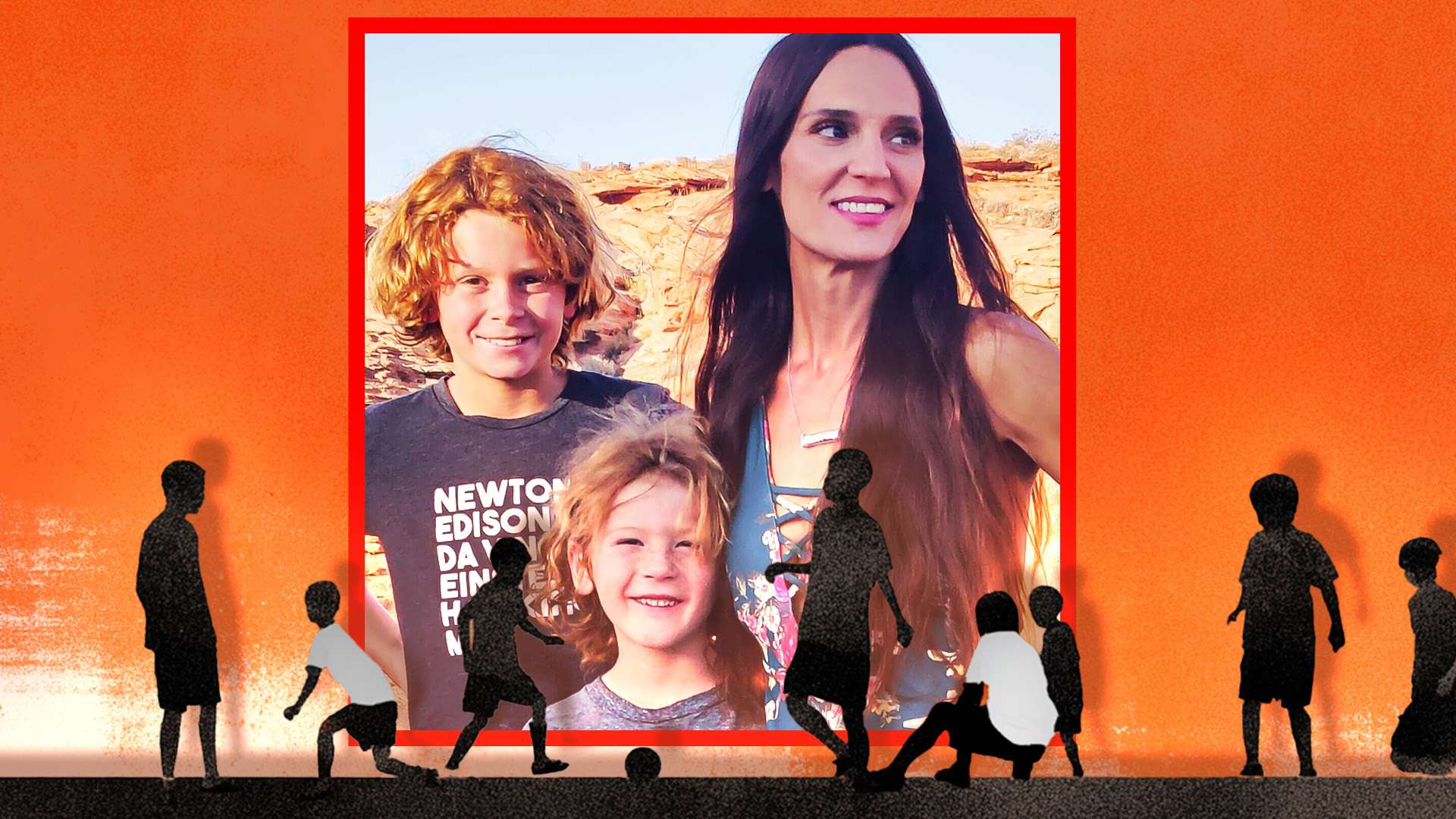
Heather Bryant, a teacher in Park City, Utah, only learned that a Division of Child and Family Services (DCFS) worker had interviewed her three kids after the fact.
“I got a call from the DCFS investigator,” Bryant said in a phone call. “I was sitting at work and was absolutely knocked sideways by it. My hand was shaking—I couldn’t believe I was having this conversation.”
The investigator informed Bryant that someone had called DCFS to report overhearing a conversation between their son and Bryant’s middle son. The 8-year-old boys were talking about how Bryant’s 12-year-old son had been rough with them during a neighborhood soccer game.
This was labeled “child-on-child physical aggression during play” by the DCFS.
“We want to reassure you that your children are all clearly well-adjusted,” the caseworker told Bryant after going to their schools and asking her three children about their home life. Bryant was informed that “no further action will be taken.” In other words, an investigation was opened without announcement, and was now being closed. “She was clearly apologetic,” recalls Bryant.
Months afterwards, Bryant was still shaken. “It was fear mixed with shock,” Bryant says. Feeling betrayed by an anonymous mom made Bryant wary about letting her kids play with their friends. She only recently felt ready to write about it in an op-ed in The Park Record, although the incident occurred over a year ago.
The fact that an overheard discussion of 8-year-olds prompted government investigation made Bryant start to see how fear and over-reaction “is increasingly routed through public systems.” She couldn’t understand why a mom would call the authorities, rather than just speaking to her. “This wasn’t about genuine risk to children. It was about outsourcing discomfort,” Bryant wrote.
Getting the state involved in parenting decisions is something Utah has been at the forefront of fighting. In 2018, Utah became the first state to pass a Free-Range Parenting law. Since then, 10 more states have followed suit with “Reasonable Childhood Independence” bills. These bills say that “neglect” is when you put your child in obvious, serious danger—not anytime you take your eyes off them, including letting them play outside unsupervised.
If a casual soccer match could be described as “dysregulated,” then almost all true play environments could be considered overly rough. “Normal physicality was reframed as aggression,” wrote Bryant. “Healthy competition became cause for alarm.” If we take all the spontaneity and risk out of play, it’s no longer play. It’s yet another orchestrated, scrutinized, adult-run activity.
Maybe one reason kids are so anxious and depressed these days is that they don’t get a lot of chances to work things out on their own. If you never figure out how to deal with an older kid playing rough, you never learn how much you can handle. Instead, an adult is always there to solve the problems—or call the authorities—and kids are growing up as bystanders.
Parents, meanwhile, are stuck in anxiety mode, seeing and hearing so many of the once-hidden ups and downs of their kids’ day. Between constant surveillance and near-constant supervision, childhood spats that would have been forgotten are now witnessed, worried about, and turned into bigger issues.
This kind of excessive intervention knows no boundaries. When kids are over at her home, Bryant says, she gets a stream of texts from parents asking her to remind their kids to hydrate, or eat a protein snack, or not to eat sugar.
As a high school teacher, Bryant sees the impact on students growing up this way. “You ask them to do something, and I need to provide step by step instructions, because that’s what they’re used to,” says Bryant. “They need directives for simple tasks.”